The morning air in central Israel usually carries the scent of salt and exhaust, a mundane hum that millions of people rely on to anchor their sanity. It is the sound of school buses and espresso machines. But on this particular Sunday, the air shattered. At 6:32 AM, a sound that begins as a low frequency vibration in the chest cavity—before it even reaches the ears—ripped through the coastal plain.
It was the siren. Not the rhythmic, almost melodic pulse of a drill, but the jagged, urgent wail of a nation being told to hide.
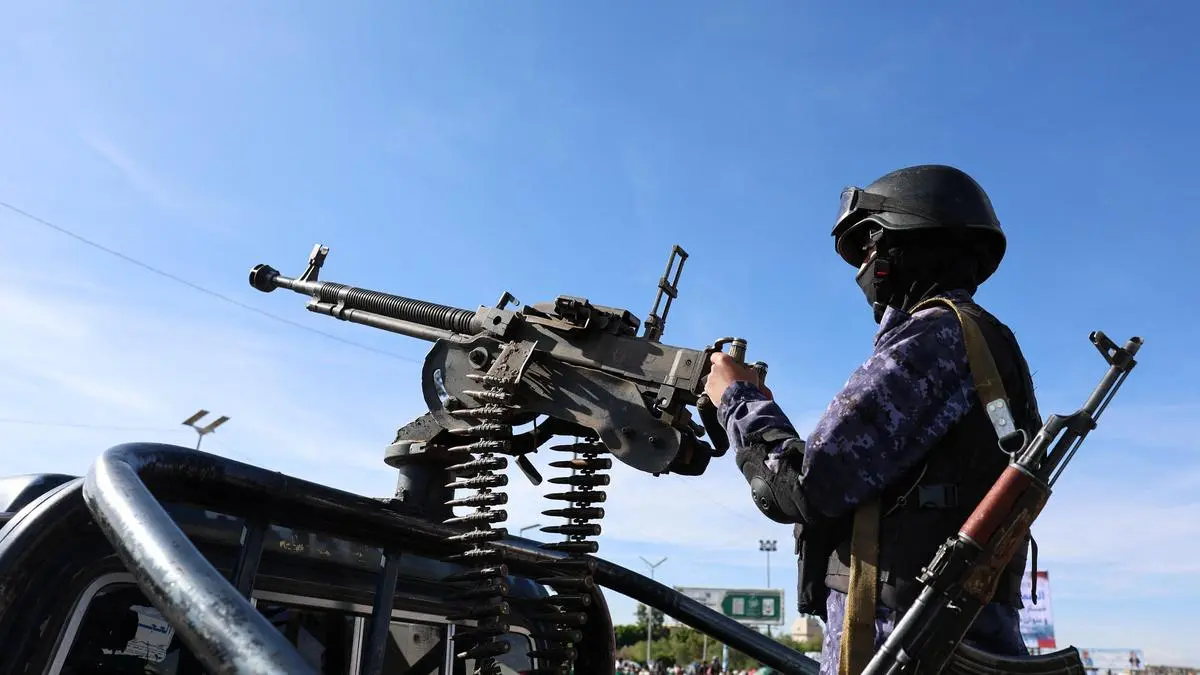
For years, the threat from the south was a distant abstraction. It lived in the jagged mountains of Yemen, more than 2,000 kilometers away, whispered through grainy propaganda videos and flickering screens. But distance is a comfort that technology is rapidly eroding. On this day, a ballistic missile launched by the Houthi movement crossed the desert sands of Saudi Arabia and the deep blues of the Red Sea to reach the heart of Israel. It was the first time a direct strike from Yemen had ever successfully pierced that far into the country’s center.
Gravity and fire. That is all a missile really is. But when that fire is directed at a densely populated city, it becomes a psychological weight that sits on the shoulders of every parent rushing a toddler into a reinforced "safe room."
The Physics of Fear
To understand the scale of this event, you have to look at a map and realize that the distance between Sana’a and Tel Aviv is roughly the distance between New York City and Denver. To throw a piece of metal that far, and have it land anywhere near a target, requires a level of engineering that was once reserved for global superpowers.
The missile in question traveled for approximately 11 and a half minutes. Think about what you can do in 11 minutes. You can soft-boil an egg. You can read a few pages of a book. You can sit in traffic. For the Israeli defense systems—the Arrow, the David’s Sling, and the Iron Dome—those 11 minutes are a frantic, high-stakes chess match played at several times the speed of sound.
The military reported that the missile was intercepted, but not completely neutralized in the way people imagine from movies. It isn't always a clean puff of smoke in the sky. Interception at those speeds often results in "fragmentation." Imagine a glass bottle hitting a brick wall at two thousand miles per hour. The bottle is destroyed, but the shards have to go somewhere.
Shrapnel rained down on a railway station near Modi'in. Fires broke out in forest lands. No one was killed by the direct impact, but nine people were injured in the frantic scramble for shelter. These are the "incidental" costs of modern warfare: the broken ankles, the panicked hearts, and the psychological scarring of a Sunday morning that was supposed to be about coffee and work.
The Invisible Bridge
Why now? The Houthis have been firing drones and missiles toward the southern port of Eilat for months, mostly as a show of solidarity with Gaza. Most were swatted away by American warships or Israeli defenses. But this was different. This was a statement of reach.
By sending a missile into the center of the country, the Houthis effectively bridged a gap that many hoped was impassable. They signaled that the geographical buffer of the Middle East is no longer a guarantee of safety.
Consider a hypothetical family in Lod, a city near the international airport. For them, the conflict in Yemen was a footnote in a news cycle. It was someone else’s tragedy. Then, the ceiling shook. The windows rattled. Suddenly, the geopolitical ambitions of a group two thousand kilometers away were vibrating in their kitchen cabinets.
This isn't just about military hardware. It’s about the democratization of destruction. When non-state actors or smaller regional powers acquire the ability to launch long-range ballistic missiles, the old rules of "deterrence through distance" evaporate.
The Calculus of Response
The Israeli government’s reaction was swift and predictable in its rhetoric. Prime Minister Netanyahu spoke of a "heavy price" to be paid. But the "price" in this part of the world is rarely paid in currency. It is paid in the currency of escalation.
Every time a new frontier of conflict opens, the room for error shrinks. If the interception had failed—if that missile had struck a high-rise in Tel Aviv or a crowded terminal at Ben Gurion Airport—the regional response would not have been a measured military strike. It would have been a tectonic shift.
We are living in an era where the technical difficulty of a task—like hitting a target across a continent—is no longer a barrier to entry. The technology has been "gifted" or "shared," creating a web of threats that are interconnected. The missile from Yemen is a thread in that web, tied to the workshops in Iran and the tunnels in Lebanon.
The Human Echo
Beyond the sirens and the debris, there is a quieter, more insidious effect. It is the death of the "normal" day.
When a missile can arrive from a place you’ve never visited, for reasons tied to a conflict you can’t control, the world feels smaller and more dangerous. The "invisible stakes" here aren't just about who has the better radar or the faster interceptor. The stakes are the mental health of an entire generation growing up under a sky that can turn hostile at any moment.
In the aftermath of the strike, life resumed. The trains eventually started running again. The fires in the fields were extinguished. But the sky looked different. It was no longer just the roof of the world; it was a corridor.
The missile didn't need to explode to achieve its goal. It just needed to arrive. It proved that the distance between "over there" and "right here" has reached a vanishing point.
The smoke cleared over the hills of central Israel, but the silence that followed wasn't peaceful. It was expectant. In the quiet, you could almost hear the clock ticking toward the next 11-minute window, where the only thing standing between a normal morning and a national tragedy is a thin streak of light rising to meet a falling star.
The sirens are silent for now, but the air still feels heavy, as if the desert wind from the south brought something with it that cannot be sent back.
Would you like me to research the specific technical capabilities of the Arrow-3 interceptor system to see how it handles fragmentation at high altitudes?