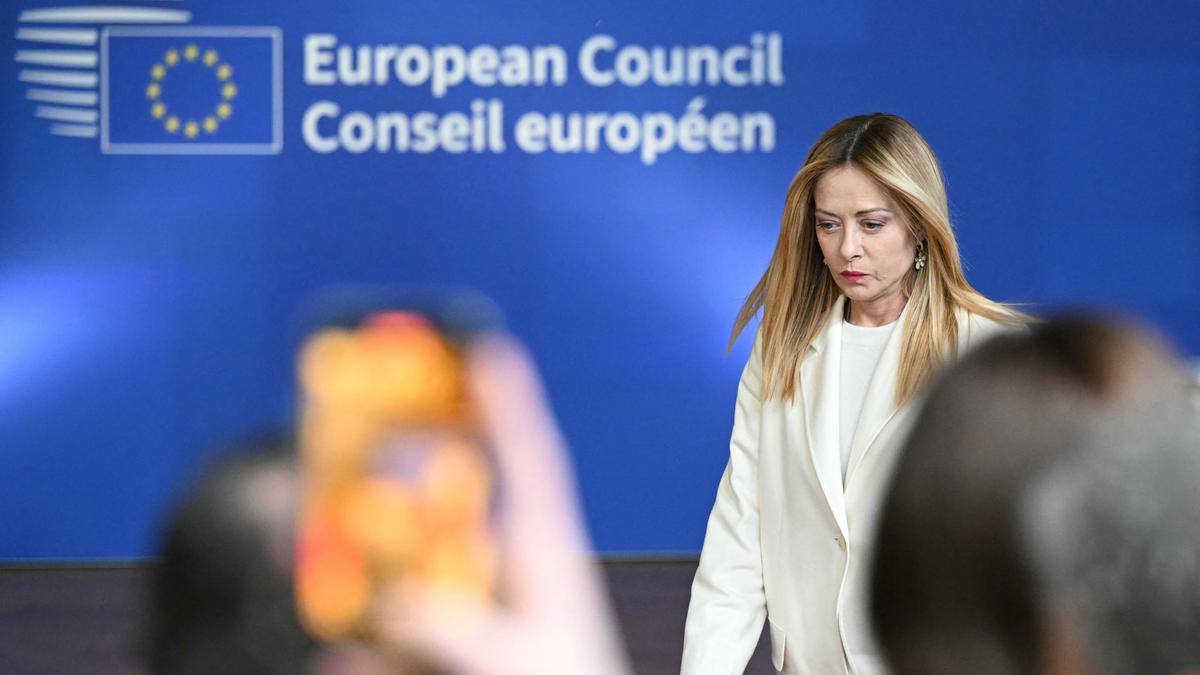
Giorgia Meloni entered the Palazzo Chigi not just to govern, but to rewrite the Italian constitutional DNA. Her flagship project, the premierato, promised to end the revolving door of Italian administrations by allowing voters to directly elect the prime minister. It was marketed as the antidote to backroom deals and technocratic coups. Instead, the initiative has morphed into a high-stakes gamble that threatens to consume her premiership. The core premise was simple: stability. But in the volatile theater of Italian politics, stability is often a euphemism for the erosion of checks and balances, a trade-off that the Italian electorate has historically viewed with profound suspicion.
The math of Italian governance is notoriously cruel. Since the end of World War II, the country has seen nearly 70 governments. Meloni’s proposal sought to break this cycle by granting the winner a guaranteed 55% majority in parliament. It sounded like a efficiency drive. Critics, however, saw the ghost of the Legge Acerbo, the 1923 law that paved the way for Mussolini's dominance. While Meloni is no dictator, the structural shifts she proposed would have stripped the President of the Republic—Italy’s ultimate moral and constitutional referee—of the power to appoint prime ministers or dissolve parliament during crises. By reaching for total control, Meloni may have inadvertently united a fractured opposition and alienated the moderate voters who were willing to give her a chance on the economy but draw the line at constitutional engineering.
The President and the Power Vacuum
The Italian Presidency is often misunderstood by outsiders as a purely ceremonial role, akin to a constitutional monarch. It is nothing of the sort. The President acts as the "custodian of the constitution," a vital pressure valve when the parliamentary gears grind to a halt. When Meloni proposed a system where the Prime Minister's mandate comes directly from the ballot box, she effectively moved to sideline Sergio Mattarella, a figure who currently enjoys higher approval ratings than any politician in the country.
This was a tactical blunder born of overconfidence. By making the office of the Prime Minister the sole sun in the political solar system, Meloni signaled a distrust of the very institutions that provide Italy with its rare moments of continuity. The opposition didn’t have to work hard to frame this as a power grab. They simply pointed at the Quirinale Palace and asked voters if they wanted to trade a respected, non-partisan referee for a winner-take-all partisan machine. The answer from the legal community and the civil service was a resounding no.
Economic Gravity Always Wins
While the constitutional debate raged in Rome, the reality of the Italian pocketbook began to bite. Constitutional reform is a luxury good; it is what politicians talk about when they cannot solve the price of bread or the stagnation of wages. Meloni’s rise was fueled by a promise of "Italy First" protectionism and a defiance of Brussels. Once in power, the cold reality of Italy’s massive public debt—roughly 140% of GDP—forced her into a pragmatic, almost submissive relationship with the European Commission.
The disconnect is stark. Her base expected a firebrand who would reclaim sovereignty. What they got was a leader who meticulously follows EU fiscal rules to ensure the flow of recovery funds. To distract from this pivot to the center, Meloni leaned harder into the premierato. She needed a "great cause" to maintain her image as a disruptor. But you cannot eat a constitutional amendment. As inflation eroded the gains of the working class, the obsession with parliamentary mechanics began to look like an elite preoccupation.
The Ghost of Matteo Renzi
Italian history is littered with the corpses of "strong" leaders who thought a referendum would provide them with a permanent mandate. The most recent example is Matteo Renzi in 2016. Like Meloni, Renzi was young, charismatic, and convinced that the public was tired of legislative gridlock. He staked his entire career on a constitutional reform package. He lost, he resigned, and his party was shattered.
Meloni claimed she would not make the same mistake of personifying the vote. She stated the referendum was about the country, not her. No one believed her. In Italian politics, every vote is a plebiscite on the incumbent. By tethering her legacy to a radical overhaul of the state, she gave her enemies a single, visible target. The Five Star Movement and the Democratic Party (PD), who usually spend their time bickering, found a common cause. They didn't need a policy platform; they just needed to say "No" to Meloni.
Brussels and the Silent Watch
While Brussels officially remains neutral on domestic constitutional matters, the anxiety in the corridors of the Berlaymont is palpable. A stable Italy is good for the Eurozone, but a "stable" Italy led by a right-wing populist with unchecked power is a different prospect entirely. The European Union is built on the idea of shared sovereignty and institutional constraints. Meloni's plan to bypass those constraints within her own borders was seen as a potential blueprint for other "illiberal" leaders across the continent.
There is also the matter of the spread. The difference between Italian and German bond yields is the ultimate barometer of trust in the Italian state. Markets hate uncertainty, but they also fear radical structural changes that might lead to a confrontation with EU norms. Every time Meloni pushed the premierato harder, the markets grew twitchy. They weren't worried about the democracy of the move; they were worried about the volatility that follows any leader who tries to rewrite the rules while the house is still on fire.
The Fragmentation of the Right
Perhaps the most overlooked factor in this decline is the internal friction within Meloni's own coalition. The League, led by Matteo Salvini, and Forza Italia, the late Silvio Berlusconi’s party, are not silent partners. They are rivals. Salvini, in particular, has seen his influence wane as Meloni’s Brothers of Italy soared. For him, the premierato was a bitter pill. Why would he support a system that permanently cements Meloni’s dominance and relegates his party to a permanent junior status?
The coalition's support for the reform was always performative. Behind the scenes, the League pushed for "autonomy"—a plan to give more power to the wealthy northern regions. This was the price Meloni had to pay for their support on the constitutional project. The result was a messy, contradictory legislative agenda that tried to centralize power in Rome while simultaneously decentralizing it to the provinces. It was a legal Frankenstein’s monster that satisfied no one and gave the opposition even more ammunition.
A Masterclass in Misreading the Room
Meloni’s fundamental error was misinterpreting her 2022 victory. She didn't win a mandate for a revolution; she won because the previous options had failed and she was the only one left who hadn't been in government recently. It was a vote of exhaustion, not an endorsement of radical change.
By pushing for a referendum, she moved from being a pragmatic leader managing a difficult economy to a partisan figure fighting for her own political survival. The public's appetite for "reforms" is at an all-time low. People want healthcare that works, trains that run on time, and a future for their children in a country that is rapidly aging. They do not want a complex debate about the "ballot for the Prime Minister" and the "majority premium."
The gamble has backfired because it forced a choice that didn't need to be made. Meloni could have spent her political capital on tax reform or labor market changes—things that have tangible impacts on the lives of Italians. Instead, she chose to fight a war over the structure of power itself. It is a classic trap for leaders who mistake a temporary plurality for a permanent transformation.
The Mechanics of the Failure
The legislative process for constitutional change in Italy is designed to be slow. It requires multiple readings and, if a two-thirds majority isn't reached, a popular vote. Meloni knew she would never get the two-thirds. She was always headed for the referendum. But the longer the process took, the more the flaws in the proposal were exposed.
Legal scholars pointed out that the 55% majority bonus could lead to a parliament that does not represent the will of the people at all. If a party wins with only 30% of the vote but is given 55% of the seats, the democratic deficit becomes an abyss. This isn't just a theoretical concern; it’s a recipe for civil unrest and institutional paralysis. The "stability" promised by the reform was revealed to be a fragile facade that could break at the first sign of a real national crisis.
Tactical Retreats and the Path Forward
As the polls for the referendum began to look increasingly grim, Meloni started to pivot. The rhetoric shifted from "changing Italy" to "improving efficiency." But the damage was done. The opposition had already framed the narrative. In politics, once you lose control of the "why," the "what" no longer matters.
The immediate challenge now is not just the failure of the reform, but the vacuum it leaves behind. If the premierato dies, Meloni is left as a lame duck leader with a disgruntled coalition and an emboldened opposition. She will have to govern the old-fashioned way: through compromise, coalition management, and the constant threat of a backstab from her "allies."
The real lesson here is that in Italy, the system is designed to resist "strong" leaders. It is a defense mechanism built into the state after the trauma of the early 20th century. Meloni thought she could outrun history. She found out that history has a very long reach.
If you want to understand the true state of Italian power, look at the bond markets and the local council elections, not the grand speeches in the Piazza del Popolo. The former tell you about the constraints of reality; the latter are just theater. Meloni’s gamble was an attempt to turn the theater into reality. It failed because the audience realized that when the play ends, they are the ones who have to pay for the set.
Study the polling data from the northern industrial heartlands. If the League’s base continues to defect or stay home, Meloni’s "stability" will vanish faster than a summer storm in the Alps. The focus must now shift to the 2025 budget, where the real battle for Italy's future will be fought, far away from the abstract world of constitutional law.