A cold wind whips across the flight deck of an aircraft carrier, a sound that mimics a low, mournful whistle through a hollow pipe. To a naval architect, this deck is a feat of precision engineering. To a sailor, it is home. But to a politician looking across the Atlantic from a position of renewed American isolationism, it is something else entirely. It is a toy.
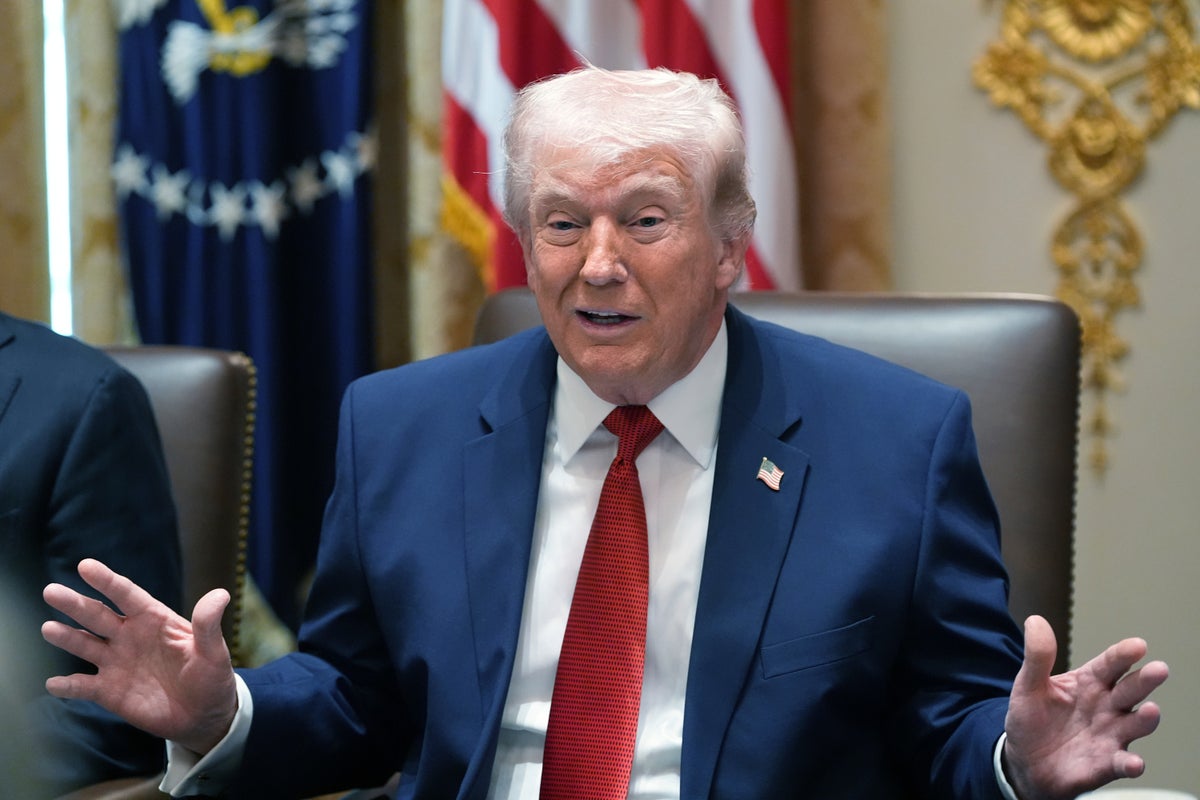
The word "toy" carries a specific kind of sting. It implies something small, something easily broken, and most importantly, something that doesn't actually work. When Donald Trump turned his rhetorical gaze toward the British Royal Navy this week, he wasn't just critiquing a defense budget. He was poking at the bruised ego of a former superpower that is currently struggling to keep its most expensive assets in the water.
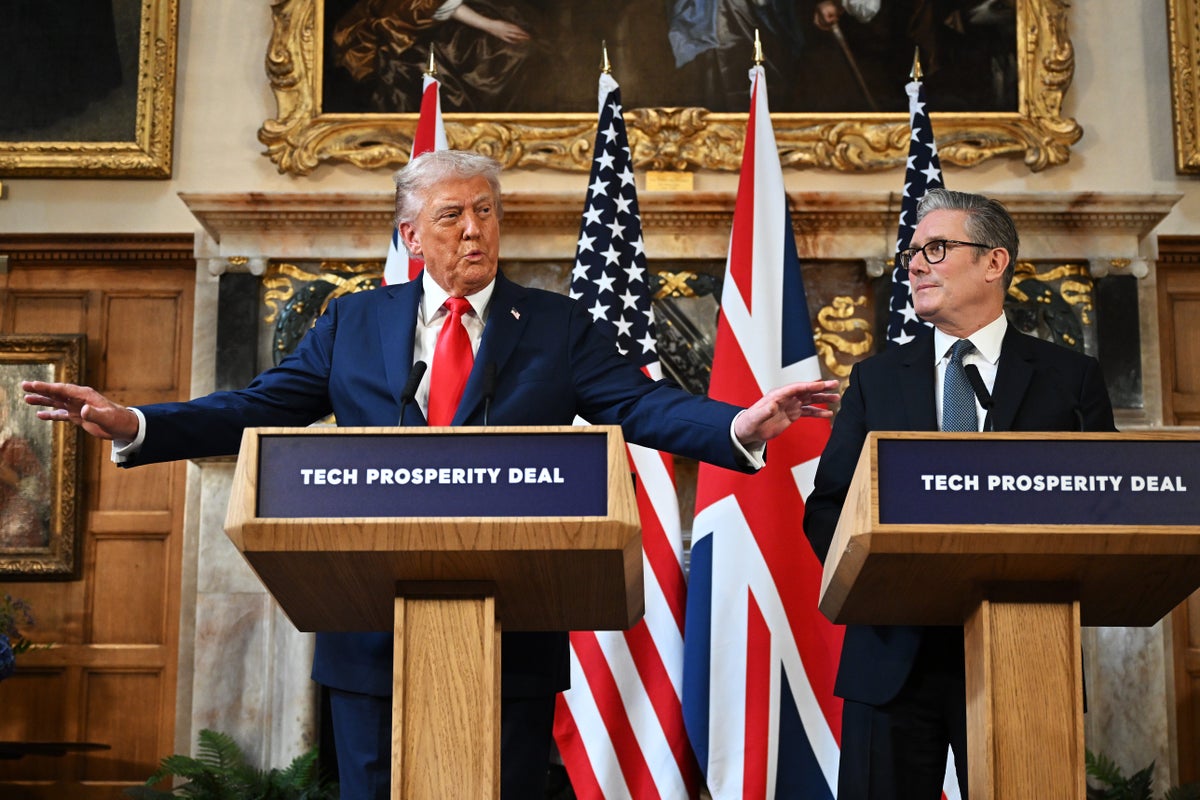
At the heart of this friction lies a fundamental disagreement about what power looks like in 2026. On one side, you have the British Prime Minister, Keir Starmer, attempting to navigate a "special relationship" that feels increasingly like a one-way street. On the other, a man who views international alliances through the lens of a balance sheet. The catalyst for this latest explosion of transatlantic tension? Iran.
Consider the physical reality of a modern warship. It is a floating city of steel, wires, and young men and women who haven't slept more than four hours at a stretch in weeks. When a leader calls that ship a toy, he isn't just insulting the government that paid for it. He is dismissing the shield those people provide. Yet, there is a painful grain of truth in the taunt that makes it impossible to ignore.
The Ghost of the High Seas
The Royal Navy currently operates two massive Queen Elizabeth-class aircraft carriers. They are imposing. They are technologically advanced. And, quite often, they are stuck in the mud. For years, these ships have been plagued by mechanical failures—propeller shaft issues, flooding, and a chronic lack of support vessels. A carrier without a strike group is just a very large, very expensive target.
Trump’s "toy" comment targets this specific vulnerability. His argument is blunt: why should the United States coordinate its Middle East strategy with a partner that can barely get its hardware out of the harbor?
This isn't just about ships, though. It's about the decision-making that puts them there. The recent escalation with Iran has highlighted a massive rift in how London and Washington view the world. Starmer’s government has attempted a delicate dance, trying to maintain a firm stance on Iranian regional aggression while desperately avoiding a full-scale conflagration that would wreck an already fragile UK economy.
Trump sees this caution as a "mistake." In his view, diplomacy is a secondary tool, useful only once the other side is convinced you are willing to break their toys—and yours are bigger.
A Tale of Two Docksides
Imagine a hypothetical technician named Elias. Elias works at the Rosyth Dockyard in Scotland. He spends his days submerged in the labyrinthine guts of a carrier, welding plates and checking seals. He hears the news on a rugged radio sitting on a toolbox. When he hears a foreign leader call the machine he spends sixty hours a week maintaining a "toy," it doesn't feel like a geopolitical analysis. It feels like a dismissal of his entire life's work.
But then Elias looks at the schedule. He sees the delays. He knows the parts are backordered. He knows that the "global Britain" promised by a decade of politicians is currently resting on a foundation of austerity and aging infrastructure.
This is the invisible stake of the argument. It’s not just about whether the UK joins a strike on Iran. It’s about whether the UK can still claim to be a first-rate military power. If the ships are toys, then the nation’s seat at the table is a high chair.
The tension peaked when Starmer’s administration signaled a potential shift in how they would handle Iranian maritime threats. Instead of the "maximum pressure" campaign favored by the Trump camp, the UK has leaned toward a containment strategy that relies heavily on international law and coalition-building. To the populist right in the US, this looks like weakness. To the UK, it looks like the only way to survive without being dragged into a multi-decade desert war they cannot afford to fight.
The Iran Equation
Iran is the specter that haunts every one of these conversations. It is a master of asymmetric warfare, using drones and proxies to keep the West off-balance. They don't need "toys" that cost six billion pounds. They use "toys" that cost twenty thousand dollars—and they use them effectively.
When Trump lashes out at Starmer’s "mistake," he is referring to the UK’s hesitation to fully commit to a pre-emptive posture. The irony is thick. The very person calling the British ships toys is the one demanding they be used in a high-stakes game of chicken in the Strait of Hormuz.
The logic is jarring. If the ships are useless, why does it matter what the UK thinks about the war? The answer lies in the symbolic value of the British flag. Even if the Royal Navy is struggling, having the Union Jack flying alongside the Stars and Stripes provides a veneer of international legitimacy that the US—especially under a "Peace through Strength" mandate—still craves, even if it won't admit it.
The Weight of History
We have been here before. In 1956, during the Suez Crisis, the United States pulled the rug out from under the UK and France, effectively ending Britain’s status as a global hegemon. Today, the roles feel reversed, yet the friction remains the same. The US is no longer the stabilizing force demanding restraint; it is the force demanding total alignment, or total irrelevance.
Starmer is trapped in a historical vice. To agree with Trump is to risk a war that could bankrupt the UK and ignite domestic unrest. To disagree is to be branded a "weak" leader of a "toy" navy, further isolating Britain from its most important security partner.
The technical reality of naval warfare is shifting. The era of the "big ship" is being challenged by the era of the "smart swarm." The US Navy is grappling with this, too, but they have the sheer volume of hulls to absorb the transition. The UK does not. Every mechanical failure on a British carrier is a national crisis. Every missed deployment is a headline.
The Human Cost of Rhetoric
Behind the headlines are the families. The sailors on the HMS Prince of Wales or the HMS Queen Elizabeth don't see themselves as pawns in a rhetorical chess match. They see the reality of the Persian Gulf heat, the hum of the engines, and the weight of the responsibility they carry. When the "toy" comment travels through the mess decks, it breeds a specific kind of resentment—not just toward the American critic, but toward their own government for failing to provide the "robust" (that forbidden word) support needed to prove the critic wrong.
Power is a performance. If you look like you can't fight, people will eventually stop believing you can. Trump’s genius, for better or worse, is identifying where the paint is peeling and pointing it out to the world. He isn't interested in the nuances of British naval procurement or the complexities of Starmer's diplomatic balancing act. He is interested in the optics of strength.
The "mistake" Starmer is accused of making isn't just a policy error. It is a failure of branding. In the current geopolitical climate, being right is less important than looking dangerous.
The Horizon
The sun sets over the Thames, casting long shadows across the Ministry of Defence. Somewhere in the North Sea, a destroyer cuts through the grey water, its radar spinning in a rhythmic, mechanical dance. It is a lethal machine, capable of incredible destruction. But in the halls of power, its value is being eroded by words.
The debate over Iran will continue. The ships will eventually leave the docks, or they won't. But the label has been applied. Once a piece of hardware is called a toy, it takes more than a successful mission to change the narrative. It takes a total shift in national identity.
Britain is currently a nation looking for a role. It is too big to be ignored, but too small to lead without a patron. Starmer’s task is to find a way to make those "toys" matter in a world that is rapidly losing patience with the old guard.
The deck is empty. The wind is cold. The world is watching to see if anyone actually takes off.