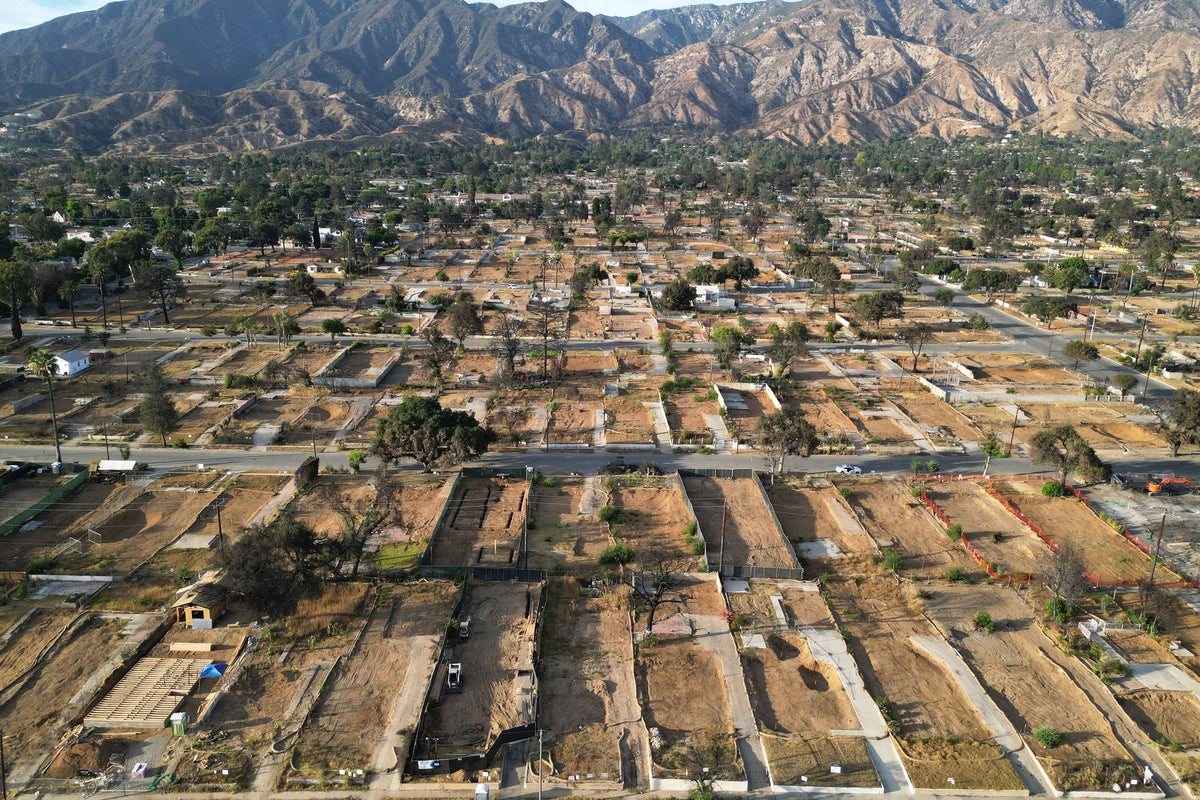
Imagine standing in a field of gray ash where your living room used to be. You’ve lost your photos, your clothes, and the roof over your head. Then, the mail arrives. It isn't a check from the insurance company or a letter of sympathy. It’s a bill from your Homeowners Association (HOA) for $23,000.
This nightmare is the reality for residents of the Villa San Pasqual complex in Escondido. After a devastating fire ripped through their community, survivors who are already struggling to rebuild their lives find themselves staring down a massive special assessment. It feels like a punch to the gut when they’re already down. But this isn't just one unlucky complex in Southern California. It’s a flashing red warning sign for every homeowner in a high-risk fire zone.
The math is simple and brutal. When a disaster hits a managed community, the cost to repair common areas, clear debris, and meet new building codes often dwarfs the HOA’s reserve funds. If the master insurance policy doesn't cover every penny—and it rarely does—the board turns to the only source of income they have: you.
Why the Safety Net is Shredded
Most people assume their HOA dues cover the "big stuff." You pay into a collective pot so that if a pipe bursts in the courtyard or the roof needs replacing, the cost is shared. Fire, however, changes the scale of the problem entirely.
In the case of the Escondido residents, the $23,000 fee stems from a gap between insurance payouts and the actual cost of restoration. California’s insurance market is currently in a state of total collapse. Major carriers like State Farm and Allstate have pulled back or stopped writing new policies in the state. This means HOAs are often stuck with "surplus line" carriers. These policies are more expensive and often come with massive deductibles or limited coverage for specific types of damage.
When the HOA board looks at the reconstruction budget and sees a multi-million dollar deficit, they don't have many options. They can't just leave a charred husk of a building sitting there. It’s a health hazard and a liability nightmare. So, they pass a special assessment. Under California’s Davis-Stirling Act, boards have the authority to levy these assessments to manage "emergency" repairs, sometimes without even putting it to a member vote if the situation is dire enough.
The Hidden Trap of Master Policies
There's a common misconception that the HOA's master policy handles everything outside your four walls. That’s a dangerous oversimplification.
Master policies usually fall into two categories: "bare walls" or "all-in." A bare walls policy only covers the structure itself—studs, framing, and roofing. It doesn't cover your flooring, cabinets, or bathroom fixtures. Even with an all-in policy, the coverage limits might be based on valuations from five years ago.
Construction costs in California have skyrocketed. Between labor shortages and the price of materials, building a home in 2026 costs significantly more than it did in 2021. If the HOA policy was capped at $300 per square foot but the reality of rebuilding is $450, that $150 difference has to come from somewhere. That "somewhere" is the residents' pockets.
Fighting Back Against the Assessment
If you're hit with a five-figure bill while living in a trailer on your driveway, your first instinct is probably rage. That’s fair. But once the smoke clears, you need a tactical plan.
Check your own HO-6 policy immediately. Many condo owners have "Loss Assessment Coverage." This is a specific rider designed for exactly this scenario. Most standard policies include a small amount, maybe $1,000, but you can usually bump that up to $50,000 for a few extra dollars a month. If those Escondido residents had high loss assessment limits, their personal insurance would have cut a check to the HOA on their behalf.
If you don't have that coverage, you're looking at a legal and financial uphill battle. You can audit the HOA’s books. You have a right to see where the insurance money went and how the $23,000 figure was reached. Sometimes, boards mismanage the claim or fail to hire a public adjuster who could have squeezed more out of the carrier.
Practical Steps to Take Right Now
Don't wait for the embers to cool before checking your status. The time to act is while your house is still standing.
- Review your HO-6 policy today. Call your agent and ask specifically about "Loss Assessment Coverage." If it's less than $50,000, increase it. It's the cheapest way to protect yourself from an HOA disaster.
- Request the HOA Reserve Study. California law requires HOAs to conduct a reserve study every three years. If the reserves are funded at less than 30%, your community is at high risk for a special assessment even without a fire.
- Read the Master Policy. Don't take the board's word for it. Ask for a copy of the association’s insurance summary. Look for the deductible. If the HOA has a $100,000 deductible, guess who pays that? The homeowners.
- Attend the Board Meetings. Most people ignore these until there's a problem. By then, the decisions are already made. Be the person who asks about the fire mitigation plan and the insurance renewal.
The situation in Escondido is a tragedy, but it's also a lesson in the fine print of modern homeownership. Being a part of a "community" means sharing the perks, but it also means sharing the catastrophes. If the association's insurance fails, the burden falls on the individuals.
Get your documents in order. Call your insurance agent tomorrow morning. Ask about the loss assessment rider. It's the difference between rebuilding your life and being buried under a mountain of debt you didn't see coming.