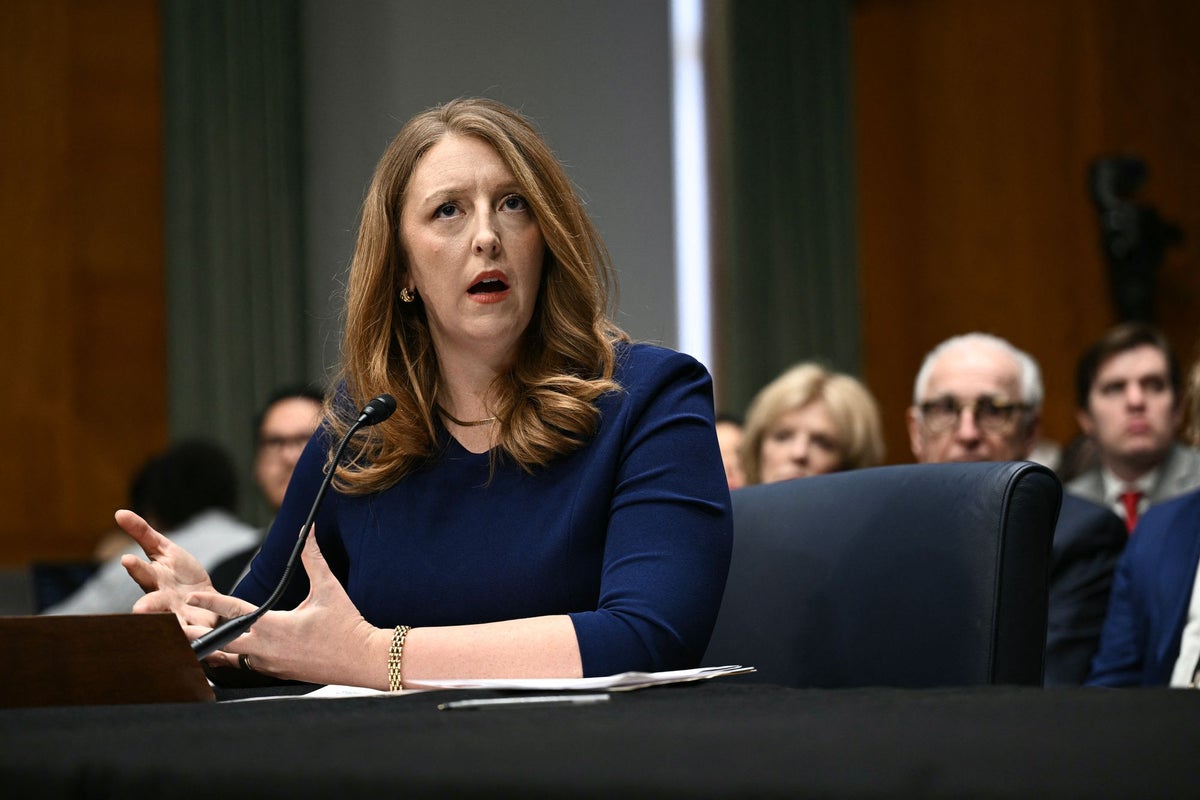
The nomination of Dr. Casey Means for U.S. Surgeon General is currently paralyzed in a Senate committee, a victim of both her own unconventional medical history and a growing insurrection within the Republican party. While the White House continues to project confidence, the reality on Capitol Hill is far more grim. Means is not just facing a standard partisan blockade; she is being picked apart by the very establishment she promised to disrupt, with key GOP senators voicing "strong reservations" that have turned a supposedly swift confirmation into a month-long quagmire.
At the heart of the delay is a fundamental mismatch between the "Make America Healthy Again" (MAHA) movement’s populist energy and the rigid, credential-heavy requirements of the Senate Health, Education, Labor and Pensions (HELP) Committee. Dr. Bill Cassidy, the committee chair and a physician himself, has emerged as a primary obstacle. During a tense February hearing, he didn’t just ask questions; he conducted a clinical interrogation of Means’ views on vaccines and her lack of an active medical license. You might also find this similar article insightful: The $2 Billion Pause and the High Stakes of Silence.
The Credentials Gap
The most glaring vulnerability in the Means nomination is her resume. While she holds a medical degree from Stanford, she famously walked away from her head and neck surgical residency at Oregon Health and Science University in her final year. She has since allowed her medical license to lapse into "inactive" status. In the eyes of the Senate’s old guard, this isn't just a career pivot; it’s a disqualification.
Former Surgeon General Jerome Adams, who served during the first Trump administration, has been uncharacteristically vocal about his disapproval. He has publicly labeled her "unqualified," noting that the Surgeon General typically oversees the 6,000-member U.S. Public Health Service Commissioned Corps. Leading a uniformed service of doctors and scientists without an active license or significant clinical experience is a bridge too far for many in Washington. As reported in recent reports by The Washington Post, the results are widespread.
Means argues that her "inactive" status is a deliberate choice, reflecting her shift from "reactive sick care" to root-cause metabolic health. She believes the system is fundamentally broken. However, the Senate HELP committee operates on the principle that to fix the system, you must first prove you can function within it.
The Vaccine Deadlock
If her lack of a license provided the spark, her stance on vaccines provided the fuel. Means is a close ally of Health Secretary Robert F. Kennedy Jr., whose skepticism of the current vaccine schedule is well-documented. During her testimony, Means repeatedly sidestepped direct questions about whether she would encourage parents to follow routine immunization schedules for measles or the flu.
Instead of the standard public health endorsements, she pivoted to "informed consent." This phrase, while popular in wellness circles, is a red flag for senators like Susan Collins and Lisa Murkowski. They are looking for a Surgeon General who will provide clear, authoritative guidance during an outbreak, not a philosophical treatise on parental choice.
Cassidy pushed her specifically on whether she believed vaccines cause autism. Her response—that "science is never settled"—sent shockwaves through the medical establishment. While she eventually stated she "accepts the evidence" of current research, the hedge was enough to convince several undecided Republicans that she might be a liability in a public health crisis.
Financial Entanglements and the Wellness Industry
Beyond the ideological battles, a more traditional Washington problem is surfacing: conflicts of interest. An investigation recently highlighted by Senator Tammy Baldwin and various media outlets suggests that Means’ career as a wellness influencer is fraught with undisclosed financial ties.
Before her nomination, Means profited from promoting various health supplements and tech platforms. Critics point out that several of the brands she endorsed have faced legal scrutiny for selling products containing hazardous materials or making unverified claims. For a nominee who promises to "root out corruption" and "remove additives" from the American diet, these associations are difficult to square.
- Levels Health: Means co-founded this glucose-monitoring startup. While she has pledged to divest, the sheer scale of her previous involvement raises questions about her ability to remain an impartial regulator of the health-tech space.
- Affiliate Marketing: Reports indicate she failed to consistently disclose "affiliate" relationships where she earned a percentage of sales from the products she recommended to her followers.
The MAHA Pressure Cooker
The White House is not sitting idly by. Under the direction of RFK Jr., MAHA activists have launched a scorched-earth campaign to pressure the holdout senators. Supporters are flooding the offices of Murkowski and Collins with thousands of phone calls daily. The message is simple: confirm Means or face the wrath of the movement.
This strategy may be backfiring. In the Senate, high-pressure grassroots campaigns can often harden opposition rather than soften it. Thom Tillis, a North Carolina Republican who is not seeking reelection, has already signaled he is leaning toward a "no" vote. He noted that he likes "disruptors" but was fundamentally unimpressed by her performance under pressure.
A Movement Without a Leader
The stall in the Means nomination is more than just a personnel hiccup. It is a stress test for the entire MAHA agenda. If the movement cannot get its primary advocate for "metabolic health" through a GOP-controlled committee, it suggests that the broader plan to overhaul the USDA and FDA will face even more significant hurdles.
The Department of Health and Human Services (HHS) is already feeling the ripple effects. With legal setbacks hitting other parts of Kennedy’s agenda, the vacancy at the Surgeon General’s office leaves the administration without a recognizable "top doctor" to communicate its vision to the public.
The path forward for Means requires a perfect alignment of political stars that currently aren't moving. She needs every single Republican on the HELP committee to advance to a full floor vote. With Cassidy, Murkowski, and Collins all expressing varying degrees of skepticism, the nomination is effectively in a coma.
Unless the White House can provide a compelling counter-narrative to her lack of clinical experience—or unless the MAHA movement can find a way to make the political cost of opposition higher than the cost of confirmation—the nation’s top medical post will remain empty. The "Great National Healing" Means promised is on hold, blocked by the very procedural hurdles she sought to bypass.
Keep a close eye on the upcoming committee schedule. If a vote isn't scheduled by the April recess, the administration may be forced to look for a nominee who carries less baggage but maintains the same disruptive spirit.
Would you like me to analyze the specific voting records of the GOP senators currently blocking the nomination?