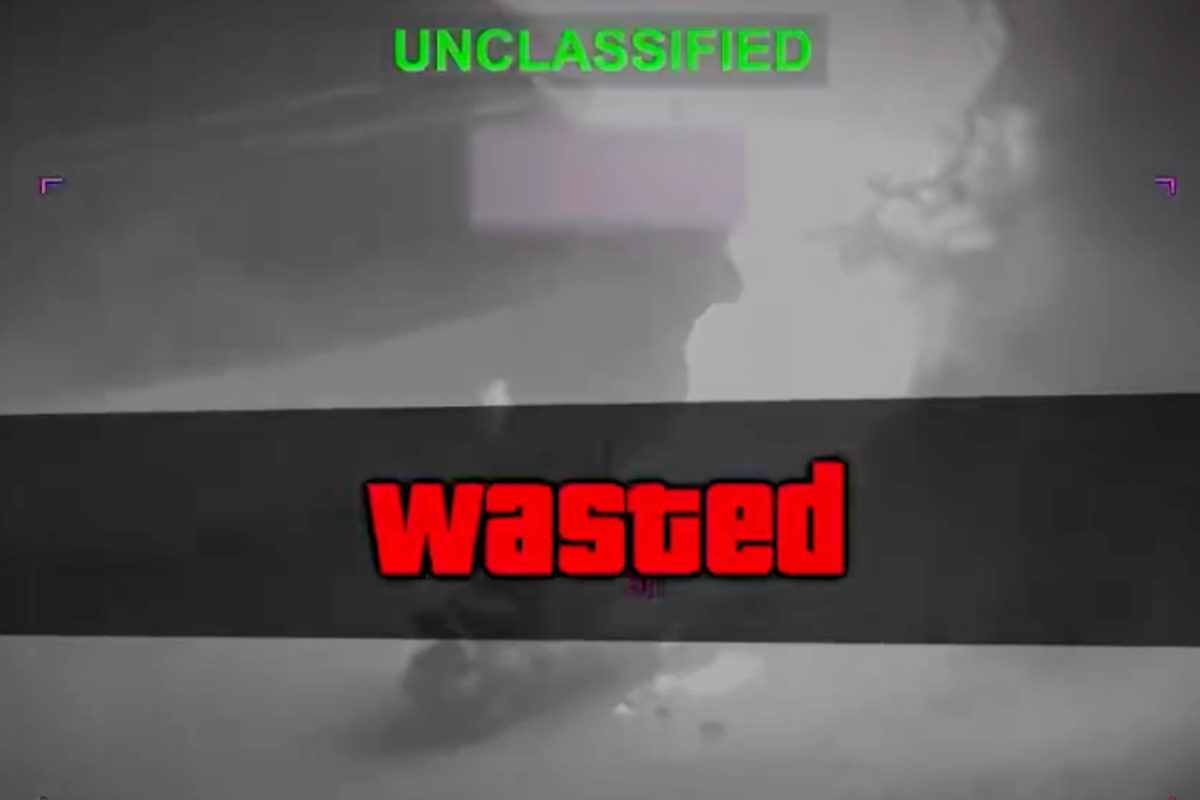
The media is currently obsessed with a cow shed. Specifically, a "dairy farm" in Afghanistan that Pete Hegseth allegedly boasted about hitting during his service, which reports now claim was devoid of the "drug lab" components he described. The lazy consensus is already solidified: a chest-thumping soldier got it wrong, a civilian asset was leveled, and the entire mission was a farce.
This narrative isn't just simplistic; it’s tactically illiterate. It ignores how asymmetric warfare actually functions on the ground and how "dual-use" infrastructure is the primary shield for insurgent logistics. If you liked this post, you should read: this related article.
The Myth of the Innocent Infrastructure
In a conventional war, you look for a factory with a sign that says "Ammunition." In a counter-insurgency, you look for the smell of acetic anhydride next to a milk pasteurizer.
The outrage over the "dairy farm" assumes that buildings in a war zone have fixed, singular identities. They don't. I have seen intelligence cycles where a school by day becomes a weapons cache by night, and a medical clinic doubles as a high-value target meeting house. To suggest that a site is "just a dairy farm" because investigators found cow stalls after the smoke cleared is to misunderstand the very nature of the Taliban's local economy. For another angle on this event, check out the recent coverage from Reuters.
Narcotics production in Afghanistan was never about Walter White-style superlabs. It was—and is—a decentralized, cottage industry. It nests within legitimate agriculture because that is the perfect kinetic shield. If you hit it, the enemy wins the PR war by pointing at the dead livestock. If you don't hit it, the heroin keeps flowing to fund the IEDs that take off your legs.
Why Intelligence Isn't a Google Map
The critics point to "post-strike assessments" as the ultimate truth. But let’s talk about the reality of human intelligence ($HUMINT$) versus signals intelligence ($SIGINT$).
- Source Reliability: In Helmand or Kunar, your "local source" is often settled in a blood feud with the guy next door. They tell you the neighbor's farm is a drug lab to get the Americans to do their dirty work.
- The Cleanup: Insurgents are remarkably efficient at sanitizing a site. By the time a third-party investigator or a journalist gets to a "dairy farm" three days after a strike, any evidence of precursor chemicals or processed opium has been scrubbed. All that’s left are the broken fences and the narrative of the "victim."
- The Logic of Probability: High-command doesn't authorize strikes on a whim. There is a "target folder." That folder contains intercepted comms, patterns of life, and heat signatures. If $SIGINT$ shows high-level Taliban couriers entering a barn three nights in a row, it ceases to be a barn in the eyes of the Rules of Engagement (ROE).
The Arrogance of the Retrospective
It is easy to sit in a climate-controlled office in D.C. or London and dismantle a tactical decision made in 2005 or 2011. This is the "hindsight bias" trap.
We demand that our soldiers have the psychic ability to see through mud walls while simultaneously demanding they never make a mistake in a landscape where the enemy wears no uniform. When Hegseth—or any operator—speaks about these strikes, they are speaking from the data available at the $T=0$ moment.
If the intelligence says "Drug Lab," you treat it as a drug lab. If it turns out to be a "Dairy Farm" later, that isn't a failure of "boasting"—it's a failure of the intelligence apparatus or, more likely, a successful deception operation by the enemy. By focusing on the mistake, we ignore the structural necessity of taking those risks in the first place.
The Cost of Perfectionism
What happens when you punish the "Dairy Farm" mistake? You get paralysis.
I’ve watched commanders refuse to clear a known sniper nest because the building was technically listed as a "cultural site" (a mud hut with a single old book). The result? More casualties on our side. The current crusade against Hegseth's account is a proxy war against the very idea of aggressive kinetic action.
If we move to a model where every strike must be 100% verified by a neutral third party before the trigger is pulled, we might as well go home. The delay between "identification" and "neutralization" is where the enemy lives.
Deconstructing the "Drug Lab" Mechanics
To understand why a dairy farm is a perfect cover, look at the chemistry. Refining opium into heroin requires:
- Large quantities of water.
- Heating sources.
- Vat-like containers.
- Heavy transport access.
Every single one of those things exists on a dairy farm. To a drone pilot at 15,000 feet, the thermal signature of a milk boiler and a chemical vat are indistinguishable. The critics act as if there’s a giant neon sign that distinguishes the two. There isn't.
The Real Question Nobody Asks
Instead of asking "Was it a dairy farm?" we should be asking: "Why was the Taliban operating in such close proximity to this farm?"
The "Dairy Farm" narrative relies on the idea that the Afghan peasantry existed in a vacuum, separate from the insurgency. They didn't. The insurgency was the economy. The farm was the lab. The lab was the farm.
By trying to "debunk" these strikes, the media is inadvertently doing the Taliban's PR work. They are reinforcing the "Invader vs. Innocent Farmer" trope that fueled the insurgency for two decades.
Stop Looking for Clean Wars
War is a series of tragic, high-stakes guesses based on incomplete data. Hegseth’s "boasting" isn't a sign of malice; it's a reflection of the certainty required to function in that environment. You cannot lead men into a compound if you are whispering, "Well, it might just be cows." You go in because the mission says it's a threat.
If you want a war where only the "bad guys" get hit and every building is exactly what its property deed says it is, you’re looking for a video game, not a battlefield.
The dairy farm report isn't a "gotcha." It's a reminder that in the dirt of a counter-insurgency, the truth is the first thing that gets buried—usually under a pile of cow manure and political maneuvering.
Stop apologizing for the fog of war. Start acknowledging that the "innocent" infrastructure was the very thing keeping the enemy alive.
Get comfortable with the ambiguity, or get off the field.