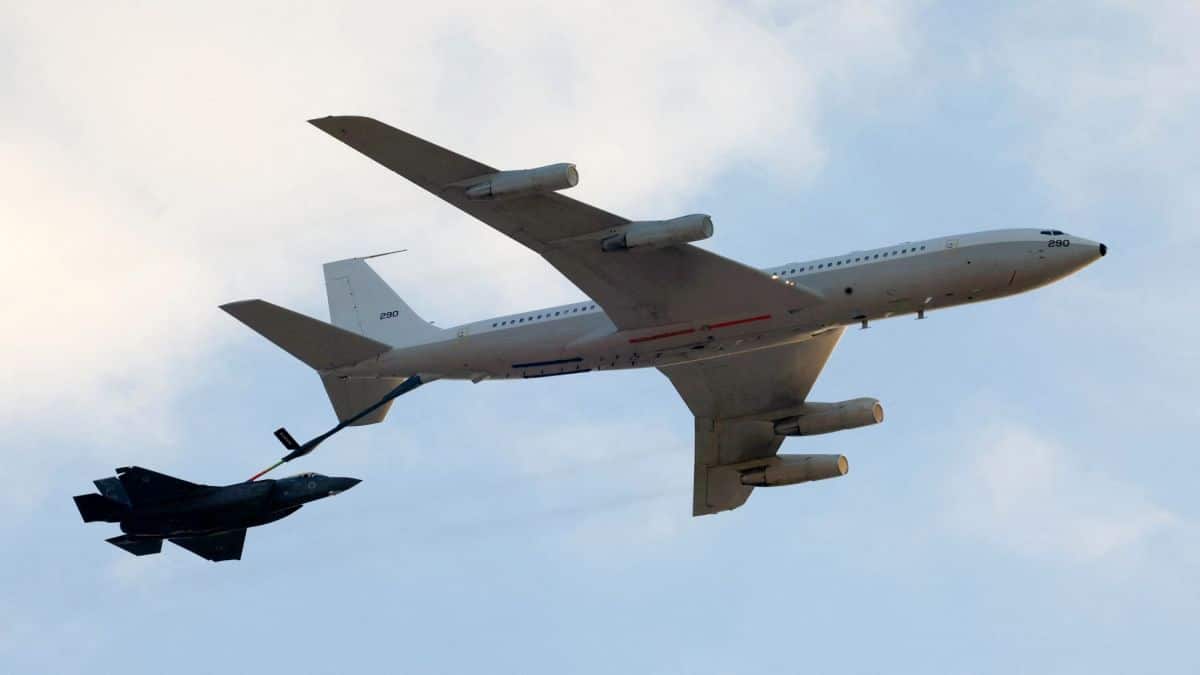
The air at thirty thousand feet is a thief. It steals heat from the skin and oxygen from the lungs, leaving behind a cold, thin nothingness that only the pressurized hull of a KC-135 Stratotanker can keep at bay. These planes are the gas stations of the sky, flying massive, lumbering fuel tanks that allow the sharp, hungry teeth of the Air Force—the fighters and the bombers—to stay airborne long after their own internal reserves have run dry.
When one of these giants falls, the silence that follows is heavier than the roar that preceded it.
Centcom’s recent dispatch was characteristically brief. A U.S. refueling plane went down in Al-Anbar province, Iraq. The report was scrubbed of drama, flattened into the two-dimensional language of military bureaucracy. It confirmed the location. It confirmed the loss. Most notably, it stated that the aircraft was not brought down by "hostile or friendly fire." In the world of modern warfare, where we are conditioned to look for a villain or a missile trail, this leaves us with a far more unsettling reality.
The machine simply stopped flying.
The Invisible Infrastructure of the Air
To understand why a Stratotanker matters, you have to look past the grey paint and the rivets. Think of the jet as a lifeline. In the vast, empty corridors of Iraqi airspace, a fighter pilot is always watching a clock. Fuel is time. Without that tanker circling in a pre-determined "track" like a lighthouse in a storm, that pilot has nowhere to go but down.
Imagine a crew of four—a pilot, a co-pilot, a navigator, and the boom operator—strapped into a flying reservoir. They are the backbone of a strategy that requires them to be everywhere at once. The boom operator, often the youngest on board, lies on their stomach in a small, cramped pod at the rear of the plane, staring through a window at the nose of a thirty-million-dollar fighter jet just feet away.
The precision required is absolute. The two planes must dance at 400 miles per hour, locked in a mechanical embrace that can transfer thousands of gallons of volatile fuel in minutes. If the weather turns, or the engines cough, or a single sensor fails, that dance becomes a collision.
When the Sky Stops Holding
When Centcom says "neither hostile nor friendly fire," they are pointing toward a category of catastrophe that scares pilots more than any surface-to-air missile. They are talking about "controlled flight into terrain," or catastrophic mechanical failure, or the terrifying unpredictability of the elements.
The Stratotanker is a design from the mid-1950s. It was built when slide rules and paper blueprints were the gold standard. We have updated them, of course—new engines, digital cockpits, strengthened wings—but the bones of these aircraft are ancient. They have spent decades vibrating under the stress of heavy loads and extreme temperatures. Metal fatigue is a silent, invisible killer that lives in the microscopic cracks of a wing spar, waiting for the one specific moment of turbulence that pushes it past the point of no return.
Consider the physics of Al-Anbar. In the summer, the heat off the desert floor creates thermals so powerful they can toss a heavy aircraft like a toy. In the winter, the dust can clog a turbine and turn a thousand-degree engine into a useless hunk of spinning iron in seconds.
The investigation will be slow. It will involve men in desert fatigues sifting through charred aluminum in a landscape that remembers every empire that has tried to claim it. They will look for the flight data recorder, that orange box that holds the last mechanical screams of a dying machine. They will look for "uncontained engine failures" or evidence of a hydraulic system that bled out in the dark.
The Human Cost of the Void
The report doesn't mention the families who are currently sitting in suburban living rooms in the United States, waiting for a knock on the door that will change their lives forever. It doesn't mention the ground crews who spent all night pre-flighting that specific tail number, checking the seals and the oil levels, now wondering if they missed a single loose bolt.
There is a specific kind of grief that comes with a non-combat loss. It lacks the jagged edge of an enemy's victory, but it carries a heavier weight of "what if." If there was no missile, if there was no fire from the ground, then the tragedy feels preventable. It feels like a failure of the very systems we trust to keep us safe.
We often view military technology as a series of invulnerable icons. We see the silhouettes of these planes and think of power. We forget that they are fragile ecosystems held together by the skill of human beings and the grace of physics. When a refueling plane crashes, it isn't just a loss of hardware; it is a breach in the invisible network that keeps the rest of the fleet alive.
Every time a tanker takes off, it is a bet against gravity and time. Most days, we win that bet. We win it so often that we forget we are even playing. We assume the sky will hold us. We assume the engines will keep turning. We assume that the silence will only be broken by the radio chatter of a successful mission.
But Iraq is a harsh place for assumptions. The desert is a graveyard for machines that thought they were stronger than the sand and the wind. As the investigation continues, the world will move on to the next headline, the next political debate, the next crisis. But for a few people, the world ended in a quiet, lonely stretch of Al-Anbar, where the sky simply ran out of room.
The fire is out now. The sand has already begun to drift over the blackened remains of the fuselage. All that remains is the cold, thin air and the terrifying realization that even the giants can fall when nothing is shooting at them.