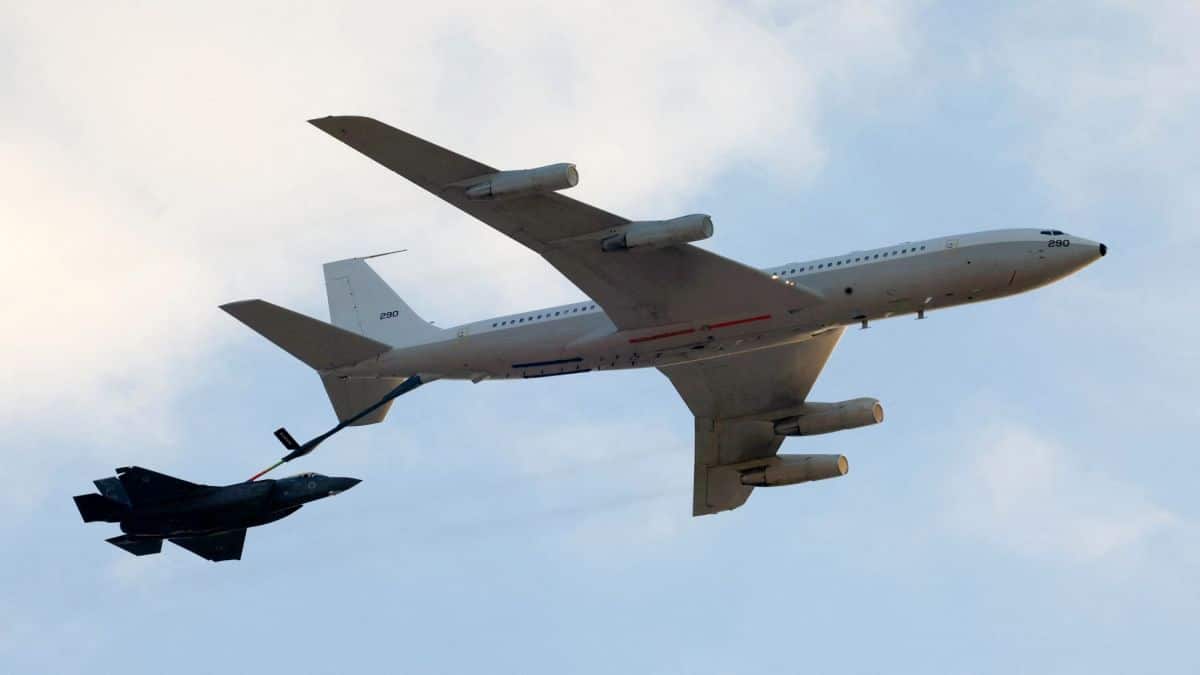
The sky over Al-Anbar province doesn't just hold the sun. It holds a weight. For a pilot banking a KC-135 Stratotanker—a flying gas station built during the Eisenhower administration—that weight is felt in the creak of the airframe and the stubborn resistance of the control column. It is a massive, metallic lung breathing in the searing desert air, carrying the lifeblood of every other jet in the theater.
When one of these giants falls, the silence that follows is deafening. For an alternative view, read: this related article.
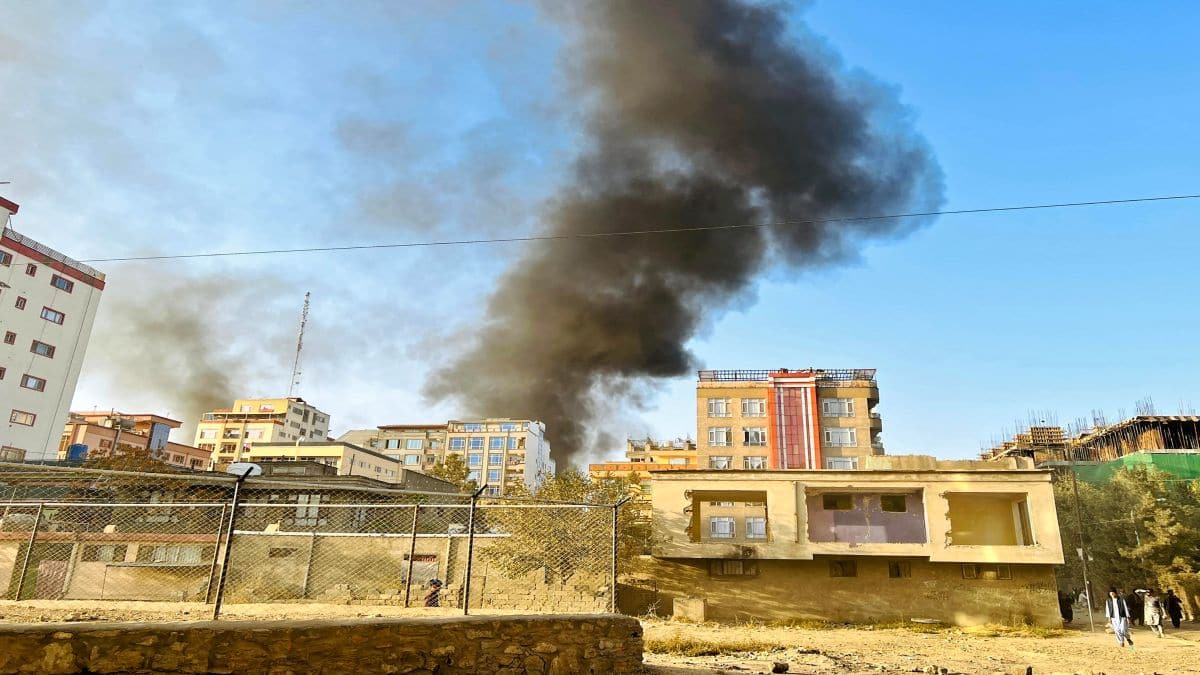
In the early hours of a Wednesday that felt like every other Wednesday, a plume of black smoke disrupted the horizon near the Al-Asad Airbase in western Iraq. The "Stratotanker," a beast of burden that has defined American aerial reach for seventy years, had met the earth. To the casual observer, it is a headline about a mechanical failure or a logistical hiccup. To the crews who live in the belly of these iron whales, it is a reminder that in the high-stakes theater of modern warfare, the most dangerous enemy isn't always a missile. Sometimes, it is the simple, relentless physics of age and the unforgiving nature of the Iraqi environment.
The Invisible Strain
Imagine a machine designed in the 1950s. It was built to endure the cold, thin air of the Stratosphere, yet here it is, decades later, orbiting a landscape where the ground temperature regularly hits 120°F. The KC-135 wasn't just a plane in this scenario; it was a relic performing a miracle. Related insight on the subject has been shared by NPR.
Every takeoff from the dusty runways of the Middle East is a battle against the elements. Fine, microscopic silica—the "moon dust" of Iraq—finds its way into every seal, every sensor, and every turbine blade. It acts like sandpaper. It grinds down the tolerances that keep a hundred tons of aluminum in the air. While official reports often lean on phrases like "technical malfunction," the reality is a slow, agonizing erosion of parts that were meant to be retired during the Cold War.
Consider a hypothetical flight engineer, let's call him Miller. Miller spends his pre-flight walkaround touching the rivets, looking for the telltale streaks of "smoking rivets" that indicate structural stress. He knows the tail number. He knows the plane’s quirks, like a temperamental fuel pump or a radio that crackles when the humidity shifts. When a crash occurs, it isn't just a loss of hardware. It is the failure of a thousand small decisions, a thousand inspections, and the ultimate exhaustion of a machine that has been asked to give too much for too long.
The Anatomy of a Descent
The initial reports from the Iraqi Ministry of Defense and the U.S. Central Command were clipped. Brief. They spoke of an "emergency landing" that ended in a "mishap." But there is no such thing as a small mishap when you are carrying tens of thousands of pounds of highly flammable JP-8 jet fuel.
The KC-135 is essentially a flying fuel tank. Its primary mission is "aerial refueling," a delicate mid-air dance where a boom operator sits in the back of the plane, staring through a small window, and directs a nozzle into a receiving jet at 500 miles per hour. It is a job that requires nerves of steel and a perfectly functioning aircraft. If the engines fail or the hydraulics seize during this window, the margin for error evaporates.
In the case of the crash in western Iraq, the focus shifted quickly to the propulsion systems. These planes have been retrofitted with CFM56 engines—vastly more powerful and efficient than the original turbojets—but even these modern marvels struggle when the air is thin and hot. Hot air provides less lift. It provides less cooling. It forces the engines to work harder to achieve the same result, pushing the internal temperatures toward the "red line" where metal begins to lose its integrity.
The Geopolitical Ghost
Why was it there? The question of "cause" isn't just mechanical; it's strategic. The western desert of Iraq remains a volatile corridor. It is the connective tissue between Baghdad and the Syrian border, a region where the shadows of insurgent remnants still flicker. The KC-135 provides the endurance for the fighters and drones that keep watch over those shadows.
Without the tanker, the reach of the Air Force shrinks. The "eyes in the sky" have to go home early. The security umbrella folds.
When the news of the crash broke, the immediate fear wasn't just for the crew, but for what the crash represented: a vulnerability. In a region where perception is as powerful as a precision-guided bomb, the sight of a burning American icon is a propaganda gift for adversaries. The investigation, therefore, isn't just about finding a broken bolt or a fried circuit board. It is about proving that the fleet is still viable, that the "Iron Whale" can still swim in these shark-infested waters.
The Human Toll of Logistics
We often talk about war in terms of "assets" and "sorties." We forget the sweat.
The maintenance crews at Al-Asad work in shifts that defy the human body’s clock. They are the ones who have to explain why a part that was ordered three weeks ago hasn't arrived. They are the ones who use "cannibalization"—taking a working part from one grounded plane to make another one fly—to meet the mission requirements.
This isn't a failure of will. It is the math of a shrinking fleet. The Air Force has been trying to replace the KC-135 with the newer KC-46 Pegasus for years, but the transition has been plagued by delays, software bugs, and budget fights. So, the old guards stay. The 1960s-era airframes keep flying because there is no other choice.
Miller, our hypothetical engineer, feels that pressure every time he signs the logbook. He isn't just signing for a piece of equipment; he is signing for the lives of the four people in the cockpit. When the "technical failure" happens, the guilt is the first thing that arrives, long before the official investigators.
Sifting Through the Ash
The wreckage in the Iraqi desert was eventually cleared. The black boxes were recovered. The data was analyzed in labs far away from the heat and the dust. What they likely found was a cascading failure—a single component, perhaps weakened by the heat, that gave way and took two others with it.
It is a phenomenon known as "Swiss Cheese Theory." For a catastrophe to happen, the holes in several layers of defense must line up perfectly. A missed hairline crack in an inspection, an unusually hot day, a sudden gust of wind during a critical maneuver. Separately, they are manageable. Together, they are fatal.
The crash in western Iraq didn't change the course of history, but it altered the lives of those involved forever. It served as a stark, fiery reminder that the infrastructure of peace and the machinery of war are equally fragile. We rely on these invisible giants to stay aloft, to keep the lights on and the borders secure, rarely thinking about the metal fatigue and the human exhaustion that threatens to pull them down.
The desert eventually reclaimed the site. The wind swept away the tracks of the recovery vehicles. But for the crews still flying those aging tankers over the Al-Anbar sands, the ghost of that Wednesday remains. They listen a little closer to the vibration of the floorboards. They check the gauges one extra time. They know that the sky is not a home, but a temporary reprieve from the gravity that eventually claims everything.
The iron whale is still out there, heavy with fuel and history, banking into the sun, waiting for the next mission to begin.