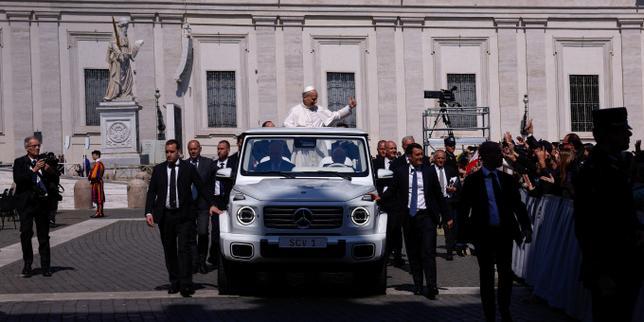
Pope Francis doesn't do "vacations" and he certainly doesn't do "photo ops" for the sake of high-society optics. When news broke about the details of the papal visit to Monaco, the world's smallest monarchy after the Vatican itself, the skeptics were quick to call it a meeting of two different worlds. One side represents the "church of the poor," and the other represents one of the densest concentrations of global wealth.
If you think this was just a polite tea with Prince Albert II and Princess Charlene, you're missing the entire point of Vatican diplomacy.
This visit wasn't about the glitz of Monte Carlo. It was a calculated move in a much larger geopolitical chess game. Monaco occupies a unique position. It’s a Catholic state by constitution, yet it sits at the heart of European financial power. For Francis, talking to Monaco isn't about endorsing luxury. It’s about reminding the people who hold the purse strings of the world that they have a moral obligation to the rest of the planet.
Why the Monaco Connection Actually Matters
Most people look at Monaco and see yachts. The Vatican looks at Monaco and sees a sovereign partner with a disproportionate amount of influence in European affairs. Since the 1981 convention between the Holy See and the Principality, the relationship has shifted from mere tradition to active cooperation on climate change and humanitarian aid.
Prince Albert II hasn't just been a figurehead. He’s been an aggressive advocate for ocean conservation, a cause that aligns perfectly with the Pope’s Laudato si’ encyclical. When they sit down behind closed doors, they aren't talking about palace renovations. They're talking about the Mediterranean. They're talking about the migration crisis hitting the shores of Southern Europe.
Monaco provides the Vatican with a gateway to elite circles that usually ignore religious leaders. It’s a "soft power" play. By maintaining a tight bond with the Grimaldi family, the Pope ensures that Catholic social teaching has a seat at some of the most exclusive tables in the world.
The Logistics of a Security Nightmare
You can't just drop a Pope into the middle of the most crowded square mile on earth without things getting messy. The security protocols for this visit were staggering. We're talking about a joint operation between the Corps des Sapeurs-Pompiers, the Monégasque police, and the Vatican’s own Gendarmerie.
Monaco’s geography is a nightmare for protection details. It's all verticality—balconies, rooftops, and winding tunnels. Every single window overlooking the route had to be accounted for. But the Pope famously hates the "Popemobile" glass box. He wants to be near people. That tension between the Pope's desire for proximity and the security team's need for a perimeter created a palpable energy in the streets.
The crowds weren't just tourists. Residents who usually stay tucked away in their private penthouses were down on the pavement. There’s something about the presence of the Bishop of Rome that pierces through the bubble of Monégasque indifference. It felt less like a parade and more like a brief, intense pause in the relentless pace of the city.
Beyond the Gold and Incense
Let’s be real for a second. The optics of a Pope walking through a city filled with Ferraris can look hypocritical if you don't understand the underlying message. Francis has spent his entire papacy railing against the "economy of exclusion." Coming to Monaco is his way of taking that message directly to the source.
During the private audience, the conversation reportedly leaned heavily into the ethics of finance. It’s easy to preach to the choir in a slum in Buenos Aires. It’s much harder, and arguably more important, to preach to the bankers in Monte Carlo.
Key Talking Points of the Private Meeting
- Environmental Stewardship: Specifically the protection of marine ecosystems in the Mediterranean.
- Migrant Support: How Monaco can use its financial influence to support NGOs working in North Africa.
- The Role of Catholic States: What it means to be a "Confessional State" in a secular 21st-century Europe.
The Prince and the Pope might seem like an odd couple, but they share a common language of "stewardship." Albert sees himself as a steward of the environment; Francis sees himself as a steward of humanity. They found a middle ground that most media outlets completely ignored in favor of talking about what the Princess was wearing.
The Grimaldi Legacy and the Church
The relationship isn't just political; it’s deeply historical. The Grimaldis have been the "Lords of Monaco" since 1297, and their legitimacy has been tied to the Church for centuries. Unlike other European nations that have aggressively secularized, Monaco keeps its ties to the Vatican front and center.
This gives the Pope a leverage point. When Francis speaks to the Monégasque people, he’s speaking to a community that still values the parish structure. The Cathedral of Monaco, where Princess Grace is buried, isn't just a museum. It’s a functioning heart of the community.
The visit served as a "recharge" for the local clergy. It’s easy for a priest in a wealthy parish to feel like their mission is just providing a service to the rich. Francis flipped that script. He challenged them to make the local church a place of genuine spiritual encounter, not just a social club for the elite.
Misconceptions About the Papal Agenda
I've seen some commentators claim this visit was about the Vatican seeking donations. That’s a lazy take. The Vatican’s finances are complex, but they don't need to fly the Pope out for a "fundraiser."
The real goal was the "Apostolate of the Ear." Francis went there to listen and to be heard in a place where people usually only hear the sound of money. He didn't come with a hat in his hand. He came with a mirror. He wanted to show Monaco what it looks like from the perspective of the "peripheries" he often talks about.
If you look at the official statements released after the visit, the language is surprisingly blunt. There’s no fluff about "luxury" or "prestige." It’s all about "responsibility," "solidarity," and "justice." That’s the Francis brand. He doesn't change his message because the carpet is more expensive.
What Happens When the Smoke Clears
The success of a trip like this isn't measured in the number of people who showed up to wave. It’s measured in the policy shifts that happen six months later. Watch Monaco’s votes in the UN. Watch where their charitable foundations direct their money in the coming year.
We'll likely see a ramp-up in Monégasque support for humanitarian corridors. There’s already talk of a joint Vatican-Monaco initiative for ocean health that could bridge the gap between scientific research and moral advocacy.
If you want to understand the impact, don't look at the photos of the Pope on the balcony. Look at the diplomatic cables that follow. Look at the way Prince Albert discusses the "common home" in his next global address. The Pope didn't go to Monaco to see the palace. He went to leave a mark on the conscience of the people who live there.
To track the actual results of this visit, keep an eye on the Journal de Monaco for new decrees regarding ethical investment and environmental protections. These are the "fruits" of the visit that won't make the front page of the tabloids but will change how the Principality operates on the world stage. Pay attention to the Prince's Foundation and its new partnerships with Catholic relief organizations—that’s where the real story is hiding. Regardless of what you think about the Church or the Monarchy, this was a masterclass in high-stakes diplomacy disguised as a pastoral visit.
The next time you see a Pope in a wealthy enclave, don't assume he's sold out. Assume he’s on a mission to disrupt the status quo from the inside. That's exactly what happened in Monaco.
Check the upcoming schedules for the Holy See’s diplomatic corps. They usually follow up these visits with technical committees that turn the Pope’s "broad visions" into actual bilateral agreements. That's where the work happens. Watch for those agreements in the next quarter. It'll tell you exactly how much Prince Albert was actually listening.