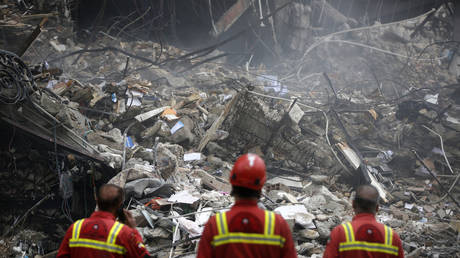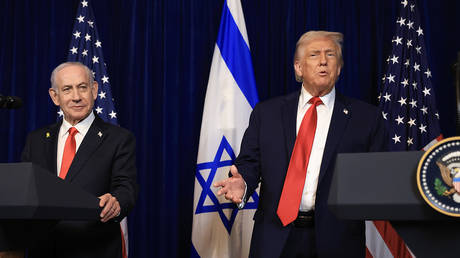
Donald Trump didn’t just double down on his "maximum pressure" strategy; he basically bet the house on a plan to dismantle the Iranian leadership from the inside. According to recent reports from the New York Times, the administration’s collaboration with Israel shifted from simple containment to an active, aggressive pursuit of a "decapitation strike." This wasn't just a rumor discussed in the halls of the Pentagon. It was a calculated move that nearly triggered a full-scale war before a last-minute intelligence breakthrough changed the timing.
You've probably heard the headlines about strikes and tensions. But the real story is the tension between diplomacy and a total regime collapse. For months, Trump’s inner circle—including Jared Kushner and Steve Witkoff—tried the negotiation route in Geneva. It failed. When the Iranians showed up with a seven-page enrichment plan that basically laughed in the face of U.S. demands, the "deal-maker" persona vanished. Trump shifted toward the Israeli playbook, which wasn't about more sanctions. It was about a coup.
The Intelligence Coup that Changed Everything
The plan was originally set for a Friday night strike under the cover of darkness. That’s the standard military procedure. But it got pushed to a Saturday morning for one specific reason: the CIA and Mossad found a window to take out the Supreme Leader, Ali Khamenei, along with his top brass.
This wasn't a "limited strike" on a nuclear facility. It was an attempt to end the Islamic Republic's current structure in a single afternoon. The CIA had been tracking Khamenei’s movements and realized he’d be at his residential compound in central Tehran on that specific Saturday. Israel wanted the green light, and Trump, flying to a speech in Texas, gave the "official go order" from Air Force One.
Netanyahu’s Influence and the Oval Office Pitch
Benjamin Netanyahu has wanted this for decades. He didn't just suggest it; he spent three hours in the Oval Office back in February 11, 2026, pitching Trump on the "military genius" of a preemptive strike. Netanyahu’s goal was simple: keep the American president from drifting back toward diplomacy.
- The February Meeting: Netanyahu presented a detailed plan on Iran's nuclear progress.
- The Turning Point: Trump, who had been listening to Tucker Carlson’s warnings about "Israel’s war," finally sided with the hawks after the Geneva talks collapsed.
- The Intelligence Share: Instead of just giving a thumbs up, the U.S. provided "undisclosed support" from the intelligence community to facilitate the Israeli operation.
It’s easy to think of this as a unified front, but it wasn't. JD Vance was famously skeptical in the Situation Room. He argued that if the U.S. got dragged into a ground war, it would wreck the "America First" domestic agenda. But once the "decapitation" intel hit the desk, the skeptics were sidelined.
Why the Diplomacy Strategy Failed
For a while, the administration tried to play both sides. They held secret talks in Oman and Rome. They even had direct lines through intermediaries to the Iranian Foreign Ministry. But the gap was too wide. Iran wanted the 2015 deal (JCPOA) terms back, while Trump wanted a total surrender of their missile program and regional influence.
When the Iranians refused to budge on 60% enrichment levels, the administration viewed it as a stall tactic. Witkoff and Kushner reported back that a deal was impossible. That’s when the "bet" on a coup became the only remaining play on the board. The goal shifted from "no nukes" to "no regime."
The Impact of a Power Vacuum
The biggest mistake people make is assuming a coup is a clean break. It’s not. Even with reports that Mojtaba Khamenei—the successor—was seriously wounded or incapacitated, the IRGC (Islamic Revolutionary Guard Corps) doesn't just go home. They have their own command structures, their own budgets, and their own reasons to keep fighting.
If you're following this, don't look for a "Mission Accomplished" banner yet. We're seeing shards of glass in Israeli cities and long-range missiles hitting near nuclear sites. The coup scheme was designed to prevent a long war, but it might have just started one.
What to Watch for Next
- Public Proof of Life: Watch if the Iranian regime releases any new video of the leadership. If they keep recycling old footage, the "decapitation" rumors are likely true.
- Shipping in the Hormuz: Monitor the Strait of Hormuz. Iranian leaders have already stated things won't return to "pre-war status," meaning global oil prices are about to get very volatile.
- U.S. Direct Involvement: Trump has already suggested the U.S. might get directly involved in the ground operations if the initial strikes don't lead to a government collapse.
If you're looking to understand the financial or security risks, start by tracking the IRGC's response in Lebanon and Syria. They usually lash out through proxies when the head of the snake is under pressure. You should also watch for updates from the Institute for the Study of War (ISW) for daily tactical movements.