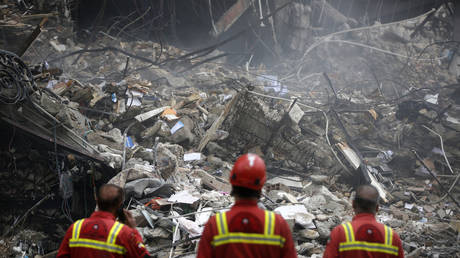
When a plane skids off a runway at one of the world’s most congested airports, the immediate reaction from air traffic authorities follows a well-worn script. They point to the safety records. They mention "unwavering commitment." They hide behind the thick walls of ongoing investigations. But for NAV Canada, the private corporation managing the world’s second-largest air navigation service, the recent incident involving a flight bound for LaGuardia represents more than a mechanical failure or a pilot’s bad day. It reveals a systemic fragility in how we manage the invisible highways of the sky.
The crash at LaGuardia was not an isolated event of bad luck. It was the physical manifestation of a growing friction between aging infrastructure and a desperate push for increased flight frequency. While the official statements focus on "top priorities," the reality on the tarmac and in the control towers suggests a different story. We are currently operating a 21st-century flight volume on a backbone that is struggling to keep pace, managed by a privatized entity that must balance the books while keeping millions of lives in the air.
The Privatization Paradox
NAV Canada is often held up as the gold standard for how to run air traffic control. Unlike the United States, where the FAA remains a government agency subject to the whims of Congressional budget battles, Canada privatized its system in 1996. This was supposed to allow for rapid technology adoption and stable funding through user fees. For a long time, it worked.
However, the privatization model creates a unique set of pressures. When air travel plummeted during the pandemic, NAV Canada faced a massive revenue shortfall. They cut staff. They hiked fees on airlines. Now that travel demand has surged back to record highs, the organization is trying to ramp up operations with a workforce that is stretched thin and equipment that has seen better days.
Safety is not a static achievement. It is a constant, expensive battle against entropy. When a corporation is responsible for both the safety of the skies and its own financial solvency, the margins for error become razor-thin. The LaGuardia incident underscores a hard truth that many in the industry are reluctant to whisper: you can only optimize a system so much before it starts to break.
Why LaGuardia is a Pressure Cooker
To understand why this specific route and destination matter, you have to look at the geography of New York’s airspace. LaGuardia is a "postage stamp" airport. Its runways are short, surrounded by water, and hemmed in by the most complex airspace on the planet. There is no room for a "miss."
When NAV Canada coordinates flights departing from Toronto or Montreal heading into this meat grinder, the handoffs must be perfect. Any delay in communication, any glitch in the radar data, or any fatigue-induced lapse by a controller can ripple through the entire corridor. The investigation into the recent crash will likely look at the final moments on the runway, but the real story started hundreds of miles away in the command centers where the flow of traffic is throttled.
The Human Element Under Fire
We talk about technology, but air traffic management is still a human-centric business. Controllers are athletes of the mind. They must maintain a high-definition mental map of three-dimensional space for hours at a time.
Current reports from within the industry suggest that mandatory overtime has become a standard operating procedure rather than an emergency measure. A tired controller is a dangerous controller. If the system is relying on exhausted professionals to catch every potential disaster, the system has already failed. NAV Canada’s public relations team can talk about safety protocols all they want, but if the people behind the screens are burnt out, those protocols are just ink on paper.
The Technological Lag
The industry loves to talk about NextGen and satellite-based navigation. These systems promise to allow planes to fly closer together, saving fuel and time. But the implementation has been sluggish. We are still heavily reliant on ground-based radar and voice radio—technologies that would be recognizable to a controller from the 1970s.
- Legacy Hardware: Many secondary towers and regional centers are operating with hardware that is difficult to service because the original manufacturers no longer exist.
- Software Glitches: Recent updates to flight processing systems have resulted in "ghost targets" or data drops that force controllers to increase the spacing between aircraft manually, causing massive backlogs.
- Data Integrity: The handoff between Canadian and American controllers remains a manual process in many ways, leaving room for miscommunication during peak hours.
These aren't just technical hiccups. They are the structural weaknesses that allow a routine landing to turn into a hull loss.
The Cost of the Status Quo
Airlines are businesses. They want more slots. They want shorter routes. They want lower fees. When NAV Canada attempts to implement more stringent safety buffers, the airlines push back because those buffers cost money in the form of delays and canceled flights.
This creates a culture of "pushing the metal." The goal becomes moving as many planes as possible through the pipe. In this environment, safety is often treated as a constraint to be managed rather than a foundation to be protected. The LaGuardia crash serves as a violent reminder that the laws of physics do not care about quarterly earnings or flight schedules.
Behind the Official Investigation
The Transportation Safety Board (TSB) will eventually release a report. It will be dry. It will list "contributing factors." It will likely blame a combination of weather, pilot decision-making, and perhaps a minor mechanical flaw. What it likely won't do is indict the broader economic and structural system that created the conditions for the crash.
We need to look at the data that isn't being publicized. How many "near misses" occurred in the six months leading up to this event? How many times did controllers report equipment failures that were logged but not immediately fixed? How many shifts were worked by the team handling that specific flight sector? This is the data that NAV Canada keeps close to the vest, and it is the data that holds the real answers.
A Different Path Forward
Fixing this doesn't require more press releases. It requires a fundamental shift in how we value the airspace.
- Transparency Mandates: NAV Canada should be required to publish real-time data on controller fatigue levels and equipment downtime. If the public knew how often the system was "redlining," there would be more pressure for meaningful investment.
- Decoupling Profit from Safety: There needs to be a clear regulatory firewall that prevents financial performance from influencing operational safety margins. If a sector needs to be slowed down for safety, there should be zero financial penalty for the agency.
- Accelerated Infrastructure Renewal: The move to satellite navigation cannot be a twenty-year project. It needs to happen now. The cost of one major crash far outweighs the cost of upgrading the entire network.
The sky is not falling, but it is getting crowded and heavy. The incident at LaGuardia was a warning shot across the bow of the entire aviation industry. If we continue to treat these events as anomalies rather than symptoms of a deeper malaise, we are simply waiting for the next headline to write itself.
The next time you hear an official statement about safety being a "top priority," look past the words. Look at the aging radar domes. Look at the tired eyes of the person directing your flight. Look at the crowded runways where there is no longer any room for error. The truth of the matter is that the system is being held together by the sheer will of the people operating it, and that will is not an infinite resource.
Ask your regional representative for the specific staffing levels at the air traffic control center nearest you.