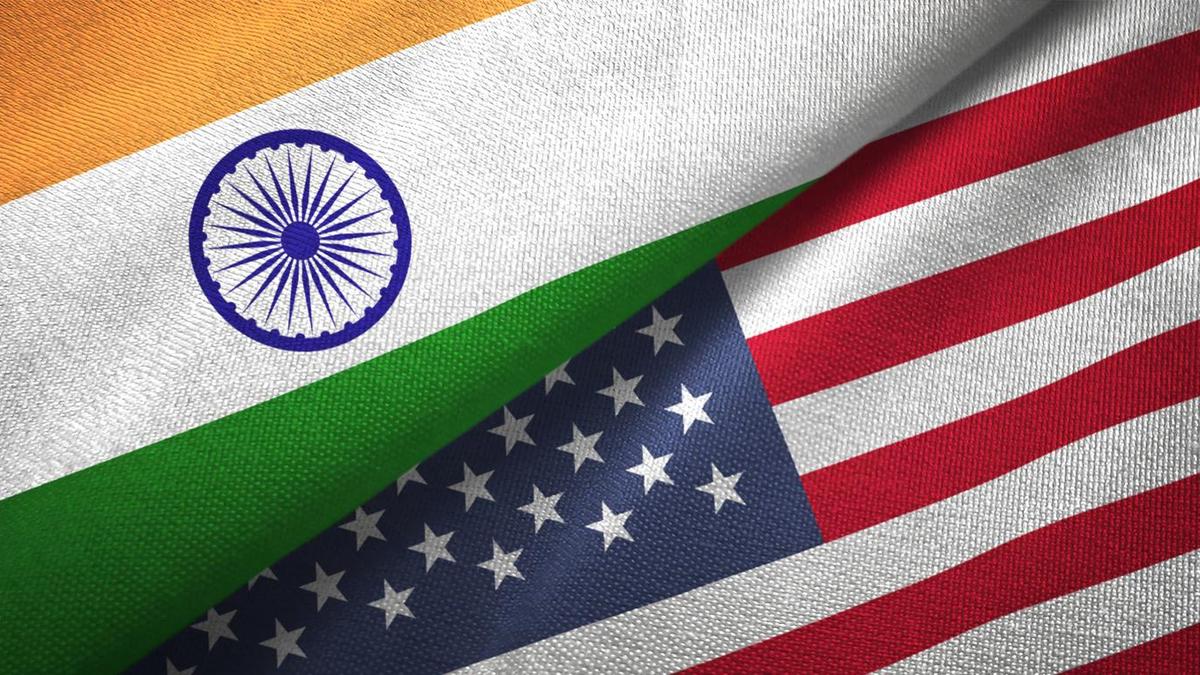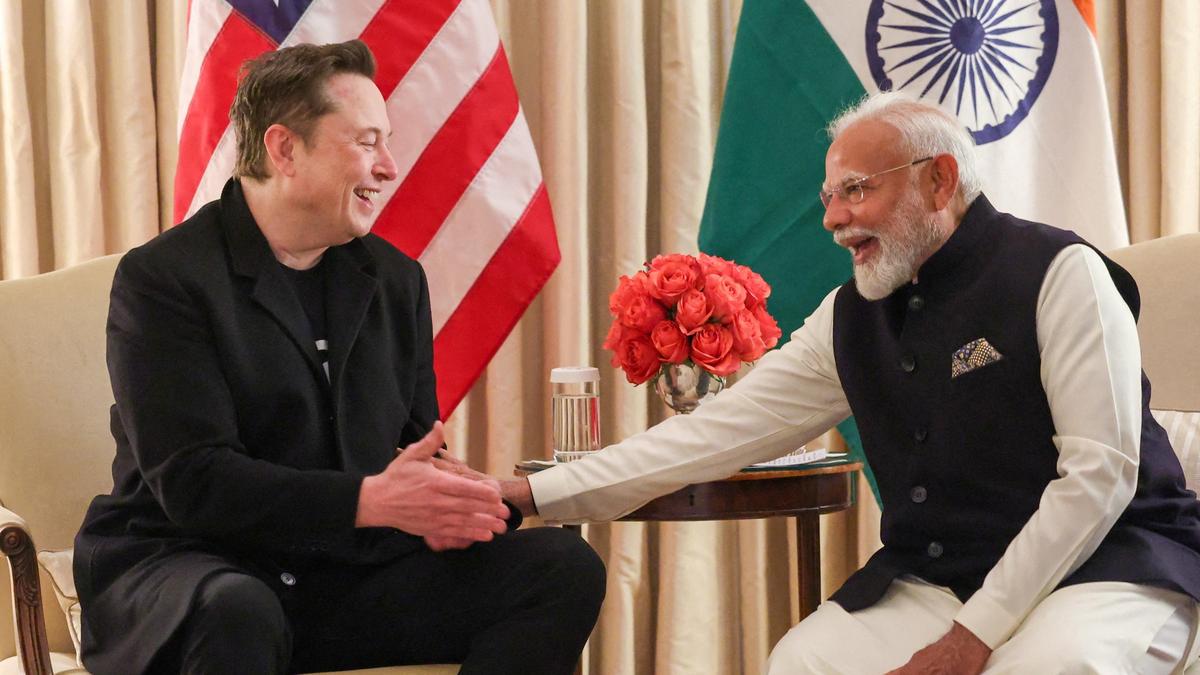
The dial-in tone of a secure diplomatic line is a lonely, rhythmic sound. It is the sound of the world’s most powerful people waiting for one another. Usually, that digital waiting room is reserved for those with flags behind their desks and constitutional mandates in their pockets. But when the line clicked open for a high-stakes call between Indian Prime Minister Narendra Modi and U.S. President Donald Trump, a third breathing presence joined the encrypted frequency.
Elon Musk was on the line.
He wasn’t there as a translator. He wasn’t there as a recording secretary. He was there as a participant in a conversation regarding the spiraling volatility of West Asia—a region where the scent of cordite often outpaces the progress of diplomacy. For decades, the script of international relations has been written in the ink of treaties and the blood of borders. Now, it is being rewritten in silicon and private capital.
The Architect of the Invisible
To understand why a billionaire tech mogul is suddenly a staple of the White House’s most sensitive geopolitical maneuvers, you have to look past the rockets and the electric cars. Look instead at the sky.
Imagine a village in a conflict zone where the local fiber optic cables have been severed by shelling. In the old world, that village is dark. It is silent. It is cut off from the eyes of the world. In the new world, a soldier or a civilian looks up, points a small rectangular dish at the stars, and suddenly, the internet returns. This is the reality of Starlink. It is a private nervous system for the planet, owned not by a government, but by a man who shares memes on the same platform he bought for $44 billion.
When Modi and Trump discuss West Asia, they aren't just talking about oil prices or troop movements. They are talking about the infrastructure of the future. India, a rising titan with a massive appetite for energy and digital sovereignty, needs stable corridors. Trump, returning to the fray with a "deal-maker" ethos, wants to reshape the map. Musk? Musk is the one building the tools that make the map functional.
The White House described the call as "productive." That is a sanitized, bureaucratic word for a seismic shift. In diplomatic circles, "productive" can mean anything from "we didn't yell at each other" to "we just mapped out the next decade of regional security." But the presence of a private citizen in a call of this magnitude signals that the era of the "Great Power" has been superseded by the era of the "Great Platform."
The Emotional Weight of a Digital Peace
Think of a young entrepreneur in New Delhi, trying to secure a supply chain that runs through the Suez Canal. Or a father in a Middle Eastern metropolis, wondering if the next wave of regional instability will wipe out his digital savings. To these people, the high-level politics of Modi and Trump feel like weather—something that happens to them, something they cannot control.
But when you add the technological layer, the weather changes.
If Musk is at the table, the conversation shifts from "How do we stop this war?" to "How do we build a future that makes war obsolete?" It is a gamble on the idea that economic and technological integration can act as a better deterrent than an aircraft carrier. It is the hope that if everyone is connected to the same grid, using the same satellites, and driving cars powered by the same batteries, the cost of conflict becomes too high for anyone to pay.
There is a tension here, though. It’s a tension that many of us feel when we realize our lives are increasingly governed by people we didn't vote for. We trust the prime minister because of the ballot box. We trust the president because of the constitution. Why do we trust the technologist? Perhaps we don't. But we rely on him. That reliance is a form of power that bypasses the traditional checks and balances of the State Department or the Ministry of External Affairs.
The Deal and the Discord
During the call, the trio reportedly touched on the "West Asia crisis"—a broad term that covers everything from the Red Sea shipping lanes to the proxy battles that have defined the region for half a century. The stakes are physical. They are human.
Consider the "hypothetical" merchant mariner, let's call him Arjun, standing on the deck of a container ship carrying Indian electronics to European markets. As he nears the Bab el-Mandeb strait, his safety depends on more than just his country's navy. It depends on real-time intelligence, satellite monitoring, and the political will of leaders halfway across the globe to keep the lanes open. If Trump and Modi are the ones providing the political will, Musk is the one providing the eyes.
The complexity of this three-way dynamic is staggering. India has long maintained a delicate balancing act in the Middle East, maintaining strong ties with Israel while ensuring its energy security through partnerships with Arab nations. Trump’s "Abraham Accords" legacy seeks to lean into that same spirit of normalization. Musk’s involvement suggests that the next phase of this normalization will be tech-heavy. We are talking about AI-driven border security, desalinated water projects funded by venture capital, and a digital Silk Road that replaces ancient dust with light-speed data.
But diplomacy is a fragile art. It requires a nuance that the tech world, with its "move fast and break things" mantra, often ignores. A single tweet can cause a diplomatic incident. A single decision to toggle a satellite array on or off can change the course of a local skirmish. The "productive" nature of the call suggests that, for now, the interests of the sovereign and the tycoon are aligned.
The Friction of Sovereignty
The real story isn't that a phone call happened. It’s that the gatekeepers of the world have accepted a new member into their club.
In the past, a president might call a CEO to discuss jobs or taxes. They wouldn't call them to discuss the "West Asia crisis" unless that CEO was essentially acting as a shadow diplomat. This is a recognition that the tools of war and peace are no longer strictly in the hands of the military. When a company can provide a nation with a superior intelligence suite or a more resilient communication network than its own government can, the CEO of that company becomes a de facto head of state.
This creates a strange, new atmosphere in the halls of power. There is a sense of vertigo. Standard diplomatic protocols are being bypassed. The traditional "sherpas"—the career diplomats who spend months preparing these calls—are finding themselves replaced by direct lines and personal relationships.
It feels like we are watching the birth of a new kind of empire. Not one based on land, but one based on the stack. The energy stack, the data stack, the transport stack. If you control the stack, you are on the call.
The Silence After the Hang-up
The call ends. The lines are disconnected. In Washington, the press corps receives a brief, two-paragraph readout. In New Delhi, the official channels echo the sentiment of cooperation and mutual respect. But the world feels different.
The invisible stakes of this conversation are found in the quiet moments of the people living in the crosshairs of the crisis. For them, the presence of Musk on that call represents a wild card. It is a promise of innovation and a threat of unpredictability. It is the realization that the fate of a desert border or a maritime strait might now be discussed between a politician in a suit and a man who dreams of dying on Mars.
We are no longer living in a world of simple bilateral agreements. We are living in a world of nodes and networks. The Modi-Trump-Musk triangle is the most visible manifestation of this shift. It is a world where the distinction between a state's interest and a corporation's vision has blurred until it is almost gone.
The sun sets over the Arabian Peninsula, and the satellites—Musk’s satellites—begin to twinkle in the dusk, visible to the naked eye. They are a constant reminder that the sky is no longer a void. It is a crowded, busy, and highly contested piece of real estate. And as long as those lights are up there, the man who put them there will have a seat at the table, listening to the dial-tone, waiting for the world to pick up.
The era of the solitary statesman is over; the era of the triumvirate has begun, and the third chair is occupied by a man who doesn't need a passport to change the world.