The sound of a home collapsing is not a single, clean break. It is a sequence of betrayals. First comes the roar that isn’t quite thunder, followed by the screech of rebar being forced to bend against its will, and finally, the heavy, suffocating silence of pulverized concrete settling into the lungs of the neighborhood.
In the city of Urmia, tucked into the northwest corner of Iran, that silence recently became the loudest thing on the street.
When the Red Crescent crews arrived, their cameras captured what words usually fail to convey. We often see war or "strikes" through the sterilized lens of a satellite map—colored dots representing targets, thin lines representing trajectories. But on the ground in Urmia, the reality is measured in the thickness of the dust coating a child’s discarded shoe. It is measured in the way a kitchen table, once the site of breakfast arguments and evening tea, now sits splintered under a ceiling that decided to become a floor.
The video footage released by the rescue teams doesn't offer a political manifesto. It offers a raw, shaky-cam look at the anatomy of a disaster. You see men in bright vests, their hands moving with a frantic precision, digging through layers of what used to be a life. Every brick they move is a gamble. Every shovelful of debris is a prayer that they won't find what they are looking for—and a simultaneous terror that they might.
The Weight of the Invisible
Urmia is a place of ancient history and complex borders. It is a city where the air usually smells of grapes and the salt of the shrinking lake nearby. Now, in the wake of the strike, the air smells of cordite and old insulation.
Consider a woman named Maryam. She is a composite of the stories that emerge from these ruins, a shadow representing the thousands who live in the crosshairs of geopolitical chess. Ten minutes before the strike, Maryam might have been checking the stove. Maybe she was wondering if she had enough flour for the week. Then, the world turned inside out.
The structural integrity of a house is a metaphor for our sense of safety. We move through our hallways with the subconscious assumption that the walls will remain upright. When a strike occurs, that psychological contract is shredded. It isn't just the physical building that falls; it is the very idea of "home" as a sanctuary.
The Red Crescent footage lingers on a specific scene: a pile of rubble where a multi-story residence once stood. The camera pans slowly, almost reluctantly. You see the jagged edges of cinder blocks. You see the tangled mess of electrical wiring, looking like the veins of a giant that has bled out.
Why does this matter to someone sitting thousands of miles away?
Because the "aftermath" is never just about the day of the event. It is about the Tuesday three weeks later when the sirens have stopped, the cameras have left, and a family is still staring at a hole in the earth where their history used to live. The Red Crescent isn't just documenting a crime scene; they are documenting the erasure of a baseline.
The Geometry of Grief
There is a specific kind of math involved in these strikes.
A missile has a radius of destruction. A budget. A set of coordinates. But grief doesn't follow a radius. It ripples outward, touching the neighbor who heard the blast and now can't sleep without the light on. It touches the first responder who has to decide which pile of stones to prioritize when he hears a faint tapping from beneath the earth.
In the Urmia footage, the rescuers work under the harsh glow of portable floodlights as day turns to a bruised purple dusk. Their shadows stretch long and thin over the ruins, making them look like giants trying to piece a broken toy back together.
The physical toll is documented in the numbers: the number of homes leveled, the number of injured transported to local clinics, the number of cubic meters of debris. But the numbers are a lie. Or at least, they are an incomplete truth.
How do you calculate the loss of a wedding album? How do you quantify the terror of a five-year-old who now associates the sound of a low-flying plane with the end of the world?
The Red Crescent workers don't try to answer these questions. They just dig. Their gloves become stained with the gray grime of the city's bones. They pass buckets of rubble hand-to-hand in a rhythmic, somber dance. It is a slow, agonizing process.
Efficiency is impossible when you are searching for heartbeats.
The Geography of the Strike
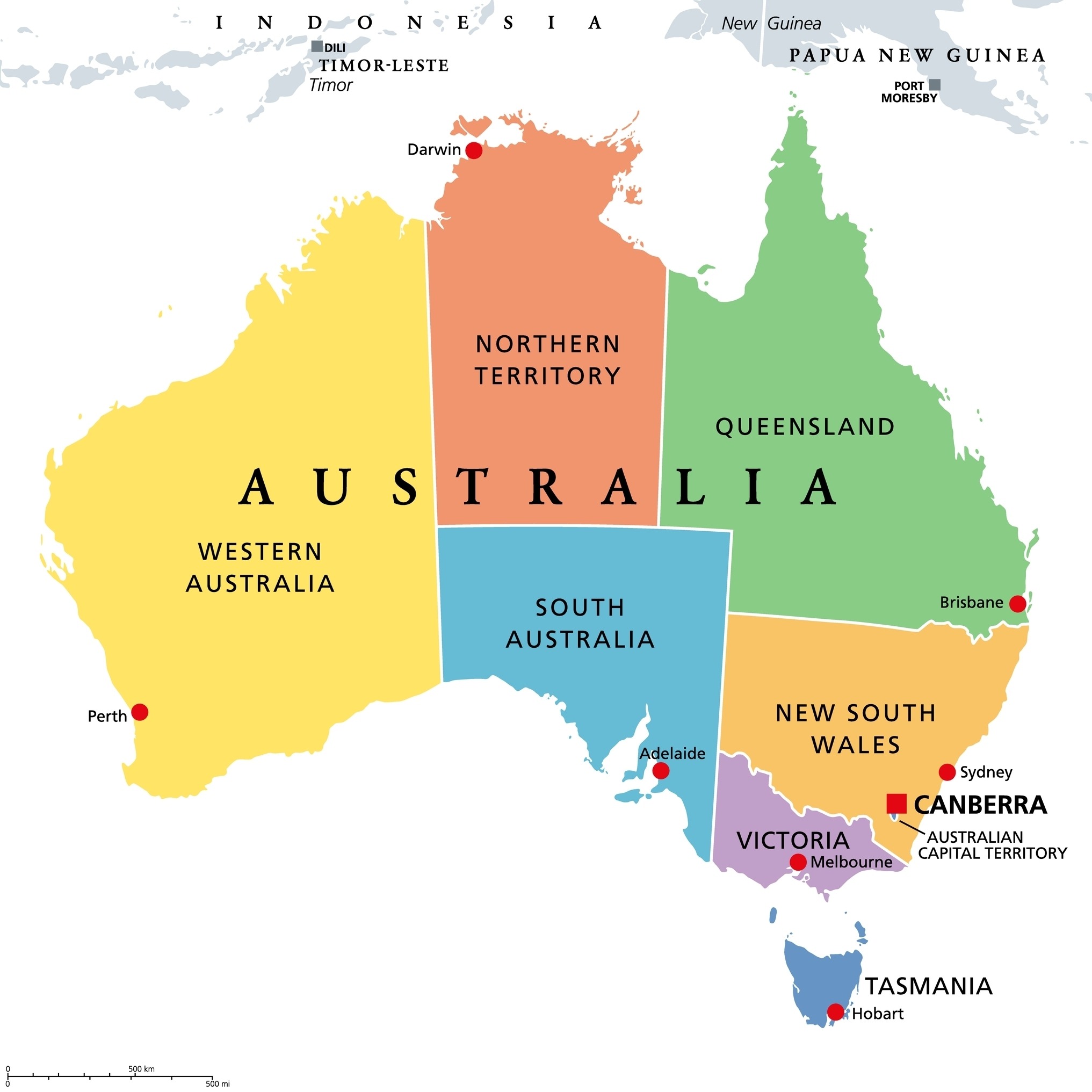
Urmia sits near the borders of Turkey and Iraq. Its location makes it a strategic pivot point, a place where different worlds brush against one another. This proximity is often a blessing for trade and culture, but in times of conflict, it becomes a curse.
The strike on these homes isn't an isolated incident in the vacuum of a news cycle. it is part of a larger, more jagged pattern of escalation that has been defining the region for decades. When we look at the video of the smoking ruins, we are looking at the latest sentence in a very long, very violent book.
The Red Crescent’s presence is a reminder that while the people who order strikes speak in terms of "assets" and "neutralization," the people who handle the consequences speak in terms of bandages and oxygen.
The disparity is jarring.
On one side, you have the high-tech precision of modern weaponry—the ability to reach across hundreds of miles to erase a specific set of GPS coordinates. On the other, you have the low-tech desperation of a man with a shovel and a crowbar, trying to find his brother.
The technology of destruction has outpaced the technology of healing. We are much better at tearing things down than we are at putting them back together.
The Persistence of the Mundane
The most haunting parts of the footage are the things that survived.
A floral curtain flapping in the wind, still attached to a window frame that no longer has a wall to support it. A plastic chair sitting perfectly upright in the middle of a wasteland of shattered glass. A tea kettle, dented but recognizable, resting on top of a heap of charred wood.
These objects are anchors. They remind us that the people living here weren't "combatants" or "collateral." They were people who liked their tea a certain way. They were people who chose those specific floral curtains because they thought the color made the room feel warmer.
The strike turns the personal into the public. It takes the private intimacy of a bedroom and exposes it to the cold, judgmental eye of the world. Suddenly, your life is a "site." Your belongings are "evidence."
The Red Crescent video shows people standing on the periphery of the cordoned-off area. They aren't screaming. Most of them are just watching. There is a specific kind of shock that looks like boredom. The brain can only process so much trauma before it simply shuts off the valves, leaving the person in a state of hollowed-out observation.
They watch the rescuers. They watch the smoke. They watch the dust settle.
The Echoes in the Rubble
We often talk about "recovery" as if it is a destination. We think that once the debris is cleared and the houses are rebuilt, the event is over.
But the people of Urmia know better.
The scars on the land might heal, but the scars on the community’re different. Every time a car backfires or a heavy door slams, a dozen heads will turn. A dozen hearts will skip a beat. The strike has rewritten the local language of sound.
The Red Crescent’s role is to provide the immediate—the blood, the splints, the temporary shelter. But who provides the long-term? Who fixes the soul of a street that has seen its neighbors buried under their own roofs?
As the video winds down, the camera catches a glimpse of a rescue worker taking a break. He sits on the bumper of an ambulance, his head in his hands. He isn't looking at the ruins anymore. He is looking at his own boots.
In that moment, the entire geopolitical conflict disappears. There is no "Iran," no "foreign interests," no "strategic objectives." There is only a tired man in a dirty vest who has seen too much.
The dust in Urmia will eventually be washed away by the rains. The houses will likely be replaced by newer, perhaps uglier, structures. The news cycle will move on to the next tragedy, the next video, the next set of shaky-cam footage from a different city with a different name.
But for those who were there, the world ended and began again in the span of a few seconds. They are living in the "after," a time period that has no expiration date. They are the ones who have to figure out how to live in a house that they no longer trust.
The video ends. The screen goes black. But in the mind's eye, the dust is still falling. It is a fine, gray powder that gets into everything—your clothes, your hair, your memories. It is the weight of a world that can be unmade at any moment, for reasons that never quite seem to justify the cost.
The ruins are silent now. The rescue teams have done what they can. What remains is the slow, quiet work of surviving the aftermath—a task that requires more courage than the strike ever did.
The earth in Urmia is heavy. It is heavy with the weight of the homes it now holds, and heavier still with the stories of the people who used to walk upon it.