The Middle East has crossed a threshold where rhetoric no longer functions as a buffer. Iran’s decision to launch a coordinated wave of strikes against Israeli targets and American assets in the Persian Gulf represents a calculated gamble that the previous era of "shadow wars" is over. This is not a mere symbolic gesture or a face-saving volley. It is a direct challenge to the regional security architecture that has held—however tenuously—for decades. Tehran is betting that the cost of a full-scale regional conflict is now higher for Washington and Tel Aviv than it is for the Islamic Revolutionary Guard Corps (IRGC).
By targeting both Israel and U.S. bases in the Gulf simultaneously, Iran has effectively merged two separate theaters of conflict into a single, existential front. This strategy forces the United States to choose between defending its own personnel or backing an Israeli counter-offensive, all while the global energy market watches the Strait of Hormuz with bated breath.
The Architecture of the Strike
Military analysts often mistake volume for intent. In this instance, the "vague d’attaques" (wave of attacks) announced by Tehran serves a specific tactical purpose: overwhelming integrated air defense systems. By utilizing a mix of low-cost loitering munitions, cruise missiles, and medium-range ballistic missiles, the IRGC tests the saturation limits of the Iron Dome, David’s Sling, and the American Aegis systems stationed offshore.
The coordination is what stands out to veteran observers. Reports indicate launches from multiple geographic locations, including Iranian soil and proxy positions in Iraq and Yemen. This "concentric fire" approach ensures that defenders cannot focus on a single vector of approach. It also signals that the "Axis of Resistance" is operating under a unified command structure, moving beyond the decentralized harassment of previous years.
The Gulf Assets in the Crosshairs
Focusing only on the hits in Israel misses half the story. The strikes against American bases in the Gulf are designed to paralyze. If the U.S. cannot guarantee the safety of its own installations in Qatar, Bahrain, or the UAE, its ability to project power and protect shipping lanes evaporates. This puts the Gulf monarchies in a precarious position. They have spent years trying to balance their security ties with Washington against the geographical reality of living next door to a heavily armed Iran. Now, that balance has shattered.
The IRGC knows that every missile fired at a U.S. base is a message to Riyadh and Abu Dhabi. The message is simple: Washington cannot protect you if the sky turns black with drones. This psychological warfare is just as potent as the physical damage to hangars or radar arrays.
The Trump Factor and the Timing of Escalation
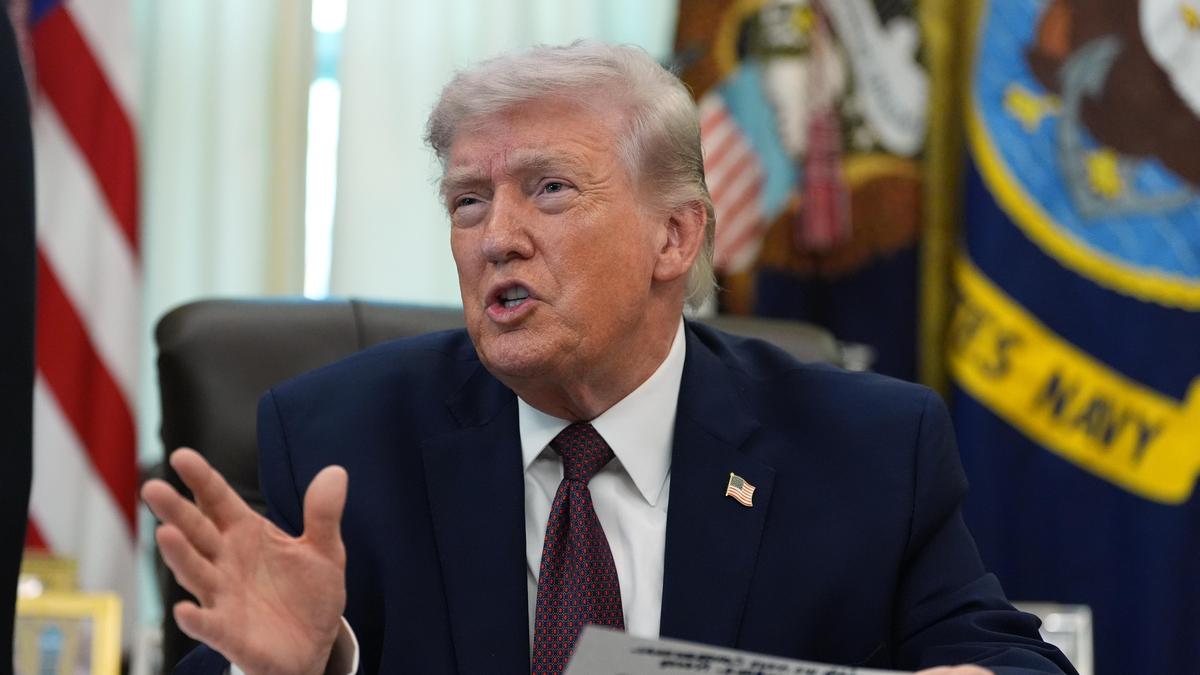
The timing of these attacks, positioned just before a major address by Donald Trump, reveals a sophisticated understanding of American political fractures. Tehran is playing to a domestic U.S. audience as much as a regional one. By escalating now, they create a "fait accompli" that forces the current and future administrations into a reactive stance.
If the American response is perceived as weak, it emboldens hardliners within the Iranian clerical establishment. If the response is massive, it risks dragging the U.S. into the "forever war" that a large segment of the American electorate has grown to loathe. Iran is weaponizing the American election cycle, betting that political polarization in the West will prevent a coherent, long-term strategic response.
Intelligence Failures or Calculated Risks
Questions are already circulating regarding why the buildup to this "wave" wasn't effectively deterred. Deterrence only works when the threat of retaliation is credible and the adversary has something to lose that they value more than the objective at hand. For the IRGC, the objective is the total removal of U.S. influence from the region. At this stage, they appear to have calculated that their domestic survival is more at risk from perceived inaction than from a kinetic exchange with a distracted superpower.
We are seeing the byproduct of a multi-year shift in Iranian military doctrine. They have moved from "strategic patience" to "active deterrence." This means they no longer wait for a blow to land before striking back; they initiate conflict to reset the terms of engagement.
The Economic Shrapnel
The immediate casualty of these attacks isn't just infrastructure; it is the global price of Brent crude. The Gulf is the world's gas station, and the "vague d’attaques" has sent insurance premiums for tankers into the stratosphere. Even if not a single drop of oil is lost, the friction in the supply chain acts as a tax on the global economy.
Iran’s leverage over the Strait of Hormuz remains their ultimate "dead man's switch." By demonstrating that they can and will hit bases in the vicinity, they remind the world that they can choke the global energy supply at will. This is a form of economic terrorism that requires no long-term occupation of territory—only the credible threat of persistent instability.
The Role of Cyber Warfare in Modern Siege
While the physical missiles dominate the headlines, a secondary, invisible front is likely being contested. Historically, Iranian kinetic strikes are accompanied by offensive cyber operations targeting civilian infrastructure, financial systems, and water treatment plants. This dual-track approach aims to create a sense of total vulnerability within the Israeli and American domestic spheres.
The goal is to prove that no one is safe, whether they are a soldier in a desert outpost or a civilian in a high-rise in Tel Aviv or New York. This is the hallmark of modern asymmetric warfare: the blurring of the front lines until the entire world becomes a combat zone.
The Proxy Trap
One of the most dangerous elements of this escalation is the "proxy trap." By launching attacks from various territories, Iran maintains a degree of plausible deniability while forcing its enemies to decide whether to strike the source (Iran) or the symptom (the proxies). Striking Iran directly risks a global conflagration. Striking the proxies is an expensive game of "whack-a-mole" that does little to diminish the IRGC's core capabilities.
The U.S. military has spent two decades fighting these proxies with varying degrees of success. However, those were isolated skirmishes. This is a synchronized symphony of violence. The sheer scale of the current operation suggests that the IRGC has been stockpiling the necessary components—often using dual-use technologies smuggled past international sanctions—for exactly this moment.
The Failure of Sanctions as a Shield
The current crisis exposes the limits of economic pressure. For years, the mantra in Washington has been that sanctions would eventually starve the Iranian military machine. The reality on the ground suggests otherwise. The IRGC has developed a self-sufficient military-industrial complex that thrives on black-market trade and partnerships with other sanctioned states.
They are not fighting with the weapons of a bankrupt nation. They are fighting with high-precision instruments of war that they have learned to mass-produce on the cheap. This "democratization of destruction" means that even a crippled economy can still field a military force capable of challenging a superpower.
The Redlines Have Moved
Every time a redline is crossed without a definitive shift in the status quo, a new, more dangerous redline is established. The "attacks against U.S. bases" were once considered an unthinkable escalation that would trigger an immediate and overwhelming response. By making these attacks frequent and increasingly heavy, Tehran has "normalized" a level of violence that would have been a casus belli ten years ago.
The current situation is not a flare-up. It is a fundamental realignment. The Islamic Republic is no longer interested in a return to the JCPOA or any other diplomatic framework that limits its regional reach. They are looking for a total exit of American forces from their "near abroad."
Tactical Realities on the Ground
For the troops stationed at these Gulf bases, the reality is a grim cycle of sirens and bunkers. The effectiveness of missile defense is high, but it is not 100%. In a saturation attack, the "leakers"—the missiles or drones that get through—only need to hit one high-value target to change the political narrative. A single direct hit on a barracks or a command center provides the IRGC with the "victory" they need for their propaganda machine.
The Israeli response will likely be asymmetrical. They cannot afford a war of attrition against a nation with Iran's depth of territory and population. Instead, they will target the "head of the snake"—the leadership and the technical infrastructure that enables these strikes. This raises the stakes to a level where miscalculation by either side leads to a general war.
Beyond the Discourse
As the world waits for the political fallout and the inevitable speeches, the reality remains that the geopolitical map of the Middle East is being redrawn in fire. The "vague d’attaques" is a declaration that the old rules no longer apply. The U.S. and its allies are no longer facing a rogue state, but a regional power that is willing to risk everything to break the existing order.
This isn't about one speech or one election cycle. It is about a decades-long struggle for hegemony that has finally reached its boiling point. The question is no longer if there will be a conflict, but how long the current one can be contained before it consumes the entire region. The "why" is clear: Tehran believes the West is tired and divided. The "how" is through a relentless, multi-vector assault that turns the Gulf into a gauntlet.
The response to this escalation will define the security of the 21st century. If the IRGC's gamble pays off, the era of Western dominance in the Middle East is effectively over. If it fails, the regime in Tehran may find that the fire they started is the one that eventually consumes them.