The air in an international terminal has a specific, recycled taste. It’s a mix of expensive perfume from the duty-free shops, the metallic tang of jet fuel, and the silent, vibrating hum of ten thousand different anxieties. For most of us, the airport is a liminal space where the rules of the "real world" are suspended. We eat breakfast at 4:00 AM. We pay nine dollars for a bottle of water. We exist in a state of perpetual waiting, suspended between where we were and who we are about to become.
But lately, that suspension has felt heavier. If you’ve walked through a major hub like JFK, O'Hare, or Miami recently, you might have noticed them. They aren't the TSA agents barking orders about laptops and liquids. They aren't the airline staff trying to manage a boarding scrum. They are the men and women in tactical vests, the agents of Immigration and Customs Enforcement (ICE), standing as stationary pillars amidst the flow of rolling suitcases and frantic travelers.
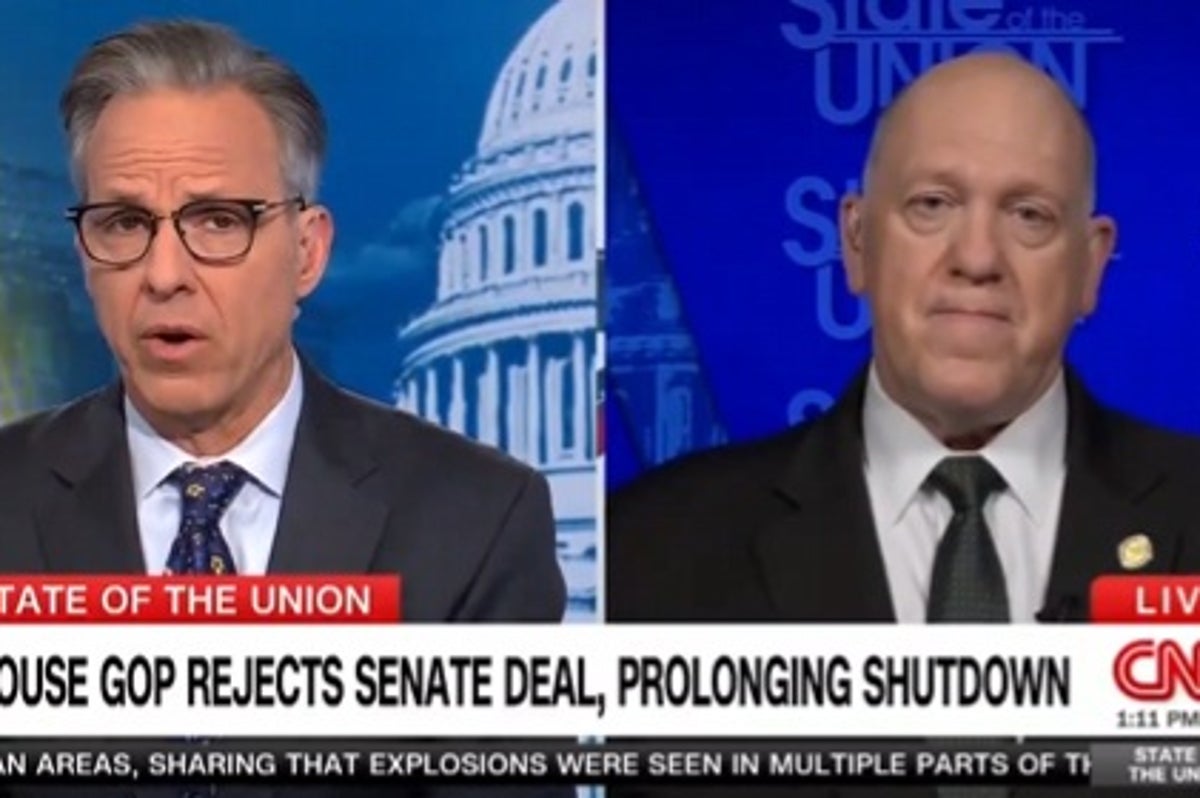
They are there because of a shift in the machinery of the state. During the recent government shutdown, these agents were surged into airports to bolster a system under strain. Now, as the gears of Washington begin to turn again, a single question hangs over the terminal like a delayed flight: Are they staying?
Tom Homan, the man currently steering the ship of border enforcement, isn't giving away the flight plan. When asked if these agents would pack up and return to their traditional posts once the shutdown dust settled, his response was a calculated, rhythmic "We’ll see."
It is a phrase that carries the weight of a gavel.
The Anatomy of a Presence
To understand why a few uniforms at a boarding gate matter, you have to look past the politics and into the eyes of the people moving through the concourse.
Consider a woman we will call Elena. She is a legal permanent resident, a grandmother who has lived in Chicago for thirty years. She is returning from a funeral in San Salvador. She has her green card. She has her passport. She has done everything right. Yet, as she rounds the corner and sees a phalanx of ICE agents standing near the baggage claim, her heart rate spikes. It’s a physical reaction—a tightening of the chest that has nothing to do with guilt and everything to do with the atmospheric pressure of enforcement.
When enforcement moves from the shadows of administrative buildings into the bright, fluorescent reality of a public terminal, the psychology of the space changes. The airport ceases to be a bridge. It becomes a filter.
Homan’s "we'll see" isn't just a coy remark to a reporter. It is an acknowledgment that the "surge" model of policing is being tested as a permanent fixture. During the shutdown, the logic was simple: the system was shorthanded, and resources needed to be where the people were. But the metrics of success in these environments are often invisible. How do you measure a deterrent? How do you quantify the feeling of a border that has moved five hundred miles inland to meet you at the Cinnabon?
The Friction of the Machine
The logistics of border enforcement are often described in dry, cold statistics—apprehension numbers, bed space, judicial backlogs. But the reality is a friction-filled human drama.
Moving ICE agents into airports isn't like moving chess pieces across a board. It involves shifting personnel away from interior enforcement—the "at-large" arrests in communities—and placing them in a high-visibility, high-traffic environment. This creates a ripple effect through the entire Department of Homeland Security.
If the agents stay, the airport becomes a hardened node. If they leave, the "border czar" risks appearing as though he is softening a line he promised to hold. Homan is a man who speaks in the language of results. He views the border not as a line on a map, but as a series of gates that must be monitored with unwavering consistency. To him, the airport is just another gate.
But for the travel industry, the presence of tactical units is a complication. Tourism and commerce rely on the "seamless" experience—that word we use to describe a world where we don't have to think about the plumbing of the state. When the plumbing is visible, when the agents are there, the illusion of the global village cracks.
Travelers feel it. The staff feels it. Even the agents feel it.
The Weight of the "See"
What are we waiting to "see," exactly?
We are waiting to see if the temporary becomes the traditional. In the history of American bureaucracy, "temporary measures" have a funny way of becoming permanent landmarks. The TSA itself was a temporary response to a crisis. Twenty-five years later, we don't know how to fly without taking off our shoes.
The presence of ICE at the gates represents a new layer of the "Total Border" concept. This is the idea that the border is not a perimeter, but a condition that follows you. It’s in the Greyhound station in Arizona. It’s on the train in Vermont. And now, it’s at the gate where you wait for your flight to visit your grandkids.
Homan’s hesitation to commit to a withdrawal suggests a strategic evaluation of this new territory. If the presence of agents at airports has resulted in a "cleaner" flow of high-priority targets, or if it has served as a psychological deterrent that outweighs the logistical cost, they will stay.
The "human element" here isn't just the immigrant or the traveler. It’s the agent, too. Imagine standing for ten hours in a terminal, watching a sea of humanity pass by, tasked with finding the needle in a haystack of three million people. It is a grueling, repetitive, and often soul-crushing exercise in hyper-vigilance. They are part of a machine that is currently being asked to do more with less, in a country that cannot agree on what "more" should look like.
The Echo in the Terminal
There is a specific kind of silence that happens when a large group of people all realize they are being watched. You can hear it in a crowded terminal when a security sweep moves through. The chatter drops an octave. People instinctively reach for their pockets to ensure their ID is still there.
This is the invisible stake of the "We’ll see."
If the agents remain, we are witnessing the final erasure of the distinction between the "border" and the "interior." The airport becomes a permanent checkpoint, a place where your right to move is subject to a secondary level of scrutiny that goes beyond safety and into the realm of status.
For the administration, this is about security and the rule of law. It’s about ensuring that the shutdown didn't create a vacuum that could be exploited. They argue that the presence of law enforcement should never be a cause for concern for those following the law.
But human emotion doesn't follow the logic of a legal brief.
A father traveling with his young children doesn't see a "policy implementation." He sees a tactical vest and a badge, and he wonders if the world his children are inheriting is one where the default state of being is "under suspicion." He wonders if the "We’ll see" means that the next time they fly, there will be more badges, more gates, and more questions.
The shutdown may be over, but the shadow it cast on the infrastructure of travel is still lengthening. The agents haven't left yet. Their bags aren't packed. They are waiting for the word from the top, while the rest of us move around them, trying to remember what it felt like to walk through a terminal without wondering if the person standing by the water fountain was measuring our right to be there.
The planes continue to take off. The arrivals board flickers with new cities and new times. But at Gate B12, the man in the vest remains, a silent reminder that the border is no longer something you leave behind when you take to the sky. It is something that waits for you at the other end, watching the jet bridge, waiting for you to step off the plane.
We are all waiting to see what happens when the waiting finally ends.
Imagine the sound of a thousand rolling suitcases on a tile floor. It is the sound of a country in motion. Now imagine that sound muffled by the weight of a gaze that doesn't blink. That is the sound of the new American airport. It is a quiet, rhythmic thrum of uncertainty.
The decision won't be made in the terminal. It will be made in a carpeted office in D.C., scrawled on a memo that will eventually trickle down to the men and women standing in the heat of the Miami concourse or the chill of a Seattle morning. Until then, the "We’ll see" remains the only flight plan we have.
A child drops a stuffed bear near the security line. An agent in a dark blue vest picks it up and hands it back to the mother. For a second, the tension breaks. There is a smile, a thank you, a moment of shared humanity. Then the mother moves on, clutching the child’s hand a little tighter, and the agent returns to his post, eyes scanning the crowd for the one thing that doesn't belong.
The line remains.
The wait continues.
The "We’ll see" lingers in the air like the smell of jet fuel—pungent, inescapable, and a reminder that we are all just passing through.