The Architecture of a Whisper
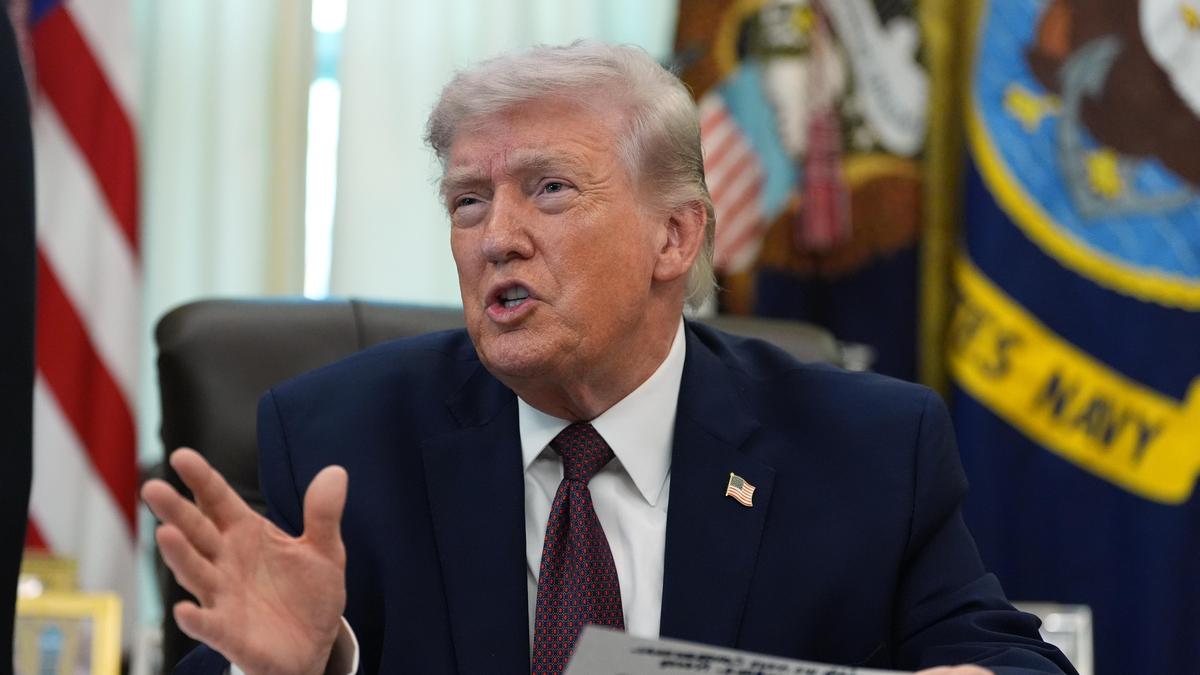
War is rarely a thunderclap. More often, it is a series of whispers, some true and some desperate, traded across encrypted lines and marble-floored corridors. We like to think of diplomacy as a grand chess match played by logic and strategy. It isn’t. It’s a messy, ego-driven exercise in perception. When Donald Trump stood before a crowd and claimed that the President of Iran had reached out to beg for a ceasefire, he wasn't just reporting news. He was painting a portrait of a collapsing enemy.
But then came the static.
From the heart of Tehran, the denial was swift, sharp, and absolute. They called it "false." They called it a fabrication. In that moment, the truth became secondary to the spectacle. We are no longer living in an era where facts dictate the narrative; we live in an era where the narrative creates its own facts. To understand why a disputed phone call matters, you have to look past the podiums and into the rooms where the lights stay on all night.
The Ghost on the Line
Consider a mid-level diplomat in a cramped office in Geneva. He has three phones. One is for his family. One is for official business. The third is a secure line that has stayed silent for three years. He spends his days drinking bitter tea and watching the ticker tape of global rhetoric. For a man like him, the claim of a secret outreach is a seismic event. If his superiors are talking to the "Great Satan," his entire strategy changes. If they aren't, and the claim is a lie, he has to prepare for the inevitable escalation that follows a public insult.
This is the human cost of the "he-said, she-said" cycle of international relations. It isn't just about two leaders trading barbs. It is about the thousands of people caught in the middle who must decide, in a heartbeat, whether to move toward peace or prepare for impact.
Trump’s assertion follows a familiar rhythm. His brand of diplomacy has always relied on the "The Art of the Deal" archetype: the idea that every opponent is secretly exhausted and looking for an exit. By claiming Iran reached out, he signals to his base that the pressure—the sanctions, the rhetoric, the military positioning—is working. It frames him as the ultimate arbiter of global tension.
Tehran’s response is equally calculated. In the Persian political psyche, "face" is everything. To be seen as the one who initiated a plea for mercy is a death sentence for a regime built on the foundation of resistance. Even if a back-channel conversation had occurred, they would be forced to deny it. The denial is as much a part of the ritual as the claim itself.
The Mechanics of the Mirage
How does a story like this even begin? In the world of high-stakes intelligence, information is a currency that devalues the moment it is spent.
Sometimes, a third-party intermediary—perhaps a Swiss envoy or an Omani official—drops a hint. They might say, "The Iranians are tired. They want to talk." This hint travels through the bureaucratic machine, gathering weight and certainty with every hand it passes through. By the time it reaches the Oval Office, "They want to talk" has morphed into "The President is calling for a ceasefire."
It is a game of telephone where the stakes are measured in ballistic trajectories.
Think of it like a failing marriage. One partner tells a friend, "I think we need to find a way to stop fighting." The friend tells the other partner, "He’s ready to apologize for everything." When the second partner shows up expecting a total surrender, the first partner recoils in defensive anger. The fight doesn't end; it intensifies because the expectations were mismatched from the start.
This is the volatility we are currently witnessing. The U.S. side sees a weakened adversary ready to fold. The Iranian side sees a bully trying to manufacture a surrender for the cameras. Both sides are looking at the same map but seeing two different worlds.
The Weight of the Sanction
Behind the headlines of ceasefires and denials lies the grinding reality of economic warfare. To the people in the streets of Isfahan or Shiraz, a "ceasefire" isn't a political abstraction. It’s the price of eggs. It’s the availability of cancer medication.
Imagine a hypothetical father in Tehran named Abbas. He isn't a revolutionary. He isn't a politician. He’s a pharmacist. Every morning, he has to explain to a mother why her daughter’s prescription hasn't arrived. He watches the currency lose value like water through a sieve. For Abbas, the news of a potential ceasefire is a flickering candle of hope. When he hears the government's denial, that candle is snuffed out.
The geopolitical theater is played by men in suits, but the audience is composed of people who have to live in the ruins of the play. When leaders use "ceasefire" as a rhetorical weapon, they are playing with the psychological survival of millions.
The Empty Chair at the Table
We often hear the term "maximum pressure." It sounds clean. It sounds professional. In reality, maximum pressure is a psychological experiment. The goal is to make the status quo so painful that the opponent has no choice but to blink.
The problem is that some cultures view blinking as a form of spiritual failure.
If Trump truly believes a call happened, he is operating on the assumption that the pressure has reached its breaking point. If Tehran is telling the truth and no such call was made, then the U.S. is operating on a fundamental misunderstanding of their opponent’s resolve. This is how wars start—not through malice, but through the profound inability to read the room.
The silence between Washington and Tehran is loud. It is filled with forty years of grievances, missed opportunities, and the wreckage of previous agreements. Into this silence, words are thrown like stones into a dark well. We listen for the splash to tell us how deep the water is, but all we hear are the echoes of our own voices.
A Mirror Held Up to Power
The discrepancy between the two accounts reveals a deeper truth about the nature of power in 2026. Information has been weaponized to the point where "truth" is no longer a shared objective. It is a tool for mobilization.
If you support the Trump administration, the Iranian denial is proof of their duplicity and their fear. You see a regime backed into a corner, lying to its own people to maintain a facade of strength.
If you are a critic, the claim is proof of a leader who treats international diplomacy like a reality television show, inventing plot twists to keep the audience engaged.
Both sides are locked in a hall of mirrors. The actual facts of whether a phone rang or a message was sent are buried under layers of ideological armor. We have reached a point where the event itself matters less than what we use the event to prove about our enemies.
The Long Night of Diplomacy
True diplomacy happens in the dark. It is the work of people who never get their names in the paper, who understand that the most important conversations are the ones that can be denied. When a potential breakthrough is dragged into the sunlight of a campaign rally or a televised press conference, it often shrivels and dies.
Publicity is the enemy of compromise.
If there was a spark of a ceasefire, it has likely been extinguished by the need to win the news cycle. No leader can afford to look weak in front of a global audience. By announcing the "request," the possibility of the request actually being fulfilled becomes almost zero. It is the paradox of the modern age: the more we talk about peace, the harder we make it to achieve.
The Echo in the Hall
The headlines will move on. Tomorrow, there will be a new crisis, a new tweet, a new denial. But the tension remains, a coiled spring waiting for a reason to release.
We are left watching the screens, trying to decipher the body language of men we will never meet, hoping they understand the gravity of the words they use. The world is a fragile place, held together by the thin thread of communication. When that thread is used as a skipping rope for political gain, we all feel the floor shake.
Somewhere, in a basement in Tehran or a secure room in D.C., a phone is sitting on a desk. It is black, heavy, and silent. It represents the bridge that hasn't been built and the words that haven't been said. Until someone is brave enough to pick it up without telling the world they did so, we are all just listeners in a room full of ghosts, waiting for a sound that may never come.