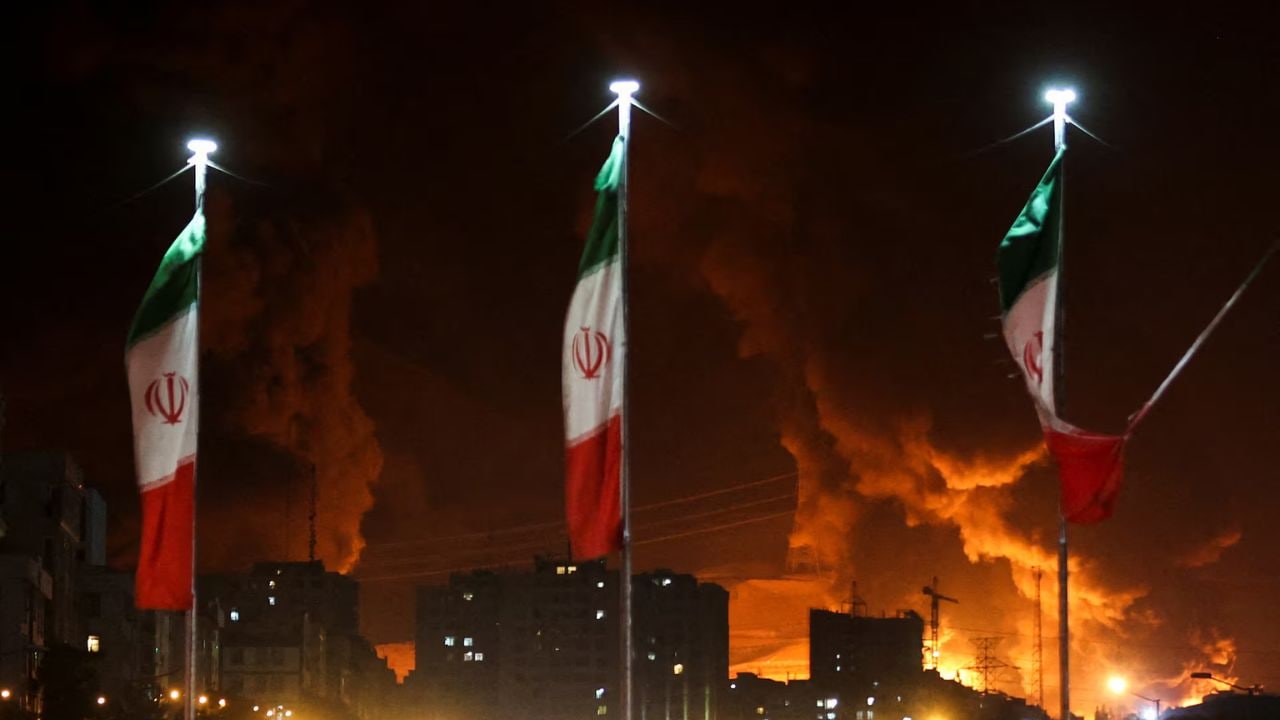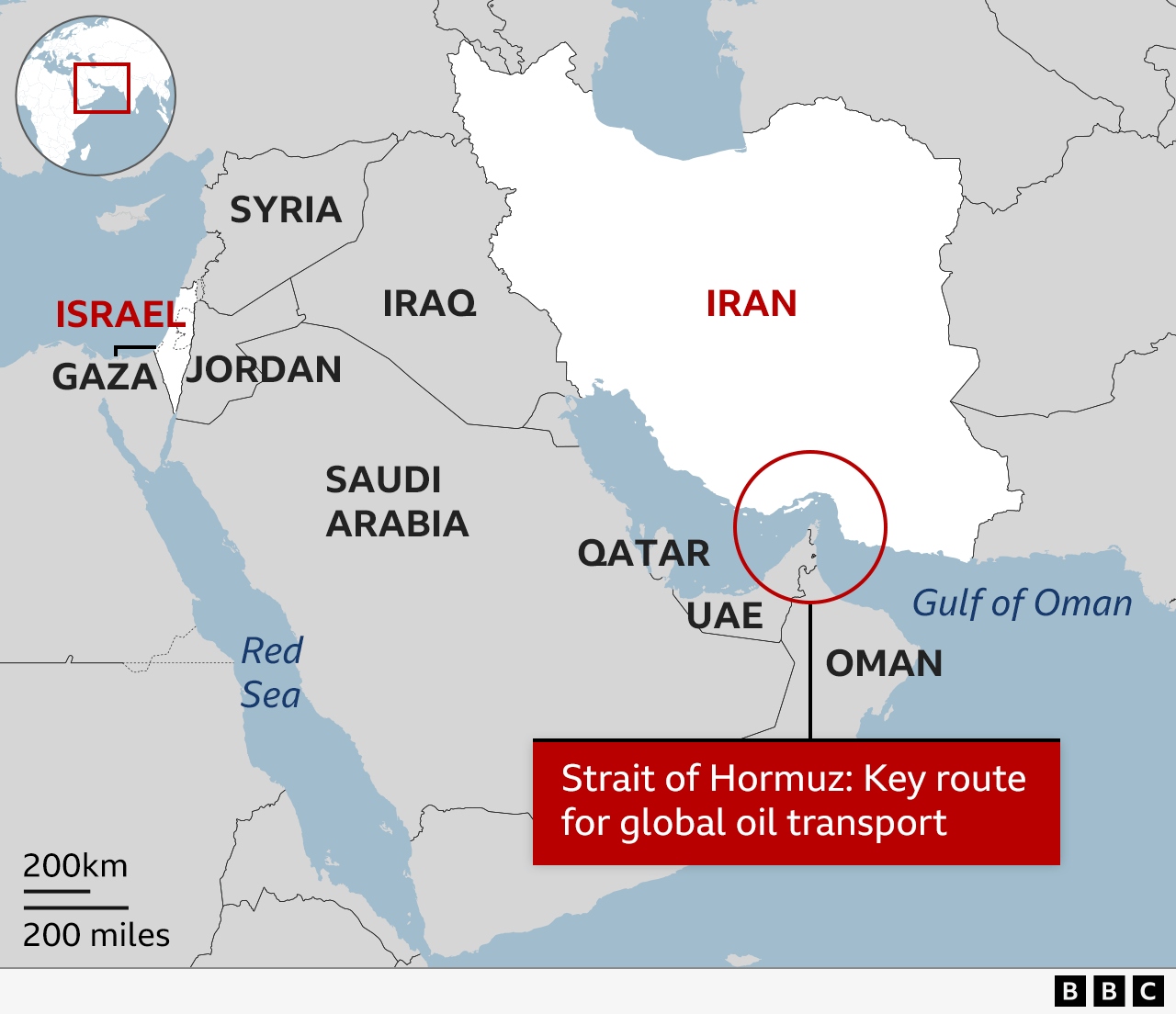
The world's most vital energy artery is currently on life support. If you've looked at a map of the Middle East recently, you'll see a tiny sliver of water between Iran and Oman. That’s the Strait of Hormuz. Right now, it’s a graveyard for global trade schedules. Since the March 1 missile strike on a crude tanker sparked a massive blaze, the "business as usual" sign has been ripped down. Ships aren't moving. They're sitting ducks.
Hundreds of massive vessels are currently bobbing in the water off the coasts of the UAE and Oman, unable to move "even an inch," according to crew members on the ground. This isn't just a local skirmish; it's a global cardiac arrest. When 20% of the world's oil and nearly a third of its liquefied natural gas (LNG) flow through a 21-mile-wide choke point, a single spark doesn't just start a fire—it threatens to collapse the global economy.
The Human Cost of Geopolitical Chess
We often talk about "shipping lanes" and "tonnage" as if ships sail themselves. They don't. Right now, over 23,000 Indian seafarers are trapped in this kinetic crossfire. For these sailors, the "Iran-Israel War" isn't a headline; it's the smell of smoke and the sound of missile alerts.
I’ve looked into the reports coming from the vessels, and the anxiety is palpable. A Chief Engineer from Hyderabad, currently anchored near Sharjah, described the frustration of being just a four-hour sail from his destination in Dubai but being legally and physically frozen. His ship is carrying Iraqi crude that the world desperately needs, yet it stays stationary because the risk of being the next target is simply too high.
It’s not just about the wait. It’s about the danger. At least three Indian seafarers have already been killed in the initial wave of hostilities. While the Indian government has set up a "Quick Response Team," the reality on the water is that these men are sitting on floating bombs—crude oil and gas tankers—in a zone where GPS jamming is rampant and "unpredictable" targeting is the new normal.
A De Facto Blockade Without the Paperwork
Iran hasn't "officially" closed the Strait in a legal sense, but that’s a distinction without a difference. When the Islamic Revolutionary Guard Corps (IRGC) broadcasts over VHF radio that "no ship is allowed to pass" and threatens to "set ablaze" anyone who tries, the insurance companies do the closing for them.
Since the start of March 2026, maritime traffic has basically flatlined.
- Only nine commercial ships successfully crossed the Strait in the first week of March. Under normal conditions, that number would be dozens per day.
- 150+ tankers are currently at anchor, waiting for a green light that might not come for weeks.
- GPS Spoofing is making navigation a nightmare, with ships reporting their positions hundreds of miles away from where they actually are.
The IRGC knows they don't need a physical chain across the water. They just need to make the risk-to-reward ratio impossible for commercial operators. Major players like Maersk and Hapag-Lloyd have already waved the white flag, rerouting ships around the Cape of Good Hope. That adds 10 to 14 days to a trip and sends shipping costs through the roof.
Why India is Bracing for an Economic Aftershock
If you think this only matters to people in the Gulf, check your last fuel bill. India is the third-largest consumer of oil globally, and it gets roughly 65% of its crude from the nations serviced by this Strait—Iraq, Saudi Arabia, the UAE, and Kuwait.
The government is trying to play it cool. Sources claim we’ve shifted 70% of our supplies to routes that don't need the Strait, but that's a temporary fix. You can't just flip a switch on global logistics. If this standoff lasts, the "contingency plan" involving more Russian oil and LPG rationing won't be a plan—it'll be our daily reality.
Even more concerning is the "indiscriminate" nature of the attacks. It doesn't matter if you're on a neutral ship. Shrapnel doesn't check flags. The US sinking of an Iranian warship near Sri Lanka has only made the IRGC more twitchy. They’re now looking at every merchant vessel as a potential proxy target.
What Happens if the Anchors Don't Come Up
The immediate problem is the supply chain "whiplash." When hundreds of ships stop at once, the ports they were supposed to visit become ghost towns. Then, when the Strait finally opens, they all arrive at once, causing a massive logjam at the docks.
For the crews, it’s a mental health crisis. They’re running on "surplus groceries" and watching the horizon for drones. Most contracts for these sailors are for months at a time. They can't just quit and walk home; they're stuck in the middle of the sea, waiting for two nations to stop trying to blow each other up.
The Indian Navy is considering escorting Indian-flagged ships, much like they did during the peak of the Houthi attacks in the Red Sea. But the Strait of Hormuz is a different beast. It's narrower, more congested, and right in Iran's backyard.
What you can do now
If you have family members working in the merchant navy in the Gulf region, ensure they have the contact details for the Directorate General of Shipping (DGS) Quick Response Team. The helpline is active, and the government is tracking the 37 Indian-flagged vessels currently stuck in the region. For everyone else, expect the "Middle East premium" to start hitting your costs for everything from petrol to electronics by the end of the month. This isn't just a fire in a waterway; it's a fever that the global market won't break anytime soon.