The wind in the Bas-Saint-Laurent region of eastern Quebec has a specific way of moving in the early spring. It carries the scent of thawing earth and the sharp, salt-heavy breath of the St. Lawrence River. But on a Tuesday morning that should have been defined by the quiet routine of a rural awakening, the air in the small community changed. It became thick. It became gray.
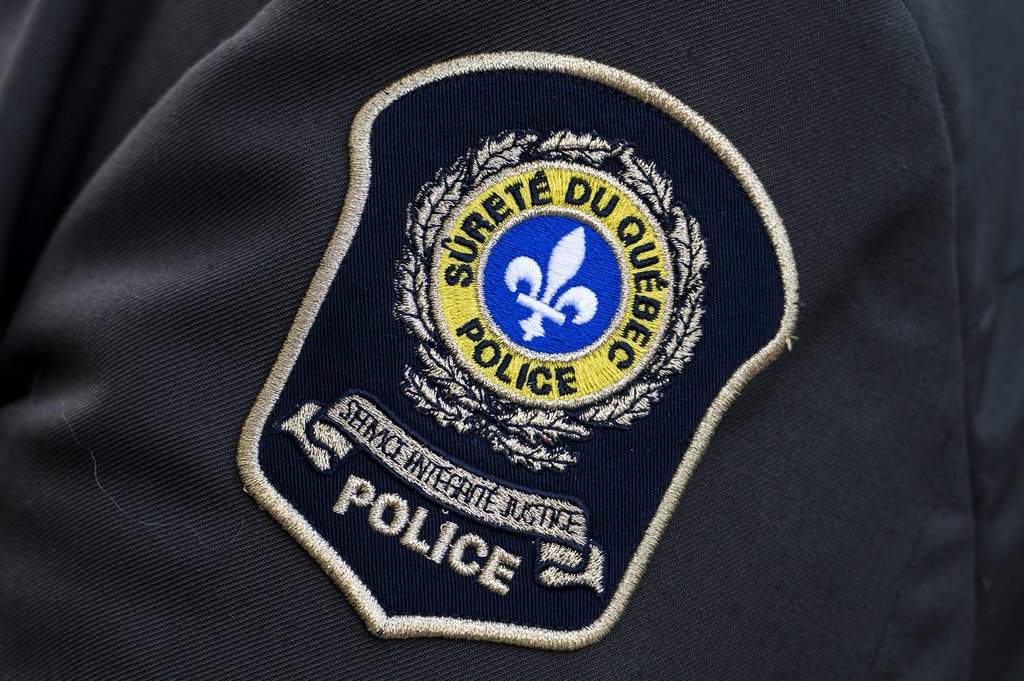
Fire is a thief. It doesn't just take structures; it consumes the context of a life. When the Sûreté du Québec (SQ) received the call about a residence engulfed in flames, the narrative was already being written in the soot. By the time the first responders arrived, the house was no longer a home. It was a skeletal remain of a private history, collapsing under the weight of its own incineration. For another view, check out: this related article.
The Silence After the Siren
In the immediate aftermath of a rural fire, there is a hollowed-out silence that no news report can truly capture. The trucks idling, the drip of water from soaked beams, and the heavy, rhythmic breathing of firefighters who have spent their adrenaline. But in this instance, the silence held a darker weight. As the embers cooled and the investigators began the grim choreography of sifting through the debris, they found what everyone had feared.
Human remains. Related insight on this matter has been provided by TIME.
The discovery shifted the event from a property loss to a forensic mystery. In a small town, a house isn't just an address on a map. It is the place where the neighbor's light is always on at 6:00 AM. It is the porch where someone sits to watch the seasons shift. When remains are found in the ashes, the entire community feels a collective shudder. The identity of the deceased wasn't immediately clear—nature and fire had conspired to strip away the recognizable markers of a human life.
The Gritty Work of the Unseen
Investigating a fatal fire in a remote area of Quebec is an exercise in profound patience. Imagine a forensic team, dressed in white Tyvek suits that stand out like ghosts against the charred black wood. They aren't looking for the obvious. They are looking for the microscopic.
Consider the hypothetical path of an investigator named Jean-Pierre. He isn't interested in the fallen roof; he is interested in the wiring behind a kitchen wall that no longer exists. He is looking for the "V" pattern of smoke stains that points toward the origin of the heat. He is looking for the one thing that doesn't belong.
The SQ, alongside fire commissioners, must play a game of reverse-engineering. They start at the end—the body and the ash—and work backward through time. Was it a stray spark from an aging wood stove? A flickered circuit? Or something more intentional? In these early hours, the police remain tight-lipped, not out of secrecy, but out of a desperate need for accuracy. A mistake in a small-town investigation doesn't just ruin a case; it can haunt a family for generations.
The Weight of the Unknown
While the lab technicians in Montreal wait for dental records or DNA samples to confirm who was lost, the living are left in a state of suspended animation. This is the hidden cost of such tragedies. In urban centers, a fire is a momentary traffic delay. In eastern Quebec, it is a tear in the social fabric.
Statistics tell us that residential fires are more frequent in older, wooden structures common in rural corridors. The logical deduction is simple: aging infrastructure meets the harsh demands of a northern climate. Yet, logic provides cold comfort when a neighbor’s car remains parked in the driveway, untouched by the heat, while the driver is gone.
The investigation is currently a multi-pronged effort. The SQ’s major crimes unit often takes the lead in these scenarios, not necessarily because foul play is suspected, but because the stakes are too high to treat it as a standard accident. They must rule out every dark possibility before they can allow a family to grieve with the peace of knowing it was simply a cruel twist of fate.
The Persistence of Memory
There is a specific kind of bravery required to stand in the ruins of a person’s life and try to piece it back together. The debris is heavy with more than just ash; it is heavy with the objects that defined a person. A melted picture frame. A ceramic mug that survived the heat but lost its handle. These are the artifacts the investigators move past to find the truth.
The fire in eastern Quebec is a reminder of how thin the line is between the warmth of a hearth and the violence of an inferno. As the sun sets over the St. Lawrence, the smoke has long since dissipated, but the questions linger. They hang in the air like the cold mist off the water.
The identity will eventually be confirmed. The cause will be typed into a report and filed away in a government cabinet. But for those who drove past that house every day, the landscape has been permanently altered. There is a hole in the horizon where a life used to be.
The investigation continues, but the story is already etched into the soil of the valley. It is a story of a Tuesday that turned gray, and the long, slow process of finding a name among the embers.
Somewhere, a light that was always on at 6:00 AM has gone dark, and the town is learning how to navigate the new shadows.