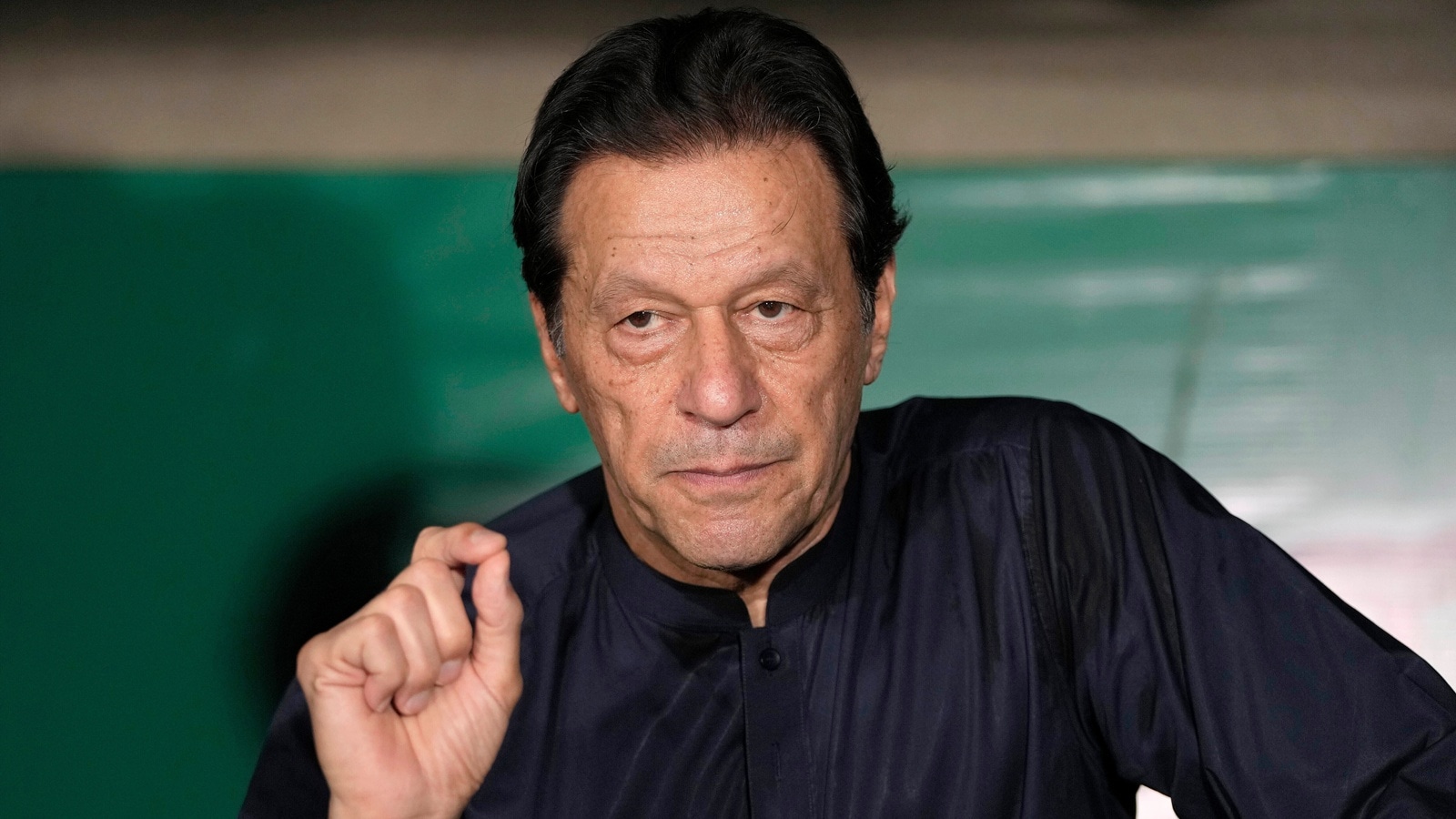
The headlines are obsessed with the wrong thing. We are currently watching a masterclass in narrative warfare, and the public is falling for the bait. When the news cycle fixates on whether a former Prime Minister’s sons are getting visas or if his eyesight has marginally improved, it isn't reporting on human rights. It is reporting on a carefully curated distraction.
Most outlets are content to parrot the same dry updates: the sons want to visit, the doctor can’t verify the vision stats, the legal battle continues. It’s boring. It’s safe. And it’s completely missing the mechanical reality of how power functions in Pakistan.
The obsession with Khan’s physical health—specifically his vision—isn't about medicine. It’s about the optics of "vulnerability" versus "defiance." In a high-stakes political deadlock, every medical report is a chess move, and every visa application is a stress test for the current administration.
The Myth of the Neutral Medical Report
Let’s dismantle the idea that a "physician’s verification" carries any objective weight in this environment. In the context of Pakistani political incarcerations, medical reports have historically been the most flexible documents in existence.
I’ve watched this play out for decades. Remember Nawaz Sharif’s "critically low" platelet count? The moment the political climate shifted and he was allowed to fly to London, those platelets magically stopped being a front-page crisis. Medical status in Adiala Jail is a currency.
When a physician says they "cannot verify" an improvement in eyesight, they aren't just making a clinical observation. They are maintaining a state of strategic ambiguity. If the report says he is fine, the "persecution" narrative loses its edge. If the report says he is blind, the state looks like a monster. By keeping the diagnosis in a grey zone, both sides keep their options open.
The technical reality of eyesight—measured by diopters or visual acuity—is irrelevant here. We are talking about the political vision of a movement. Focusing on Khan's retinas is a way to avoid talking about the total paralysis of the Pakistani legislative process.
The Visa Gambit
The story about Khan’s sons seeking visas is being framed as a "heartbreaking family reunion" or a "bureaucratic hurdle." That is a superficial reading.
In reality, the visa issue is a diagnostic tool for the PTI (Pakistan Tehreek-e-Insaf). By pushing for these visits, the party is forcing the current government to choose between two losing moves:
- Grant the visas: Allow the "enemy" to consolidate, bring messages from the outside world, and boost Khan’s morale.
- Deny the visas: Hand the PTI a massive PR win on a silver platter, allowing them to scream "human rights violation" to the international community.
The sons aren't just children visiting a father; they are high-profile links to the global stage. Their presence in Pakistan would turn a quiet jail cell into a focal point for international media. The government knows this. The PTI knows this. The "humanitarian" angle is just the wrapper for a very sharp political knife.
Why the "Human Rights" Angle is a Trap
People keep asking: "Why won't they just let the doctors in?"
The question itself is flawed. It assumes the goal of the state is to provide care, or that the goal of the prisoner is to receive it. Both assumptions are wrong.
The state’s goal is containment. The prisoner’s goal is leverage.
If you want to understand what is actually happening, stop looking at the medical charts and start looking at the leverage. Khan is currently a "Schrödinger’s Prisoner." As long as his condition is uncertain, he remains a potent symbol of state overreach. The moment a definitive, independent medical team says "He’s perfectly healthy," his primary shield against certain types of state pressure vanishes.
The Inversion of the Martyr Narrative
The current media landscape loves a martyr. They are trying to fit Khan into the box of the "ailing leader." But Khan isn't playing that game. He is an athlete by trade and a populist by choice. He knows that his strength is his brand.
This creates a fascinating friction. His legal team must argue he is being mistreated to gain sympathy and legal relief, while his base needs to believe he is an unbreakable lion. This is why the medical reports are always so contradictory.
- Argument A: He is being denied basic light and exercise, leading to physical decay.
- Argument B: He is in high spirits, exercising daily, and ready to lead the country tomorrow.
You cannot have both, yet the media attempts to sell both simultaneously. The truth is that the physical condition of the man is secondary to the utility of his suffering.
The International "Ask"
The constant drumbeat of "visa denials" and "medical neglect" is aimed squarely at Washington and London. It’s an attempt to trigger the Magnitsky Act or similar international sanctions.
But here is the cold truth: The West doesn't care about a Pakistani politician's eyesight. They care about regional stability and nuclear security. If the "eyesight" narrative doesn't translate into a threat to those two things, it stays in the "human interest" section of the paper, far away from the halls of actual power.
By focusing on these minutiae, the opposition is actually signaling a lack of broader domestic leverage. If you had the streets, you wouldn't need to argue about a pair of glasses.
Stop Asking if He Can See
The question isn't whether Imran Khan can see the walls of his cell. The question is whether the public can see through the performance.
We are witnessing a stalemate being fought with press releases. The government is betting that they can wait out the news cycle. The PTI is betting that they can manufacture enough small-scale outrage to spark a large-scale fire.
If you are waiting for a "verified medical report" to tell you the truth, you will be waiting forever. In this theater, the doctor is just another actor, and the stethoscope is a prop.
The next time you see a headline about "sons seeking visas," don't think about family. Think about the logistics of a PR campaign designed to keep a movement alive when its leader is behind bars.
Stop looking at the patient. Look at the crowd.
Direct your attention to the upcoming constitutional amendments. That is where the real surgery is happening—not in a jailhouse infirmary, but in the gutting of the judicial system that would make any medical report, true or false, completely irrelevant.
Forget the vision report. Watch the hands.