The air in a deposition room has a specific weight. It is thick with the scent of stale coffee, the low hum of a court reporter’s machine, and the crushing pressure of what is left unsaid. For years, the world has looked at the Jeffrey Epstein saga and asked how a man could build a global web of depravity while remaining functionally invisible to the machinery of justice. We looked for monsters in the shadows. We should have been looking at the ledger.
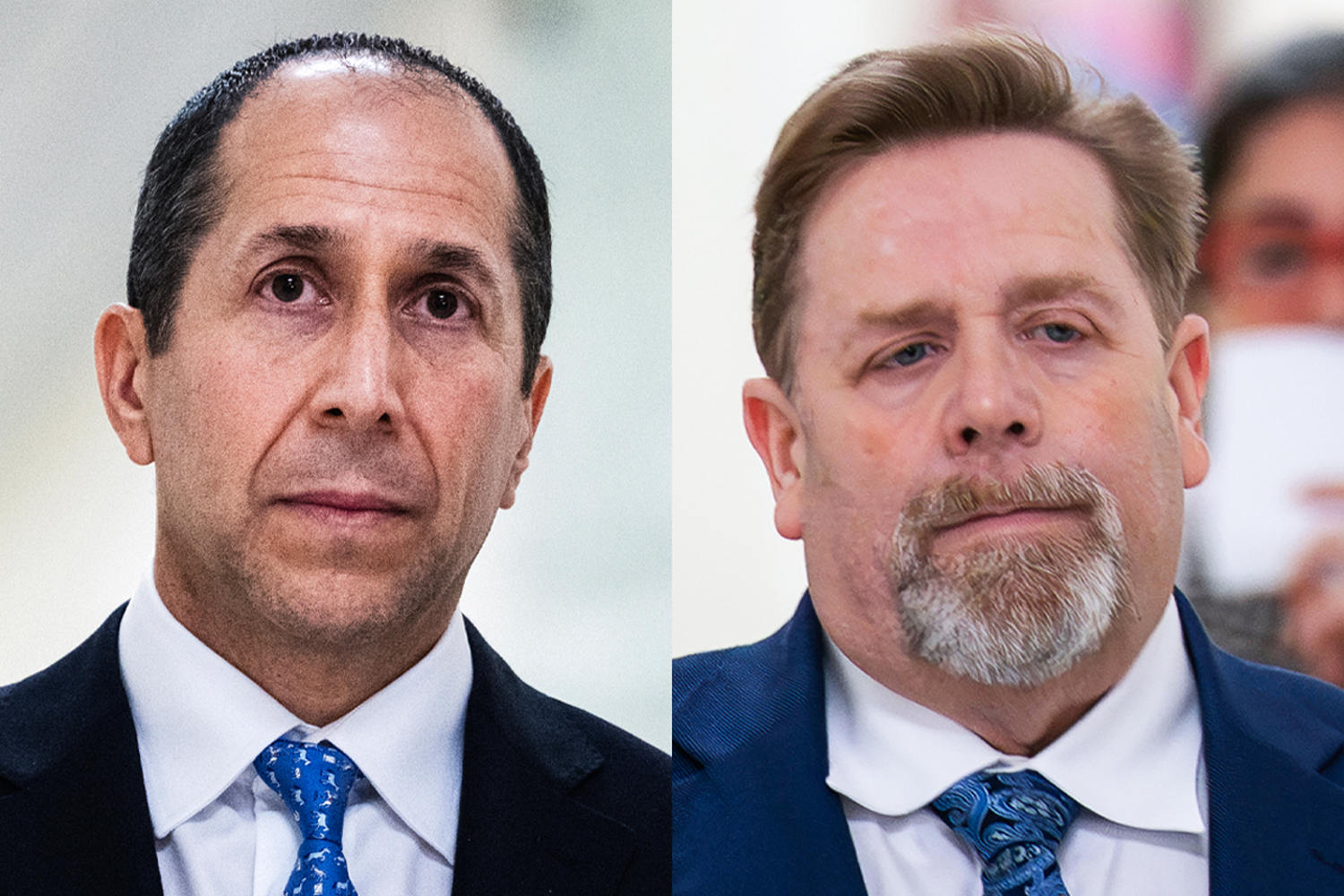
Accountants and lawyers are the cartographers of the modern world. They map the flow of capital, drawing the borders between what is private and what is public. When Richard Kahn and Darren Indyke sat before a House committee recently, they weren't there to talk about the lurid headlines. They were there to talk about the maps. But the most chilling revelation wasn't a hidden offshore account or a secret wire transfer. Discover more on a related subject: this related article.
It was a void.
They told Congress that in all the years of investigation, through the multi-agency task forces and the global headlines, federal investigators never actually sat them down for a formal interview. More reporting by TIME highlights comparable views on the subject.
The Gatekeepers of the Ledger
Imagine holding the keys to the most scrutinized kingdom on earth.
Darren Indyke was Epstein’s lawyer for decades. Richard Kahn was his accountant. These are not peripheral figures who occasionally handled a tax return or a real estate closing. They were the administrative backbone of an empire. They saw the invoices. They authorized the payments. They knew where the money originated and, more importantly, where it landed.
In a functioning justice system, these are the first doors you kick down. You don't just ask for documents; you sit the gatekeepers in a room and you stay there until the numbers make sense. You look for the pulse beneath the profit and loss statements.
But according to their testimony, that conversation never happened. The investigators stayed on the outside, peering through the windows while the men with the keys stood waiting in the hallway.
This isn't just a failure of procedure. It is a fundamental breakdown of how we understand power. We often think of high-level criminality as a series of dramatic, smoky-room deals. The reality is much more mundane. It is a series of wire transfers. It is a rhythmic, monthly cadence of "administrative expenses" that mask the exploitation of human beings. To ignore the people who processed those payments is to intentionally blind oneself to the mechanics of the crime.
The Weight of a Missed Connection
Why does a missed interview matter?
In the world of forensic accounting, a document is a static object. A spreadsheet can tell you that $50,000 moved from Account A to Account B. It cannot tell you the tone of the voice on the other end of the phone when that transfer was ordered. It cannot tell you the urgency, the hesitation, or the specific instructions that accompanied the capital.
When federal investigators bypass the human elements of a financial network, they are choosing to read a book while skipping every second chapter. They see the plot points, but they miss the connective tissue. They miss the "why."
Kahn and Indyke testified that they were "surprised" by the lack of outreach. Think about that. The two men most positioned to explain the financial architecture of a predatory ghost were essentially left to their own devices.
It raises a question that sits heavy in the gut: Was this incompetence, or was it a choice?
Investigating Epstein was never just about one man. It was about the system that allowed him to thrive. It was about the banks that looked the other way, the politicians who accepted the invitations, and the legal structures that provided the armor. If you interview the accountant, you might find a trail that leads to a door you aren't prepared to open. If you interview the lawyer, you might find that the "privileged" conversations weren't just about defense, but about maintenance.
The Ghost in the Machine
We like to believe that justice is a relentless machine, a grinder that eventually catches every grain of truth. But the testimony of these two men suggests a machine with a jammed gear.
The federal government has resources that would make a medium-sized nation-state envious. They have the power to subpoena, to freeze assets, and to compel testimony. Yet, in the most high-profile case of the century, they left the primary witnesses of the money trail untapped.
Consider the victims. For them, the "money" wasn't an abstract concept. It was the tool used to buy their silence, to transport them across borders, and to maintain the lavish stage where their trauma was enacted. Every dollar that moved through Epstein’s accounts was a heartbeat in a predatory system. When the government fails to talk to the men who moved that money, they are effectively saying that the "how" of the crime doesn't matter as much as the spectacle of the criminal.
The Architecture of Indifference
There is a specific kind of exhaustion that comes from watching a story like this unfold. It is the exhaustion of realizing that the institutions we trust to protect us are often just as susceptible to the gravity of wealth as anyone else.
If a small business owner misses a tax payment, the IRS is at the door within weeks. If a working-class citizen is suspected of a crime, their associates are hauled into interrogation rooms before the sun goes down. But here, in the stratosphere of the ultra-wealthy, the rules seem to soften. The edges blur. The "primary witnesses" become "co-executors" who are left to manage the estate rather than explain it.
Kahn and Indyke didn't just manage Epstein’s life; they are now managing his death. They are the ones overseeing the victims' compensation fund. They are the ones liquidating the assets. The very men who were never interviewed are now the ones deciding how the remaining pieces of the empire are distributed.
It is a circle that refuses to close.
The House committee’s inquiry into this lack of communication isn't just a political exercise. It is an autopsy of a failed investigation. We are looking at the organs of justice and finding them withered. We are discovering that the "thorough investigation" promised to the public was, in many ways, a performance of due diligence that avoided the most difficult questions.
The Silence That Screams
There is a metaphor often used in high-stakes litigation: the dog that didn't bark.
In this narrative, the "dog" is the federal investigative apparatus. It should have been howling. It should have been at the throats of anyone who touched a ledger or signed a retainer. Instead, there was a quiet, polite distance.
The accountants and the lawyers didn't hide. They didn't flee to non-extradition countries. They stayed in their offices, surrounded by the paper trail of a monster, and waited for a knock that never came.
What does that say to the next person who tries to build a kingdom on the backs of the vulnerable? It says that if you are rich enough, and if your network is wide enough, the investigators might just be too intimidated—or too disinterested—to ask the people who know the most.
It says that the ledger is a shield.
We are left with a landscape of unanswered questions. Why were these men ignored? Who made the decision to stop the inquiry at the door of the counting house? And most importantly, what information has been lost to the fog of time because the right questions weren't asked when the trail was still warm?
Justice is often depicted as blind, holding a pair of scales. But in the Epstein case, it feels more like justice was wearing a blindfold while standing in a room full of evidence, reaching out and touching only what was safe to feel.
The ledger remains. The accounts are being closed. The money is being moved one last time. And the men who know exactly where it all went are finally speaking—not to investigators in a high-pressure room, but to a committee, years too late, marveling at the fact that nobody ever bothered to ask them for the truth.
The silence of the paper trail isn't just a gap in the record. It is a monument to how power protects its own, even when the person at the center of it is gone.
The ink on those ledgers has dried, but the questions it raises are still bleeding.