The coffee in a French village square does not taste like politics. It tastes of chicory, over-extraction, and the damp morning air of the Loire Valley. But if you sit long enough at a zinc-topped bar in a town like Beaugency or a suburb of Lyon, you realize the steam rising from those cups is actually the cooling breath of a country trying to decide if it still knows itself.
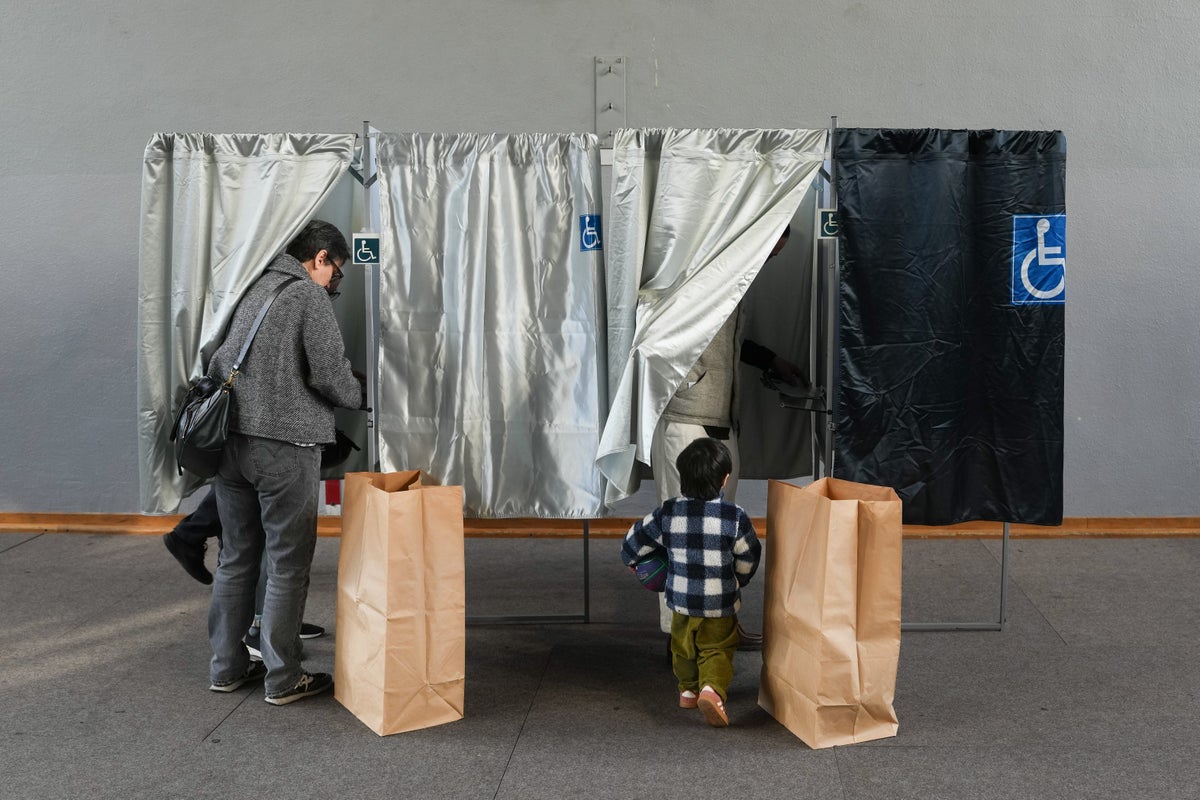
France just went to the polls for local elections. To a casual observer, these are exercises in the mundane: who will fix the potholes, how much will the school canteen cost, and whether the municipal pool stays open through August. But in the grand, sweeping theater of French power, these local results are a dress rehearsal for a much darker, more consequential play.
The year 2027 looms like a mountain peak hidden in fog. That is when Emmanuel Macron must step down, his two-term limit reached, leaving a vacuum that every political force in the country is currently screaming to fill. These local ballots were the first real map of that vacuum.
The Mayor and the Shadow
Consider a hypothetical mayor named Jean-Pierre. He has run a medium-sized town in the "Rust Belt" of northern France for twenty years. He knows everyone’s name. He is a socialist of the old guard, the kind of man who believes in public libraries and well-paved roads. For decades, men like Jean-Pierre were the bedrock of the French Republic. They were the barrier.
In this election, Jean-Pierre looked at the tally sheets and felt a chill that had nothing to do with the drafty town hall.
The far-right National Rally (RN) did not just win seats; they became the furniture. In previous cycles, a vote for Marine Le Pen’s party was a scream of protest, a brick thrown through a window. Now, it is a quiet choice made by parents dropping their kids off at soccer practice. The "de-diabolization" of the far right is complete. They are no longer the monsters under the bed. They are the neighbors.
The data confirms what Jean-Pierre felt. The RN has seen a massive surge in municipal representation, moving from the fringes into the heart of local governance. This matters because, in France, the road to the Élysée Palace is paved with local endorsements. To run for President, a candidate needs 500 signatures from elected officials. By capturing town halls, the far right is building a logistical fortress for 2027.
The Center Cannot Hold
While the edges of the map are turning a deep, bruised purple, the center—the space occupied by Macron’s "Renaissance" party—is looking increasingly translucent.
Macronism was always a top-down project. It was a philosophy of the elite, designed in Parisian salons and implemented by technocrats with shiny degrees. It worked for a while. It saved the economy from the worst of the global shocks. But it never grew roots. You cannot find many people in a rural village who identify as a "Macronist" in their soul. They might vote for him to keep the "extremists" out, but they don't love him.
In these local elections, that lack of roots was exposed. Without the gravity of Macron himself on the ballot, his party’s local candidates drifted away like dandelion seeds. They lack the "local anchoring" that French voters crave.
Imagine a young candidate, brilliant, wearing a slim-fit navy suit, sent from Paris to a town in the Auvergne. He talks about "digital transformation" and "labor flexibility." The locals look at their closed post office and their struggling bakery and they see a stranger speaking a dead language. They didn't vote for him. They voted for the person who promised to bring the doctor back to the village.
The Great Re-Alignment
The real story of these results is the death of the "Republican Front."
For half a century, there was an unwritten rule in French life: no matter how much the Left and the Right hated each other, they would join forces in a second round of voting to stop the far right. It was a sacred pact. A glass ceiling that Marine Le Pen could never break.
That ceiling is now shattered glass on the floor.
In these local races, the "Left" (a fragile coalition of Greens, Socialists, and the hard-left) and the "Right" (the remnants of the Gaullist tradition) often refused to step aside for one another. The hatred between the moderate center and the radical left has become more intense than the fear of the far right.
This is the "ni-ni" phenomenon—neither this, nor that. When voters are told that the radical left is just as dangerous as the far right, they stop believing in the "lesser of two evils." They simply stay home. Or, increasingly, they decide to see what the far right can actually do.
The Invisible Stakes
Why does a pothole in a village in Brittany matter for the future of Europe?
Because the French President is arguably the most powerful democratically elected leader in the Western world. They command a nuclear-armed military and hold a veto over the entire European project. If the 2027 vote swings toward a nationalist, protectionist agenda, the ripples will turn into a tsunami that hits Brussels, Washington, and Berlin.
The local elections showed us that the "safety rail" is gone.
The far right is learning how to govern at the local level. They are managing budgets. They are picking up the trash. They are proving they can be "boring." And boring is exactly what they need to be to win the presidency. If they can show they didn't blow up the town budget in a small city like Perpignan, they can argue they won't blow up the national budget in Paris.
The Quiet Room
There is a specific silence that follows a French election. It is the sound of millions of people folding their paper ballots and walking back to their lives, leaving the pundits to scream at each other on the news channels.
But this time, the silence feels different. It feels like a pause before a storm.
The 2027 election will not be won on a stage in Paris during a televised debate. It was won, or lost, this week in the town halls where the center failed to show up, and in the cafes where the "impossible" became the "inevitable."
The invisible stakes are the very definition of what it means to be a Republic. If the local roots of democracy are rotting, the tree cannot stand, no matter how grand the palace at the top looks. The French voter is no longer looking for a savior from Paris. They are looking for someone who sees them in their own square, in their own skin, in their own struggle.
Right now, the only people consistently showing up to that square are the ones the Republic was built to keep out.
The coffee is cold now. The sun is setting over the slate roofs. In three years, the man or woman who sits in the Élysée will have to answer for what happened in these quiet streets today. By then, the answer might already be written in the dirt.