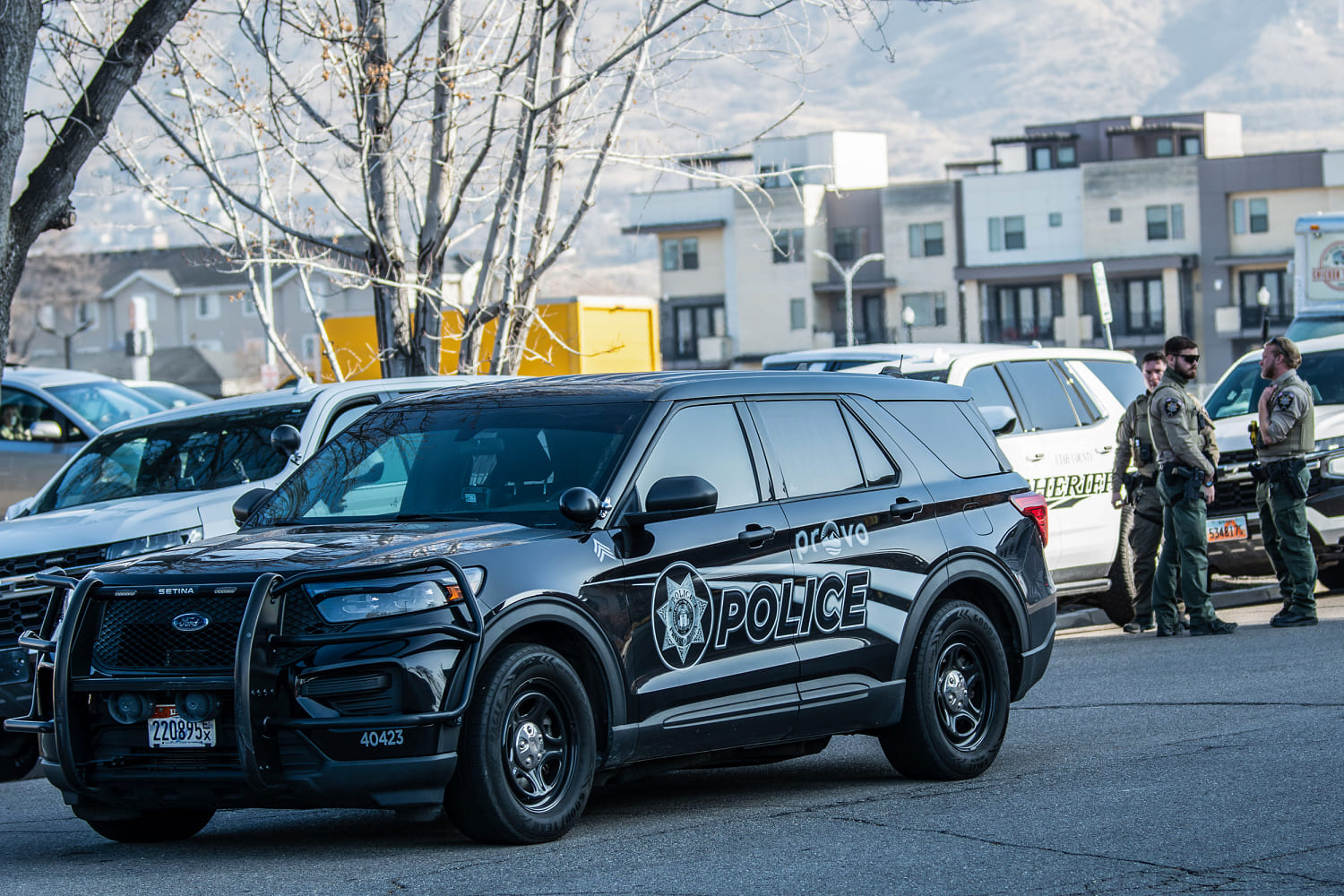
The air inside a parked SUV in a quiet Utah suburb doesn't smell like a crime scene. It smells like stale Cheerios, gym bags, and the lingering scent of vanilla air freshener. It smells like the mundane, exhausting reality of modern parenthood. But on a Tuesday that started like any other, that confined space became the stage for a desperate, misguided attempt at justice that would leave a community reeling and a mother in handcuffs.
Imagine the weight of a backpack. To a child, it isn't just carrying notebooks and half-eaten snacks; sometimes, it carries the invisible lead weight of dread. For weeks, a eleven-year-old boy in a small Utah town had been coming home with that weight. His mother, 30-year-old Elizabeth Ledesma, watched the light dim in his eyes. She heard the stories of the name-calling, the shoves in the hallway, the relentless picking that defines the modern middle-school experience. For an alternative perspective, consider: this related article.
She did what we are told to do. She reached out. she waited for the system to grind its gears. But the system is often slow, and a mother's heart beats in real-time.
On that afternoon, the simmering pot finally boiled over. Ledesma didn't call the principal again. She didn't send another email. Instead, she drove to the spot where her son’s alleged bully stood. She didn't see a child. She saw the source of her son’s misery, a personification of the cruelty that was stealing his childhood. Similar analysis on the subject has been provided by USA Today.
The Moment the Lines Blurred
The legal documents describe what happened next in the clinical, cold language of the law. They call it "kidnapping." They talk about "unlawful detention." But to understand the story, you have to look at the frantic energy of a parent who feels their cub is being hunted.
Ledesma pulled her vehicle alongside the other boy. She didn't just yell from the window. Witnesses and police reports indicate she forced the child into her car. Think about that transition for a second. In one heartbeat, she was a protective mother. In the next, she was a perpetrator.
The interior of that car, once a sanctuary for her own children, became a prison for someone else’s.
She didn't want money. She wasn't looking to cause physical pain. Her demand was singular, primal, and oddly domestic: an apology. She wanted the boy to look her son in the eye and say the words that would make the world right again. She wanted a verbal contract that the torment would stop. It was an attempt to force a moral resolution through an immoral act.
The Illusion of Control
We live in an era where we feel increasingly powerless to protect our children from the digital and physical shadows of bullying. We see the headlines about the tragic consequences of schoolyard cruelty, and it creates a low-frequency hum of anxiety in every parent’s mind.
Ledesma’s actions were an extreme, illegal manifestation of a universal urge.
In her mind, she was probably the hero of the story. She was the one who finally did something. She was the one who wouldn't let her son be a victim. But the tragedy of her choice is that she became the very thing she hated. She used fear to fight fear. She used power to overwhelm a smaller opponent.
Police later reported that the boy was terrified. Of course he was. To him, this wasn't a lesson in accountability; it was an abduction. He wasn't learning empathy; he was learning that the world is a place where adults can snatch you off the street if they are angry enough.
The Cost of a Forced Apology
An apology forced at the edge of a panic attack isn't an apology. It’s a survival tactic.
When the authorities caught up with Ledesma, the narrative shifted from a schoolyard dispute to a felony investigation. The irony is bitter. In her attempt to save her son from a bully, she likely handed him a new, more complex trauma: watching his mother be taken away in zip ties.
The legal system in Utah doesn't have a "well-intentioned mother" loophole for kidnapping. The charges are heavy. They carry the potential for years of separation, the very thing Ledesma was likely trying to prevent by "fixing" her son’s school life.
Consider the ripple effect. Two families are now shattered. One family deals with the trauma of a child who was snatched off the street. The other deals with a mother facing the loss of her freedom and the stigma of a criminal record. And in the middle of it all are two boys who are now linked forever, not just by a playground grudge, but by a police report.
The Invisible Stakes of Parent Rage
This isn't just a story about one woman in Utah. It is a mirror held up to a society where the traditional structures of conflict resolution—schools, community leaders, neighborhood mediation—feel broken or inadequate.
When parents feel the "village" has failed them, they try to become the whole village themselves.
But a village is built on rules. It is built on the understanding that we cannot take the law into our own hands, no matter how much our hearts ache. The moment we decide that our personal pain justifies someone else's terror, we lose the moral high ground. We become the monsters we told our children to hide from.
Ledesma’s SUV sat in the driveway later that day, empty and silent. The vanilla scent was still there. The gym bags were still in the back. But the woman who drove it was gone, caught in the gears of a system that cares very little for the "why" when the "what" is a felony.
The boy who was bullied is still there. The boy who was taken is still there. And the apology that was supposed to fix everything? It hangs in the air, hollow and useless, a reminder that you can't build peace on a foundation of fear.
The sun sets over the Utah mountains, casting long, sharp shadows over the suburban streets. Somewhere, a child is looking out a window, wondering if the person walking down the sidewalk is a neighbor or a threat. Somewhere else, a mother sits in a cell, realizing that in her rush to protect her son's childhood, she may have ended her own role in it.
The lesson isn't found in the apology. It’s found in the silence that follows when the sirens stop.
Would you like me to look into the specific legal precedents for parental interference cases in Utah to see how this might play out in court?