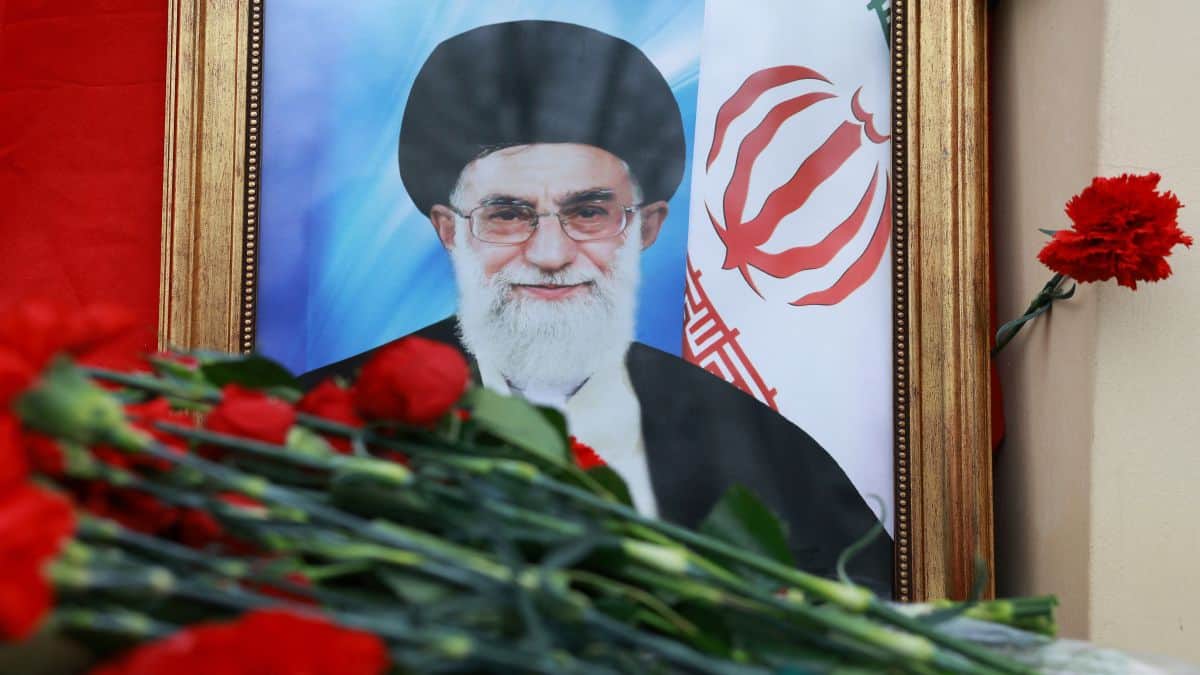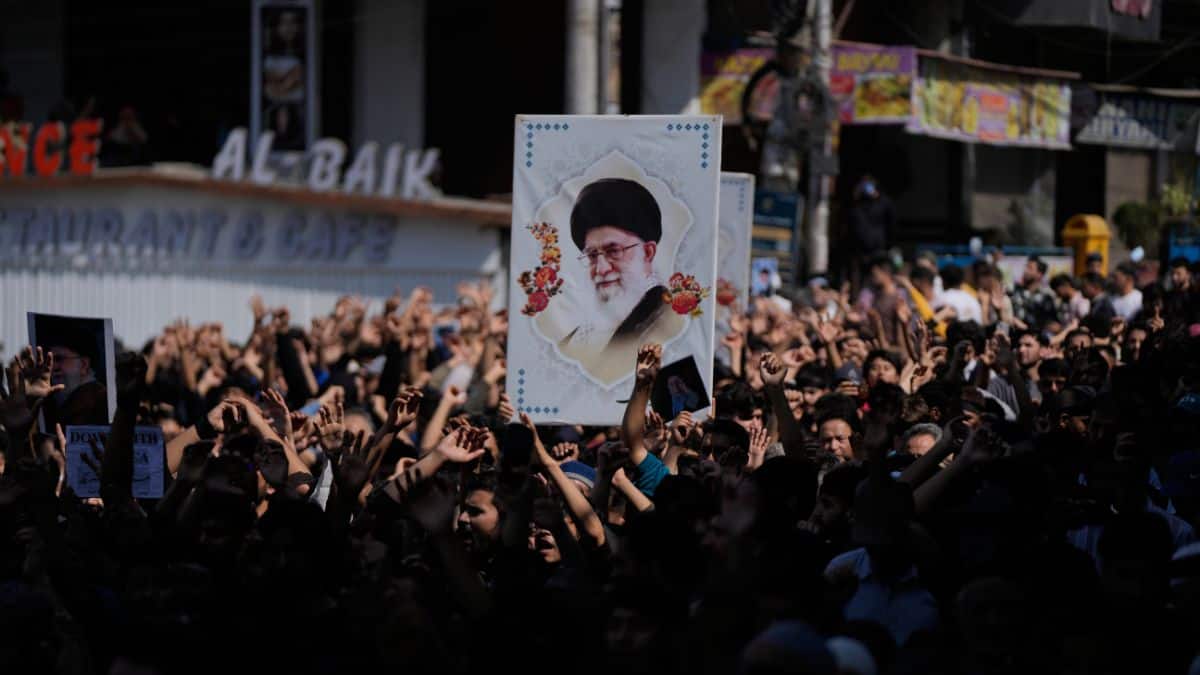
The death of Ali Khamenei represents more than a vacancy in the Iranian executive; it triggers a structural failure in the Velayat-e Faqih (Guardianship of the Jurist) model that has unified Shia militant and political networks for over three decades. This transition does not merely "rock" the Shia world—it forces an immediate re-evaluation of the loyalty-to-resource ratio that governs the relationship between Tehran and its transnational proxies. To understand the fallout from Karachi to Beirut, one must analyze the dissolution of the "Supreme Leader" as both a theological focal point and a financial clearinghouse.
The Tripartite Crisis of Legitimacy
The stability of the global Shia network under Khamenei rested on three distinct pillars. Each of these pillars is currently facing a specific, quantifiable degradation.
- Theological Jurisprudence: Unlike his predecessor, Ruhollah Khomeini, Khamenei’s religious credentials were often viewed as politically manufactured. However, his long tenure provided a "stability of precedent." His successor lacks this accumulated gravity, creating a vacuum where local clerics in Najaf (Iraq) or Qom (Iran) may challenge the Iranian state’s right to command foreign nationals.
- Financial Distribution Systems: The Office of the Supreme Leader manages a multi-billion dollar conglomerate (Setad). This capital is the primary engine for the "Axis of Resistance." Any friction in the transition of these assets leads to immediate operational paralysis for groups like Hezbollah or the Houthis, who operate on high-overhead military budgets.
- The Cult of Personality as a Friction-Reducer: Khamenei functioned as the final arbiter in disputes between disparate Shia factions. Without a singular, feared authority, internal competition for resources between Iraqi militias or Lebanese political blocs will likely shift from cold disagreements to kinetic conflict.
The Lebanese Bottleneck: Hezbollah’s Resource Recalibration
Hezbollah is the most sophisticated non-state actor in the Iranian orbit, but its dependence on the Rahbar (Leader) is existential. The organization’s internal logic is split between "Lebanese Nationalism" and "Transnational Jihad."
The loss of Khamenei removes the ideological anchor that justified Hezbollah’s involvement in non-Lebanese conflicts, such as the Syrian Civil War or the Yemeni insurgency. This creates a Strategic Decoupling Risk.
- Operational Inhibition: Hezbollah’s command structure is designed to defer to Tehran for high-level escalation decisions. In the absence of a clear successor, the decision-making loop lengthens. Delay in warfare is equivalent to defeat.
- Domestic Vulnerability: Lebanese political rivals view this transition as a window of weakness. If the flow of Iranian "shadow budget" funds—estimated at $700 million annually—stutters during the succession process, Hezbollah’s social service network (hospitals, schools, and subsidies) will fail.
The mechanism at play here is simple: Social contract erosion leads to political insignificance. If Hezbollah cannot pay its base, it cannot mobilize its base.
The Iraqi Fragment: Competition Over Command
In Iraq, the death of Khamenei exposes the deep rift between the "Quietist" school of Grand Ayatollah Ali al-Sistani and the "Activist" school of the Iranian state.
Iraqi Shia identity is not a monolith; it is a competitive market. The Popular Mobilization Forces (PMF) are essentially a conglomerate of franchises. Some are loyal to the Iraqi state, while others, like Kata'ib Hezbollah, answer directly to the Supreme Leader’s office.
The Shift from Centralized to Distributed Command
- Factionalism: Without Khamenei to enforce a hierarchy, the PMF will likely splinter into localized protection rackets.
- The Sistani Factor: At 90+ years old, Sistani’s eventual passing combined with Khamenei’s death removes the two stabilizing forces of the Shia world simultaneously. This creates a "Double-Vacuum Scenario" where the very definition of Shia authority is up for grabs.
The result is not a unified Shia "uprising" or "mourning," but a Darwinian struggle for local dominance. Iraqi militias will prioritize controlling the Iraqi oil economy over Iranian regional interests if they suspect the new leader in Tehran lacks the iron will—or the bank account—of his predecessor.
The South Asian Frontier: The Karachi-Parachinar Arc
In Pakistan and Afghanistan, the impact is less about military hardware and more about Identity Security. The Shia minorities in these regions rely on the "Shadow of the Rahbar" for a sense of global protection against Sunni extremist groups.
The death of Khamenei signals a period of perceived vulnerability.
- Recruitment Failure: Iran has historically recruited the Zaynabiyoun and Fatemiyoun brigades from Pakistani and Afghan Shia refugees. These men fought in Syria under the banner of defending the faith as dictated by the Supreme Leader. A less charismatic or contested successor will find it difficult to maintain this pipeline.
- Intellectual Drift: The Shia middle class in Karachi, often highly educated and professional, may look toward more localized or Western-integrated forms of religious expression, further isolating the hardline pro-Tehran elements.
The Economic Cost Function of Succession
Succession in an autocracy is an expensive endeavor. To secure the loyalty of the Islamic Revolutionary Guard Corps (IRGC) and the Basij, the incoming leadership must increase domestic spending.
This creates an Inverse Proportionality: As the cost of domestic stability in Iran rises, the budget for foreign proxies must decrease.
- The Sanctions Variable: Iran’s economy is already constricted. If the transition period is marked by civil unrest or IRGC infighting, the state will be forced to cannibalize its foreign policy budget to prevent a domestic collapse.
- Proxy Austerity: Groups in Yemen and Syria will be the first to feel the "Austerity of Death." Reduced shipments of precision-guided munitions and raw cash will force these groups to pivot toward illicit economies (narcotics, smuggling, and kidnapping) to sustain operations. This transition from "State-Sponsored" to "Criminal-Sustained" fundamentally changes their political legitimacy.
Structural Vulnerabilities in the Succession Logic
The Iranian constitution dictates that a "Leadership Council" may govern if a single candidate isn't chosen. This is the "Decision-by-Committee" trap.
In military strategy, committees are incapable of the rapid, decisive action required to maintain a global insurgency. If Iran moves to a council-based leadership, the "Axis of Resistance" becomes a "Guild of Resistance"—slow, bureaucratic, and prone to internal vetoes.
The IRGC will likely attempt to bypass this by installing a puppet leader who serves as a clerical rubber stamp for military objectives. However, this creates a Theological Short-Circuit. The Shia world outside Iran follows a leader for his religious standing, not his military rank. An IRGC-controlled figurehead will not command the same spiritual devotion in Beirut or Baghdad that Khamenei did.
The Strategic Pivot for Global Actors
For Western and regional intelligence services, the post-Khamenei era requires a shift from "Counter-Iran" to "Counter-Faction" strategies.
The monolithic threat of the Shia Crescent is being replaced by a multi-polar mess of competing interests. The tactical move is to identify which factions within the IRGC and which proxy commanders are most likely to seek financial independence from Tehran.
- Incentivizing Localism: By supporting local Shia identities in Iraq and Lebanon that are distinct from Iranian political Islam, the global community can accelerate the fragmentation already underway.
- Monitoring the Wealth Transfer: The critical indicator of who will hold power next is not who speaks at the funeral, but who takes control of the Bonyads (charitable foundations) and the Setad assets.
The global Shia community is moving from a centralized command structure to a decentralized, high-volatility network. The "Geopolitical Shock" is not the mourning in the streets; it is the silent, ruthless auditing of loyalty that happens behind closed doors when the person who signed the checks is gone.
Immediate focus must be placed on the IRGC's Quds Force. Their ability to maintain personal relationships with proxy leaders is the only thing preventing a total collapse of the Iranian influence sphere. If the Quds Force leadership is also caught in the succession crossfire, the "Axis of Resistance" will cease to exist as a coherent military entity within 18 months, devolving into a series of localized, manageable insurgencies.