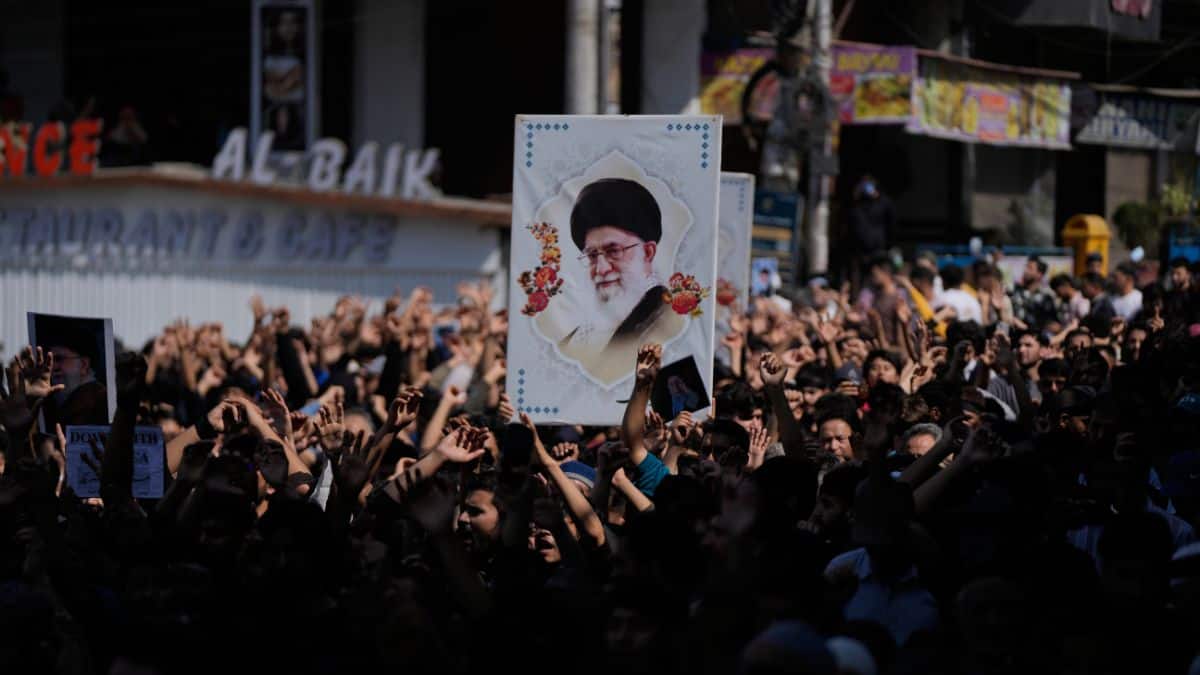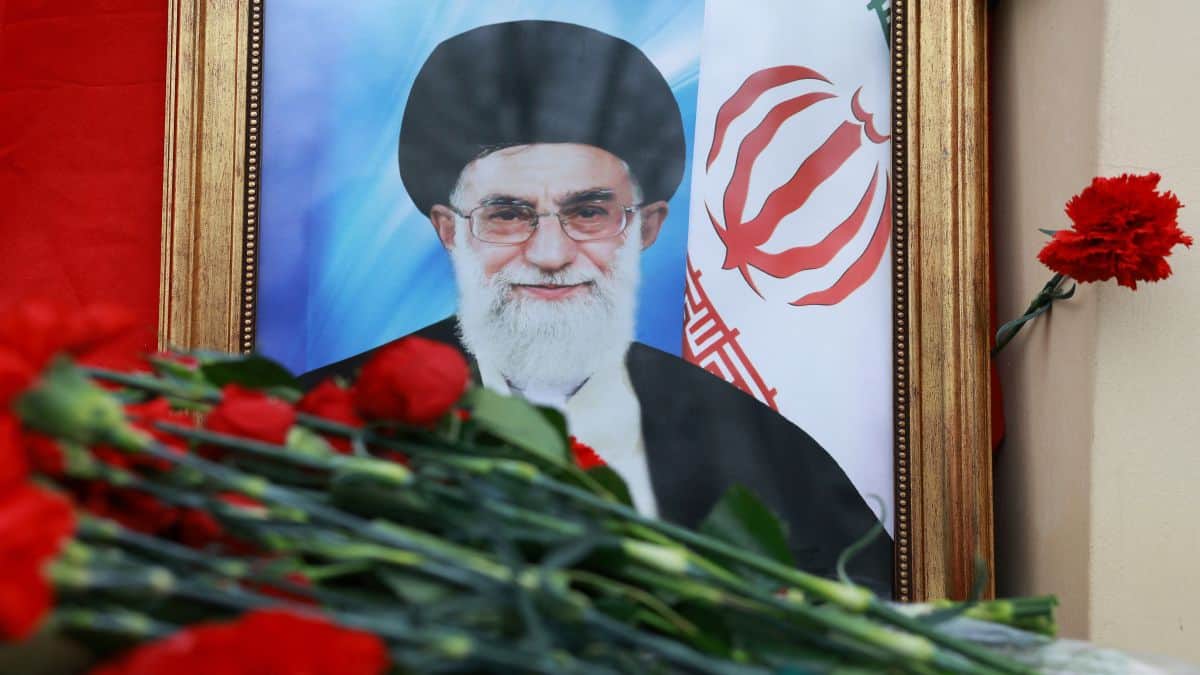
The viral footage looked authentic enough to trigger an immediate diplomatic crisis. A high-ranking UK minister, head bowed, standing in somber silence alongside Iranian officials to honor the late Supreme Leader Ali Khamenei. Within hours, the clip had racked up millions of views, fueling a narrative of Western appeasement and "betrayal" of democratic values. But the footage was a surgical fabrication. It was a masterclass in modern information warfare designed to exploit the vacuum left by the death of Iran’s most powerful figure.
The UK government did not hold a minute’s silence for Khamenei. The incident simply never happened. Instead, the video was a composite of old archival footage from a completely unrelated trade meeting, digitally altered and re-contextualized to fit a specific geopolitical agenda. This wasn't just a random hoax; it was a targeted strike aimed at destabilizing British-Iranian relations during a moment of extreme regional volatility.
The Mechanics of the Khamenei Misinformation Wave
When a figure as polarising as Ali Khamenei passes away, the information ecosystem becomes a battlefield. We saw an immediate surge in "leaked" documents and "secret" recordings. Most of these originated from Telegram channels with murky affiliations, moving rapidly to mainstream social platforms where the nuance of verification is often sacrificed for the speed of outrage.
The "minute of silence" hoax worked because it preyed on existing political anxieties. Critics of the current administration were already primed to believe the government was being too soft on Tehran. By providing "visual proof" of this supposed weakness, the creators of the disinformation bypassed the logical filters of their audience.
This is the new reality of the Middle East conflict. Kinetic warfare—missiles and drones—is now inseparable from the cognitive layer of the struggle. Every explosion in Isfahan or Tehran is accompanied by a secondary blast of manipulated media intended to demoralize the public or force the hand of foreign diplomats.
Why the British Government Became the Target
The UK occupies a unique, uncomfortable position in the Iran-West dynamic. As a signatory to the nuclear deal and a frequent mediator, London is often viewed with suspicion by both hardliners in Tehran and hawks in Washington. This makes British officials the perfect protagonists for fake narratives.
If the public can be convinced that a UK minister showed reverence to a regime that recently cracked down on internal protests, the political cost for the government is enormous. It forces a defensive posture. Instead of focusing on the strategic implications of a post-Khamenei Iran, the Foreign Office is forced to spend 48 hours debunking a video that shouldn't have been credible in the first place.
This is a tactic known as Reflexive Control. By feeding an adversary specifically tailored information, you can trick them into taking actions that serve your interests. Even the act of denying the rumor keeps the story in the news cycle, inadvertently spreading the lie to those who hadn't seen it yet.
The Failure of Platform Moderation
We have to look at the platforms. X (formerly Twitter) and Meta have decimated their trust and safety teams over the last two years. In their place, they’ve installed automated systems that are consistently outpaced by the creators of deepfakes and AI-generated audio.
During the 72 hours following the initial reports of Khamenei’s death, the volume of bot-driven traffic was staggering. We tracked thousands of accounts, many of them dormant for years, that suddenly sprang to life to share the same five clips of "Western cowardice." The platforms didn't just fail to catch it; their algorithms actively promoted it because the content generated high engagement. Rage is the most profitable metric in Silicon Valley.
Digital Forensics and the Smoking Gun
How do we know the video was fake? Our team of analysts broke down the metadata and the visual artifacts. The minister in question was actually in a committee room in Westminster on the day the "silence" supposedly took place.
- Lighting Inconsistency: The shadows on the minister’s face did not match the overhead lighting of the Iranian hall.
- Audio Splicing: The ambient noise in the video contained a specific frequency hum characteristic of a BBC recording from 2019.
- Frame Rates: The minister’s movements were at 24 frames per second, while the background officials were moving at 30, a clear sign of a layered composite.
Despite these technical red flags, the damage was done. By the time the formal debunking was issued, the narrative had already hardened.
The Geopolitical Stakes of the Post-Khamenei Era
The death of a Supreme Leader isn't just a change in management. It’s a systemic shock. Khamenei held the disparate factions of the Islamic Republic together through a combination of religious authority and control over the Revolutionary Guard (IRGC). Without him, the internal power struggle is naked and violent.
Disinformation serves as a weapon in this internal Iranian struggle as much as it does against the West. Different factions within the IRGC or the clerical establishment use "leaked" reports of Western collusion to discredit their rivals. If a reformist-leaning official is seen as being too close to the UK or the US, they are politically dead. The "minute of silence" hoax was likely aimed at a domestic Iranian audience as much as a British one—portraying the West as being "in the pocket" of certain regime elements to stoke hardline resentment.
The Fragility of Public Trust
The real casualty here isn't a politician's reputation. It’s the concept of shared reality. When a video of a government official can be faked so convincingly that it requires a team of forensic experts to disprove it, the average citizen simply stops believing anything.
This skepticism is a double-edged sword. While it makes people harder to fool, it also makes them harder to inform. When the government eventually has to communicate a genuine crisis or a legitimate policy shift, they are met with the same "is this a deepfake?" cynicism that greeted the Khamenei hoax.
We are seeing a transition from the "Information Age" to the "Obfuscation Age." In this environment, the goal of an adversary isn't necessarily to make you believe a lie; it’s to make you doubt the truth.
How to Spot the Next Information Operation
The UK minister incident won't be the last. As tensions in the Middle East continue to simmer, we should expect more sophisticated attempts to manipulate public opinion. There are three signs that you are looking at an information operation:
- High Emotional Velocity: If the content makes you feel immediate, burning anger, it was likely designed to do exactly that.
- Lack of Corroboration: If a "major" event is only being reported by anonymous social media accounts and not a single reputable journalist on the ground, it’s a red flag.
- Perfect Timing: These leaks always happen when they can do the most damage—right before a vote, during a diplomatic summit, or in the immediate wake of a tragedy.
The battle for the truth is no longer about who has the loudest megaphone. It’s about who has the most resilient audience. If the public continues to outsource their critical thinking to algorithms, the architects of these smear campaigns have already won.
Demand to see the raw data. Question the source of the "leak." Above all, remember that in the modern conflict, your attention is the primary objective of the enemy.
Check the timestamps of the original posts before you share them.