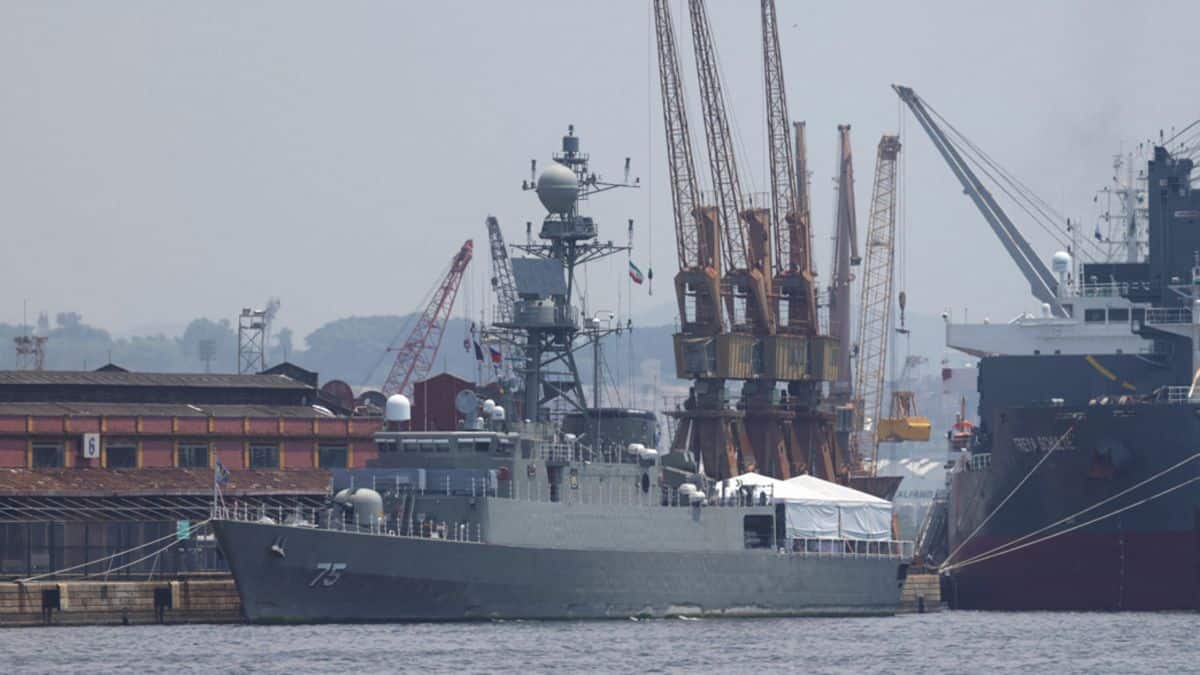
The maritime strike on an Iranian vessel near Sri Lanka represents a fundamental shift in the risk profile of mid-ocean transit, signaling the end of "safe harbor" assumptions in the Laccadive Sea. Beyond the immediate casualty count—estimated at over 100 missing—this event dictates a new calculus for global logistics: the neutralization of merchant-integrated naval assets through sub-surface precision. To understand the gravity of this kinetic event, one must evaluate the intersection of Iranian shadow-fleet operations, the limitations of Sri Lankan maritime security, and the technical physics of modern submarine warfare.
The Triad of Maritime Vulnerability
The success of a submarine-launched strike at this specific coordinate relies on three structural weaknesses that the Iranian vessel failed to mitigate.
- Acoustic Profiling and Identification: Iranian vessels operating under dual-use mandates (civilian-military hybrids) often lack the acoustic masking required to evade modern sonar arrays. If the vessel was broadcasting a standard AIS (Automatic Identification System) signature while carrying high-value military cargo, it created a predictable track for any high-capability submarine in the region.
- Geographic Bottlenecking: The waters near Sri Lanka serve as a primary transit point for the East-West shipping lanes. By positioning the strike here, the aggressor utilized the "noise" of high-volume commercial traffic to mask their approach and departure.
- The SAR (Search and Rescue) Vacuum: Sri Lanka’s naval capacity is optimized for coastal patrol, not deep-water salvage or mass casualty recovery. The delay in response times directly correlates to the high number of "missing" personnel, as the window for survival in open-ocean conditions closes exponentially after the first 120 minutes.
Mechanics of a Sub-Surface Kinetic Event
Analyzing the reported damage profile—dozens wounded and a catastrophic loss of life—suggests a specific engagement model. A hull breach of this magnitude is rarely the result of a single torpedo unless that torpedo struck a primary magazine or fuel reservoir.
The pressure differential at the point of impact creates a "bubble pulse" effect. When a heavy-weight torpedo detonates beneath the keel, the resulting gas bubble lifts the ship, followed by a vacuum that snaps the structural spine of the vessel. This explains why casualties are divided between those "wounded" (likely by internal debris and fire) and those "missing" (likely trapped in sections of the ship that sank within minutes).
Internal Structural Failure Points
- Bulkhead Integrity: In converted merchant vessels, internal bulkheads often lack the pressure-rating of dedicated warships. A single breach leads to progressive flooding that bypasses damage control measures.
- The Fire-Flood Tradeoff: In the immediate aftermath of a strike, crew resources are split. If the engine room is compromised, the loss of power kills the fire pumps. Without pumps, the crew cannot fight the fires caused by the explosion, leading to an abandonment of the ship long before it actually sinks.
Strategic Implications of the Laccadive Breach
This incident is not an isolated tactical strike; it is a signal of "Area Access/Area Denial" (A2/AD) expansion. For years, Iranian maritime operations felt secure once they cleared the Strait of Hormuz. The Sri Lankan strike proves that the "threat envelope" now extends 1,500 nautical miles further east than previously modeled.
The Cost Function of Iranian Shadow Logistics
Iran utilizes a decentralized fleet to bypass sanctions and move hardware. The economic impact of this strike is calculated through the Risk-Premium Multiplier:
- Insurance Escalation: War-risk premiums for vessels with any Iranian nexus will now see a vertical spike, potentially making "legitimate" shadow-fleet operations cost-prohibitive.
- Escort Requirements: To prevent a repeat, Iran would need to provide destroyer escorts for its high-value transit. However, the Iranian Navy lacks the blue-water sustainment capability to maintain a permanent escort presence near Sri Lanka, creating a permanent structural vulnerability.
Intelligence Failures and the Transparency Gap
The high number of missing personnel suggests the vessel was significantly over-manned compared to a standard merchant crew. This discrepancy points to the presence of "technical advisors" or security detachments, further validating the ship as a legitimate military-adjacent target.
The second limitation in the current reporting is the lack of "Origin Attribution." Submarine warfare is inherently clandestine, but the choice of weapon—likely a wire-guided or wake-homing torpedo—leaves a forensic trail. The absence of a claim of responsibility suggests a state actor seeking to degrade Iranian capabilities without triggering a direct diplomatic escalation.
The Erosion of Regional Neutrality
Sri Lanka’s involvement, even as a passive bystander, complicates its relationship with both the "String of Pearls" strategy and Western maritime coalitions. The island nation now finds itself the unwilling theater for a proxy conflict. This creates a bottleneck in regional diplomacy:
- Surveillance Mandates: Pressure will mount on Sri Lanka to increase its underwater domain awareness (UDA), a technology stack it currently cannot afford.
- Salvage Rights and Sovereignty: The recovery of the wreckage—and the sensitive cargo it likely contains—will become a flashpoint. Whoever reaches the debris field first gains the intelligence advantage.
Tactical Realignment for Merchant-Integrated Assets
If this strike marks a new baseline for maritime engagement, operators must shift from passive evasion to active defense. However, the physics of submarine engagement makes this nearly impossible for non-state or secondary-tier navies. The stealth advantage remains entirely with the hunter.
Future Iranian transits will likely attempt to hug the coastline of friendly or neutral nations to minimize the "deep water" window where submarines operate most effectively. This increases transit time and fuel consumption, adding a secondary "friction tax" to their logistics chain.
The strategic play for competing powers in the Indian Ocean is now to monitor the salvage operation. The specific nature of the cargo being moved by the Iranian ship remains the most critical unknown. If the cargo was missile components or drone hardware destined for a third-party actor, the strike serves as a "pre-emptive interdiction." The focus must now shift to the seabed; the wreckage holds the definitive evidence of the ship’s true mission and the technical signature of its attacker.
Operational commanders should anticipate a surge in underwater surveillance drone deployments along the Cape of Good Hope and the Malacca Strait routes, as the era of unmonitored mid-ocean transit has effectively ended.