The coffee was still warm on desks in Tel Aviv. In Washington, the late-afternoon sun hit the windows of the West Wing at a sharp, golden angle. But in Tehran, it was 1:30 in the morning, and the silence of the city was about to be obliterated by the physics of modern warfare.
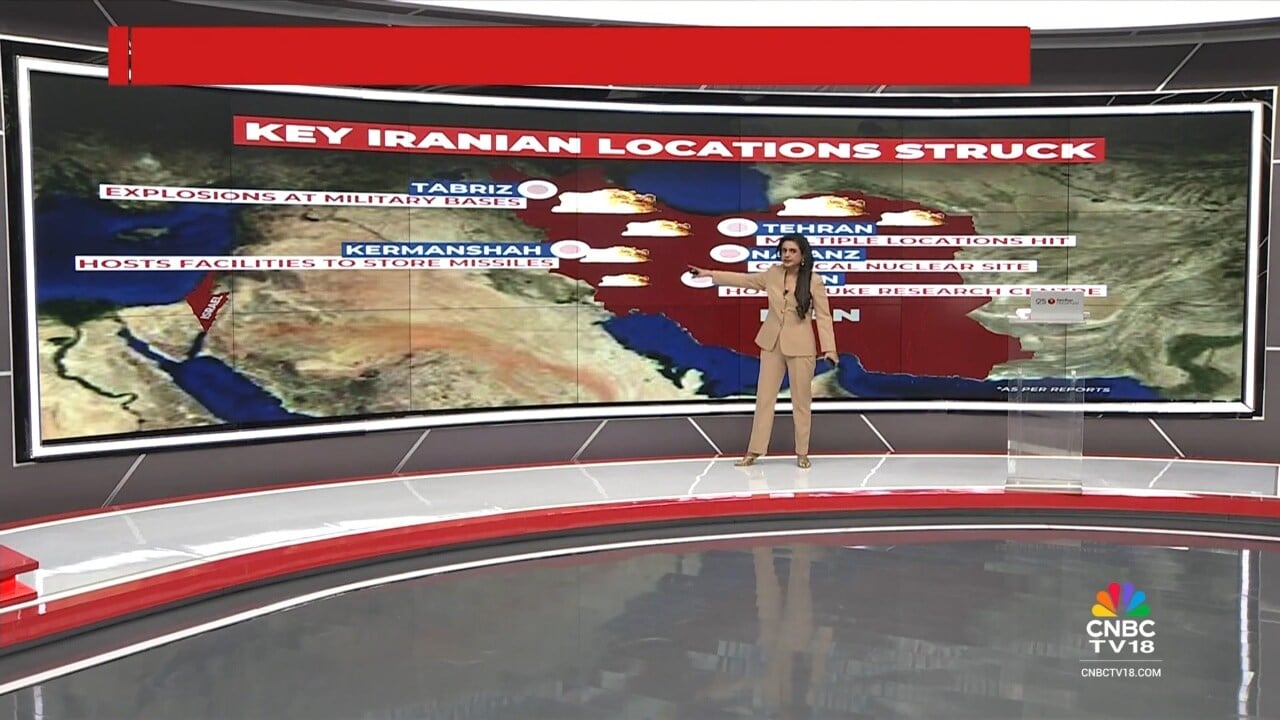
Information during the first hour of a conflict is a liquid thing. It pours through Telegram channels, leaks via grainy cell phone footage, and hardens into official statements only after the smoke has cleared. When the first reports of explosions near Isfahan and Tehran began to surface, they weren't just data points on a map. They were the sound of a decade of shadow boxing finally ending.
For years, we spoke about the "Gray Zone." It was a comfortable, academic term for a world of cyberattacks, maritime sabotage, and targeted assassinations. It was a space where nations could hurt each other without the paperwork of a formal war. That zone evaporated the moment the afterburners ignited.
The Order from the Mar-a-Lago Situation Room
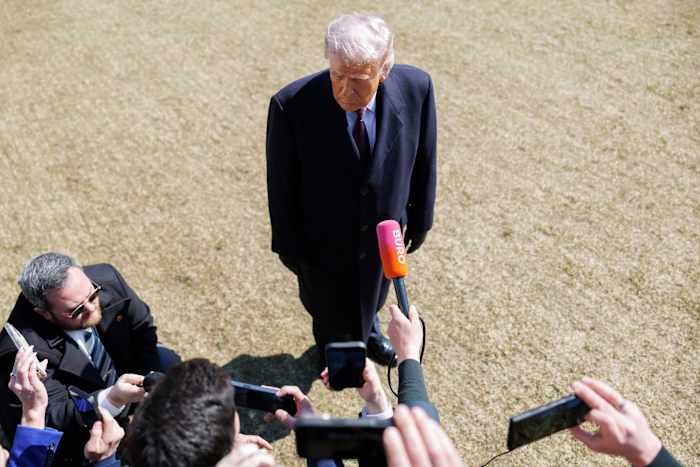
The phrase "major combat operations" carries a weight that standard military jargon cannot match. When President Trump used those words, he wasn't just announcing a mission; he was pivoting the entire machinery of the United States toward a direct confrontation.
To understand the scale, you have to look past the headlines and into the logistics. A "major combat operation" means the end of surgical strikes. It implies a sustained effort to dismantle an entire military infrastructure. The coordination required between the Israeli Air Force and the US Central Command is a feat of engineering that defies easy description. It involves thousands of moving parts—refueling tankers orbiting in secret corridors, electronic warfare planes jamming radars into blindness, and the pilots themselves, breathing through masks in the thin air of the stratosphere.
Consider the perspective of a radar operator in central Iran. One moment, the screen is a rhythmic, green sweep of normalcy. Then, the world turns into a chaotic mess of "noise." This is the invisible front of the war. Before a single building explodes, the electromagnetic spectrum is conquered. The sensors go dark. The communications fail. The isolation is total.
A Coalition of Necessity
Israel and the United States have long shared intelligence, but a joint kinetic strike of this magnitude represents a different kind of marriage. It is a union born of a shared, existential calculus. For Israel, the threat of a nuclear-capable Iran has never been a theoretical debate; it is a geography problem. When your country is the size of New Jersey, there is no "strategic depth." There is only the front line.
The strikes targeted more than just missile silos. They were aimed at the nervous system of the Iranian Revolutionary Guard Corps. By hitting command and control centers alongside enrichment facilities, the coalition sought to do more than just delay a nuclear program. They sought to paralyze the ability of the state to respond.
The logic is brutal. If you hit hard enough and fast enough, the enemy spends their time trying to figure out what happened rather than deciding what to do next.
The Human Cost of the High Altitude
While the politicians talk about "degrading capabilities" and "restoring deterrence," the reality on the ground is far less clinical. In the neighborhoods of Tehran, the sound of anti-aircraft fire is a rhythmic, terrifying thud that shakes the glass in window frames.
Think of a family in an apartment block near a military installation. They are not thinking about the geopolitical shift of the 21st century. They are grabbing shoes. They are pulling children into hallways. They are wondering if the internet will ever come back on. The "invisible stakes" are often the most personal ones: the loss of a sense of safety that can take a generation to rebuild.
The tragedy of these moments is that the people with the most to lose are rarely the ones who made the decisions. The escalation ladder is easy to climb but nearly impossible to descend. Each rung represents a choice that felt logical at the time—a response to a provocation, a defense of a red line—until suddenly, the ground is miles below and the only way left is up.
The Geopolitical Aftershock
The ripples of this strike didn't stop at the Iranian border. In Riyadh, Abu Dhabi, and Doha, the lights stayed on late. The Middle East is a delicate clockwork of alliances, and someone just threw a wrench into the gears.
Russia and China, who have spent years cultivating Iran as a counterweight to Western influence, now face a choice. Do they intervene and risk a global conflagration, or do they watch their partner’s infrastructure burn? The silence from Moscow in the initial hours was deafening. It was the silence of a gambler realizing the stakes just tripled.
We often treat these events like a movie, something to be watched on a 24-hour news cycle with a scrolling ticker at the bottom. But this isn't a broadcast. It is a fundamental shift in the global order. The era of the "forever war" in the shadows has been replaced by the "instant war" in the light.
Why This Time is Different
In previous administrations, the strategy was "strategic patience" or "maximum pressure." Those were economic and diplomatic tools. They were slow. They were meant to squeeze the life out of a regime over years.
This is different. This is a "major combat operation."
The transition from sanctions to strikes is a rubicon that, once crossed, cannot be uncrossed. You cannot "un-bomb" a facility. You cannot retract a missile once it has met its coordinates. The certainty of the kinetic action has replaced the ambiguity of the diplomatic table.
The psychological impact on the Iranian leadership cannot be overstated. For decades, they relied on the idea that the West was too weary of war to engage in a direct, large-scale conflict. They bet on the exhaustion of the American public and the caution of the Israeli cabinet. Tonight, they found out they lost that bet.
The Fog of the Morning After
As the sun begins to rise over the Alborz Mountains, the true extent of the damage will become clear. Satellite imagery will show the scorched earth and the collapsed concrete of the Fordow and Natanz complexes. The Pentagon will release high-definition videos of "precision" hits.
But the smoke won't just be rising from the targets. It will be rising from the ruins of the old world order.
We are entering a period of profound uncertainty. When the two most powerful military forces in the West decide that the time for talking is over, the rest of the world has to decide where they stand. There is no middle ground left. There is only the action and the reaction.
The sky in Tehran didn't just turn white because of the explosions. It turned white because the old night—the night of shadows and secrets—is finally over. What comes with the morning is something much harsher, much louder, and far more dangerous.
The missiles have landed. The jets are returning to their carriers and hangars. The statements have been read. But in the quiet that follows, the world is holding its breath, waiting to see if the first strike was the end of a chapter, or the beginning of a book we aren't ready to read.
Somewhere in the darkness of a bunker, a phone is ringing. Someone has to decide how to answer. And in that decision, the fate of millions hangs by a thread as thin as the wire in a detonator.