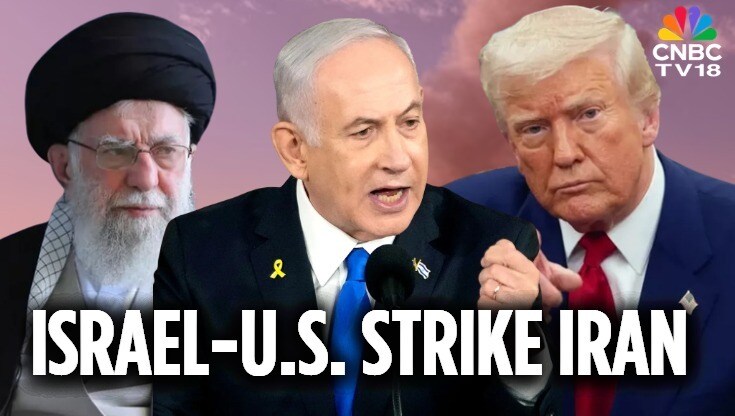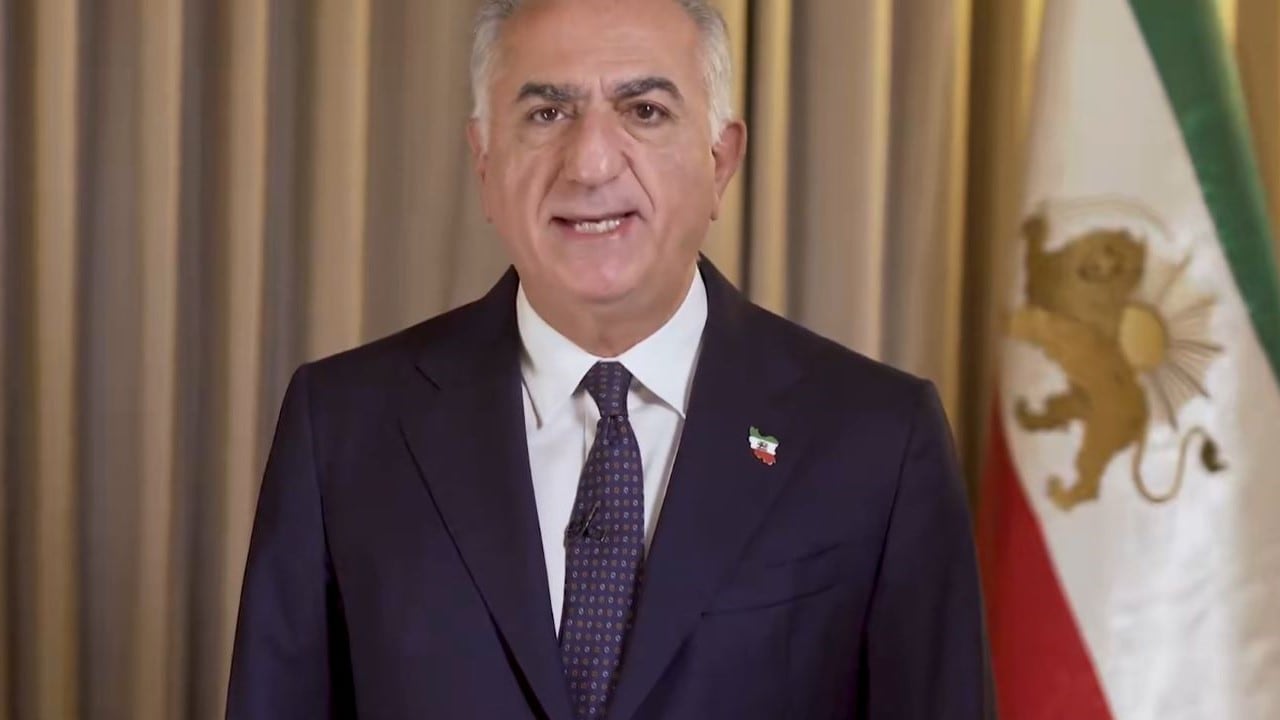
The recent escalation of hostilities between the United States, Israel, and the Islamic Republic of Iran has pushed the Middle East into a frantic, unpredictable new era. As missiles crossed borders and air defense sirens became the soundtrack of Tehran, a familiar voice emerged from the comfort of exile. Reza Pahlavi, the son of the late Shah, issued a public call for Iranians to take to the streets and reclaim their country. On the surface, it looks like a moment of historical alignment. Underneath, it is a high-stakes calculation where the aspirations of a domestic population are being weighed against the cold requirements of Western geopolitics.
Military strikes against Iranian infrastructure change the internal math for any protest movement. When foreign powers hit a nation's soil, the immediate reaction is rarely a tidy democratic transition. More often, it is a tightening of the security apparatus and a desperate rally around the flag. Pahlavi’s message seeks to bypass this instinct, urging a "national strike" to break the back of the current administration while it is distracted by external threats. Whether the Iranian people see him as a savior or a relic remains the most expensive question in modern intelligence circles.
The Infrastructure of Dissent
To understand why Pahlavi is speaking now, you have to look at the state of Iran's internal stability. For three years, the country has lived through waves of civil unrest, sparked by economic mismanagement and social repression. These weren't just protests; they were fundamental ruptures in the social contract. However, a protest is not a revolution. A revolution requires a command structure, a clear alternative, and, most importantly, the defection of the security forces.
Pahlavi is betting that foreign military pressure will be the catalyst for that defection. He isn't just asking for people to wave flags. He is calling for a collapse of the administrative state from within. The theory is that if the Revolutionary Guard is busy tracking incoming F-35s or defending nuclear sites, they cannot effectively police every corner of Isfahan, Tabriz, or Mashhad. It is a strategy of distraction.
The Disconnect Between Exile and Alleyway
There is a profound gap between the Persian diaspora's vision of a restored monarchy and the reality of a Gen Z Iranian in a Tehran basement. The youth-led "Woman, Life, Freedom" movement was organic, decentralized, and wary of old-guard politics. While Pahlavi maintains a significant media presence through satellite channels, his influence on the ground is difficult to quantify.
His call for a return to the streets assumes that the people have the energy left to fight. Inflation in Iran has hovered at crushing levels for years. The middle class has been erased. When people are struggling to buy eggs and fuel, their capacity for sustained street warfare is limited unless they believe a viable, organized alternative is waiting in the wings. Pahlavi claims to be that alternative, but he lacks a formalized political party or a shadow cabinet that has been vetted by the people he hopes to lead.
The Silicon Shield and the Digital Front
Modern revolutions aren't fought with pamphlets. They are fought with VPNs and encrypted messaging apps. The Iranian government’s "National Information Network"—a sophisticated attempt to wall off the Iranian internet from the global web—is the primary obstacle to Pahlavi’s goals. If the state can kill the internet, they can kill the coordination of a strike.
The role of technology in this conflict is more than just social media posts. It involves the deployment of satellite internet terminals and the funding of circumvention tools. This is where the business of regime change meets the reality of Silicon Valley. For Pahlavi’s call to have any teeth, there must be a way for the population to communicate outside the gaze of the Ministry of Intelligence.
Starlink and similar technologies have been touted as the solution, but smuggling the hardware across the border remains a logistical nightmare. Every terminal is a liability. Every user is a target. The digital front is currently a stalemate, with the regime using advanced AI-driven surveillance to track dissenters faster than they can organize.
The Military Equation and the Risk of Civil War
If the US and Israel continue to degrade Iran’s conventional military capabilities, they create a power vacuum. History teaches us that power vacuums in the Middle East are rarely filled by liberal democrats. They are filled by the person with the most guns.
The Revolutionary Guard (IRGC) is not just a military wing; it is a multi-billion dollar business conglomerate. They own the construction companies, the telecommunications firms, and the ports. They will not go quietly. If Pahlavi’s "return to the streets" succeeds in fracturing the state, the result could easily be a fragmented series of fiefdoms rather than a unified democratic nation.
- Option A: The military sees the writing on the wall and negotiates a transition.
- Option B: The IRGC turns its weapons inward, leading to a Syrian-style protracted conflict.
- Option C: The external strikes cause the population to resent the West, strengthening the hardliners' grip.
Pahlavi is banking on Option A. He has spent years trying to court the "patriotic" elements of the regular army, hoping to convince them that their loyalty belongs to the nation, not the clerics. It is a noble pitch, but a dangerous one. Soldiers who defect usually do so when they see a winner. Right now, the winner is unclear.
The Economic Ghost in the Machine
The underlying driver of any Iranian uprising is the economy. The rial is in a tailspin. Decades of sanctions have forced the country into a "resistance economy," which effectively means the state has learned to survive on the black market and illicit oil sales to East Asia.
When Pahlavi calls for a national strike, he is asking people who are already poor to stop earning altogether. This is the hardest sell in politics. For a strike to work, there must be a "strike fund"—a way to support the families of those who walk off the job. Without significant financial backing from the frozen assets of the Iranian state held abroad, a general strike is likely to fizzle out before it can topple the government.
The legal hurdles to releasing those billions of dollars are immense. Western governments are hesitant to hand over funds to an opposition that hasn't proven it can govern or even maintain a unified front. The opposition is notoriously fractured, with monarchists, republicans, and ethnic minority groups often spending more time arguing with each other than planning for a post-regime reality.
The Geopolitical Chessboard
Washington and Jerusalem aren't just looking at the streets of Tehran. They are looking at the entire region. An Iranian collapse would send shockwaves through Lebanon, Iraq, and Yemen. The "Axis of Resistance" relies on Iranian funding and command. If the center falls, the proxies lose their North Star.
This is why Pahlavi's message is being broadcast so loudly right now. It provides a moral framework for military action. If the narrative is that the West is "assisting a popular uprising," the political cost of the strikes is much lower. It moves the conversation from "foreign intervention" to "liberation."
However, this narrative is fragile. If the strikes result in high civilian casualties or the destruction of non-military infrastructure, the "liberation" story dies instantly. Pahlavi knows this. His rhetoric is carefully calibrated to support the removal of the regime while pleading for the safety of the Iranian people. It is a tightrope walk over an active volcano.
The Reality of the "Return"
Reza Pahlavi has not set foot in Iran since 1979. To many young Iranians, he is a figure from a history book or a grainy YouTube video. To others, he represents a lost era of secularism and global integration. But the Iran of 2026 is not the Iran of 1979. It is a country of 85 million people who have been shaped by forty years of isolation and ideological indoctrination.
The success of Pahlavi’s message depends on his ability to convince the middle-ranking officers of the military that they have a future in his version of Iran. If they believe they will be executed or imprisoned after a revolution, they will fight to the death to keep the current system in place.
Revolutions are won by the people who stay in the room when the shooting starts. Pahlavi is calling for the start of that process, but he is doing so from a distance. The people on the ground are the ones who will face the tear gas, the live ammunition, and the "Evin Prison" cells. They are the ones who must decide if the risk of a chaotic transition is better than the certainty of a repressive status quo.
The strikes have opened a door. Pahlavi is trying to usher the people through it. But once that door is open, nobody can control who—or what—walks through it next. The coming weeks will reveal if the Iranian street is ready to respond to a voice from the past to secure a future that remains dangerously undefined.
Organize your local neighborhood councils now, because the centralized state will not be there to catch you when the power goes out.