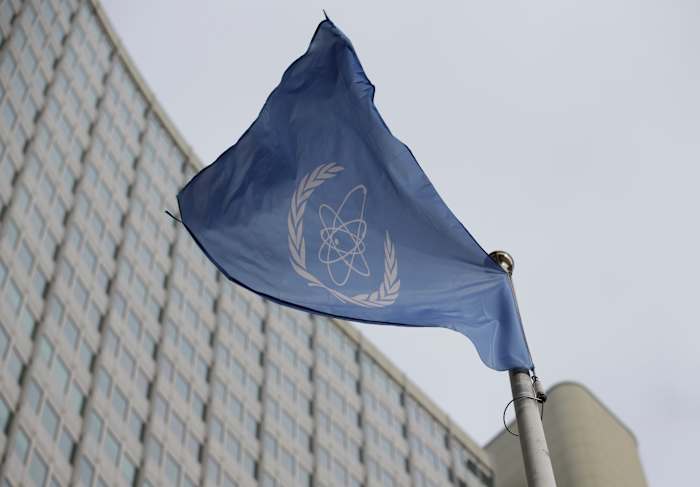
The international community is currently hyperventilating over a headline that has been recycled every six months for the better part of two decades. The International Atomic Energy Agency (IAEA) says it can’t verify if Iran has suspended enrichment. This is treated as a sudden lapse in global security, a failure of diplomacy, or a shocking breach of trust.
It is none of those things. It is the intended design of a geopolitical game where "certainty" is the ultimate sucker’s bet.
Mainstream reporting treats the IAEA like a cosmic referee with a magical whistle. The reality is far more transactional. When the "watchdog" barks about lack of access, they aren't revealing a hidden secret; they are reporting on a negotiation tactic that has already succeeded. The obsession with "verifiable suspension" is a relic of a unipolar world that no longer exists. We need to stop asking if the IAEA can see into every room in Natanz and start asking why we still pretend that seeing inside actually changes the outcome.
The Transparency Trap
Western policy is addicted to the idea that transparency equals safety. It doesn't. In the world of nuclear proliferation, transparency is often just a roadmap for sabotage or a checklist for the next round of sanctions.
I have watched diplomats waste years arguing over the placement of a single remote camera, as if a $500 lens is the only thing standing between us and a regional arms race. This is the Transparency Trap. We’ve convinced ourselves that if we can just measure every gram of $U^{235}$ with 99.9% accuracy, we’ve "solved" the problem.
In reality, the IAEA’s inability to verify is the most honest report they’ve ever issued. Total verification is a physical and political impossibility in a sovereign nation determined to maintain "breakout capability." Breakout capability isn't a bug in the system; for a middle power surrounded by adversaries, it is the primary feature of their foreign policy.
The Math of Enrichment vs. The Myth of "Suspension"
Let’s talk about the physics that the general public—and most journalists—conveniently ignore. The jump from 5% enrichment (power grade) to 20% (medical/research grade) is the heavy lifting. Once you reach 60%, you have already done roughly 90% of the work required to reach weapons-grade levels ($90%+$).
When the IAEA reports they "cannot verify suspension," they are essentially saying the toothpaste is out of the tube. You cannot "suspend" the knowledge of the scientists. You cannot "suspend" the manufacturing pipelines for IR-6 centrifuges that have already been perfected.
The "lazy consensus" suggests that if we just get inspectors back into the workshops, we can reset the clock. This is a fundamental misunderstanding of technical momentum.
Imagine a scenario where a company develops a proprietary algorithm. If the government forces them to stop running it on their servers, does the company forget the code? Does the math stop working? Nuclear enrichment is an industrial process, but at its core, it is an intellectual one. Once a nation masters the enrichment cycle, the IAEA’s role shifts from "prevention" to "bookkeeping." We are currently arguing over the ledger while the factory is already fully tooled.
The IAEA is a Bureaucracy, Not a SWAT Team
The IAEA is frequently framed as an enforcement agency. It is actually a technical secretariat with no power beyond the ability to write a sternly worded memo to the UN Security Council.
- Fact: The IAEA cannot enter a site without permission.
- Fact: The IAEA relies on the host nation for visas, transport, and safety.
- Fact: The IAEA’s budget is a rounding error compared to the defense budgets of the countries it monitors.
When the Director-General expresses "concern," he is performing a ritual. He is signaling to the board members that the political environment has soured. The technical "inability to verify" is a symptom of a breakdown in the underlying grand bargain, not the cause.
The status quo assumes that if the technical monitoring is fixed, the politics will follow. That is exactly backward. The monitoring is failing because the political incentive to cooperate has evaporated. Why would any state grant total access when the reward for "transparency" is often just a more precise target list for Stuxnet-style cyberattacks or kinetic strikes?
The Strategic Value of the "Grey Zone"
We are entering an era of Nuclear Ambiguity.
For decades, the world was binary: you had the bomb (The P5) or you didn't. Today, the most valuable geopolitical position is the "Grey Zone"—being three months away from a warhead but never actually building one.
This is the ultimate leverage. If you build the weapon, you get the North Korea treatment: total isolation. If you have no program, you have no seat at the table. But if you maintain a "verifiably unverifiable" program, you keep your enemies guessing and your allies writing checks.
Iran’s strategy isn't about the bomb; it’s about the possibility of the bomb. The IAEA’s "failure" to verify is exactly what maintains that possibility. If the IAEA could verify everything was shut down, Iran would lose its only meaningful lever in sanctions negotiations. If the IAEA verified a weapon existed, the bombs would start falling the next morning.
The "unverifiable" middle ground is the only stable equilibrium left.
Stop Asking the Wrong Questions
The media keeps asking: "How do we get the inspectors back in?"
The real question is: "What are we willing to trade for a permanent state of managed uncertainty?"
The obsession with "suspension" is a failure of imagination. Enrichment will not be un-learned. The centrifuges will not be un-invented. We are chasing a 2003 solution for a 2026 reality.
If you want to understand the nuclear landscape, ignore the reports about broken seals and camera batteries. Those are distractions. Look at the energy markets, the drone export contracts, and the regional defense pacts. The nuclear program is no longer a standalone technical issue; it is the central node in a much larger network of regional influence.
The IAEA isn't "failing" because it's incompetent. It's "failing" because it's being asked to solve a political problem with a geiger counter.
Stop waiting for the IAEA to give you a green light. It’s never coming. We are living in a world where "unverifiable" is the baseline, not the exception. The sooner we stop treating these reports as "breaking news" and start treating them as "permanent reality," the sooner we can stop chasing the ghost of 100% certainty and start managing the actual risks in front of us.
The watchdog hasn't lost its teeth; it just realized it's been barking at a mirror for twenty years.
Accept the ambiguity or continue to be surprised by the inevitable. There is no third option.