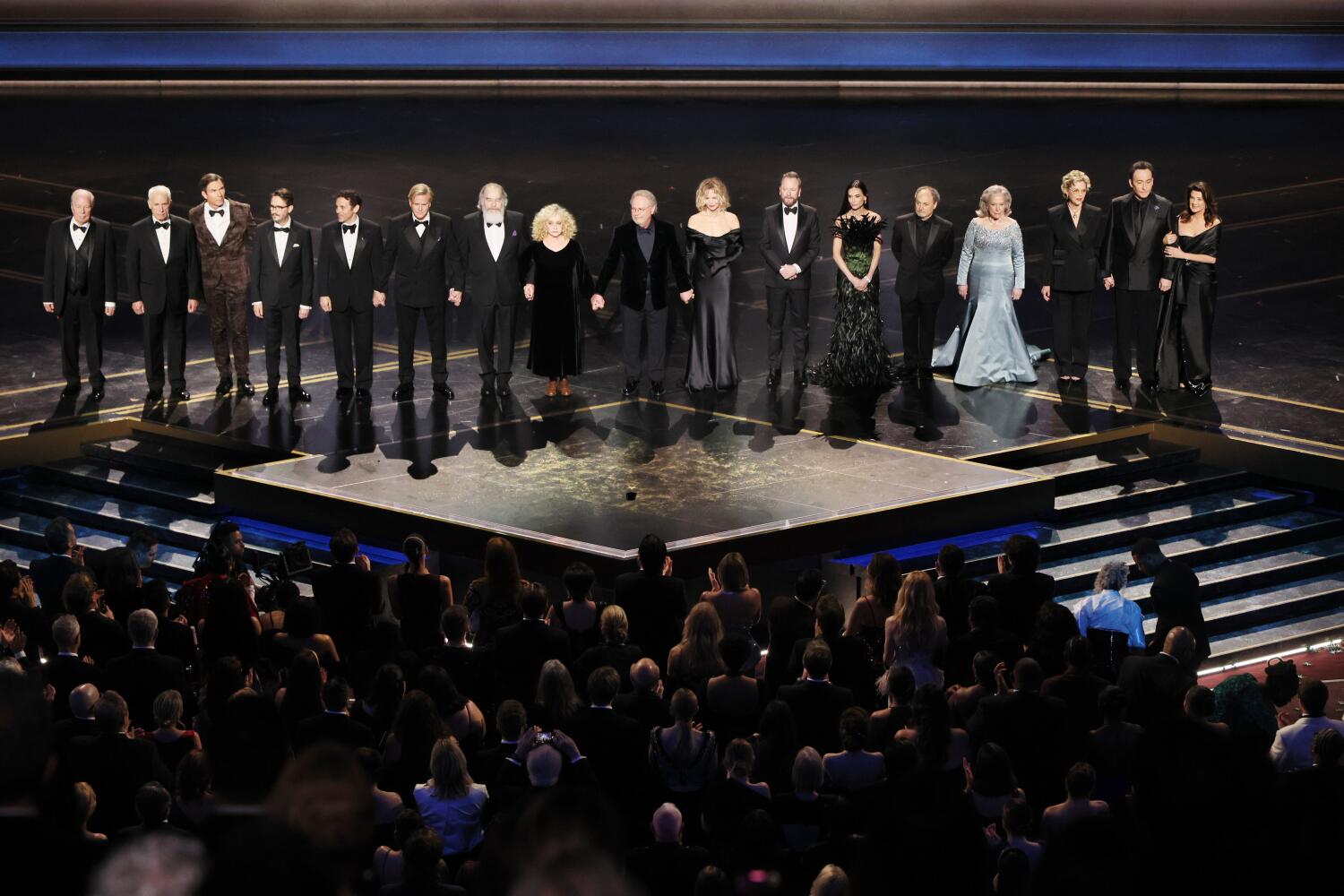
The air in the Dolby Theatre usually smells of expensive lilies and desperation. But midway through the 98th Academy Awards, the scent shifted. It became the ozone of a lightning strike.
In the back rows, where the publicists and the mid-level executives sit with their phones glowing like fireflies, the math started to outpace the ceremony. One win. Three. Seven. By the time the technical categories began to bleed into the heavy hitters, the tally for Warner Bros. wasn't just a streak. It was an erasure of the competition. Read more on a related topic: this related article.
Eleven statues.
To the casual viewer at home, eleven is just a digit. To the industry, it is a tectonic shift. It is the sound of a century-old lion finding its teeth again. This wasn't just about a single film or a lucky director. It was the moment a studio tied the all-time record for the most wins in a single night, a feat previously reserved for the kind of cinematic miracles that only happen once every few decades. Further reporting by IGN delves into comparable views on this issue.
The Ghost in the Projector Room
Think about the person who has to polish those statues.
Imagine a veteran staffer at the Warner lot in Burbank. Let's call him Arthur. Arthur has seen the commissary through the lean years, the years where the "prestige" movies flopped and the superhero fatigue started to feel like a chronic illness. For a long time, the narrative in Hollywood was that the "Big Six" studios were dinosaurs waiting for the tar pit to swallow them. The streamers were supposed to have won. The algorithm was supposed to have replaced the gut instinct.
Then came this night.
Arthur watches the telecast from a small monitor in a breakroom, surrounded by posters of Casablanca and The Exorcist. He sees the Warner Bros. logo flash on the screen over and over. Each time a winner climbs those steps, it isn't just a victory for an actor’s ego. It is a validation of a massive, risky, multi-billion-dollar gamble on human storytelling.
Eleven wins means the studio didn't just participate in the culture; they dictated it. They took the "impossible" scripts—the ones that don't fit into a tidy four-quadrant marketing spreadsheet—and they backed them with the kind of muscle only a legacy titan can flex.
The Math of a Miracle
Tying the record for the most wins by a single studio in a single year is a logistical nightmare. To hit eleven, you need a perfect storm. You need the "sweeper"—that one juggernaut film that captures the zeitgeist and refuses to let go—but you also need the "specialists."
Warner Bros. achieved this by dominating across the board. They won for the sweeping epics that remind us why we pay fifteen dollars for a tub of popcorn. They won for the intimate, quiet dramas that make us cry in the dark. They even snatched the technical awards, the "below-the-line" categories like sound design and film editing that are the literal heartbeat of a movie.
Consider the pressure of that momentum. When a studio wins five in a row, the room starts to turn. There is a palpable tension. The "underdog" narrative starts to favor the other guys. Yet, the quality of the work was so undeniable that the momentum never broke. It was a rhythmic, relentless march toward history.
Why This Hurts and Heals
Success at this scale is a double-edged sword. For the rival studios sitting in the dark, watching the Warner contingent repeatedly take the stage, it felt like a funeral for their own campaigns. Millions of dollars spent on "For Your Consideration" billboards on Sunset Boulevard evaporated in real-time.
But for the industry as a whole, it served as a much-needed jolt of electricity. It proved that the theatrical model—the old-school, big-studio way of doing things—still has the power to produce the highest level of art. We have spent years hearing that the "Golden Age of Cinema" is in the rearview mirror, replaced by 15-second vertical videos and content generated by prompts.
Then a night like this happens.
It reminds us that there is a specific, irreplaceable magic when a thousand people in a dark room all gasp at the same time. The eleven Oscars are trophies, yes, but they are also receipts. They are proof of purchase for the idea that scale doesn't have to sacrifice soul.
The Weight of the Gold
If you held an Oscar in your hand, you would notice it is surprisingly heavy. It weighs about eight and a half pounds. Now, imagine the weight of eleven of them.
That is the burden Warner Bros. now carries back to Burbank. The record isn't just a finish line; it’s a new starting block. When you tie the record for the greatest single-night performance in the history of the Academy, "good enough" is no longer an option for the next fiscal year. The shareholders will want a repeat. The fans will expect a masterpiece every Friday.
But for one night, the spreadsheets didn't matter.
As the house lights came up in the Dolby Theatre and the celebrities began their migration toward the after-parties, the historical weight of the evening began to settle. The record was no longer a goal; it was a fact. Eleven wins. A tie for the crown.
Back on the lot in Burbank, Arthur turns off the breakroom TV. He walks out into the cool California night, passing the water tower that has stood since the days of silent film. The studio is quiet, but it doesn't feel empty. It feels like a place that has just been reminded of its own power.
The lights on the lot stay on a little longer tonight. There is a lot of polishing to do.
Inside the quiet offices where the scripts for next year are piled high, the golden glow of those eleven statues seems to reflect off every window. It is a reminder that in a world of digital noise, a truly great story still has the power to silence the room.