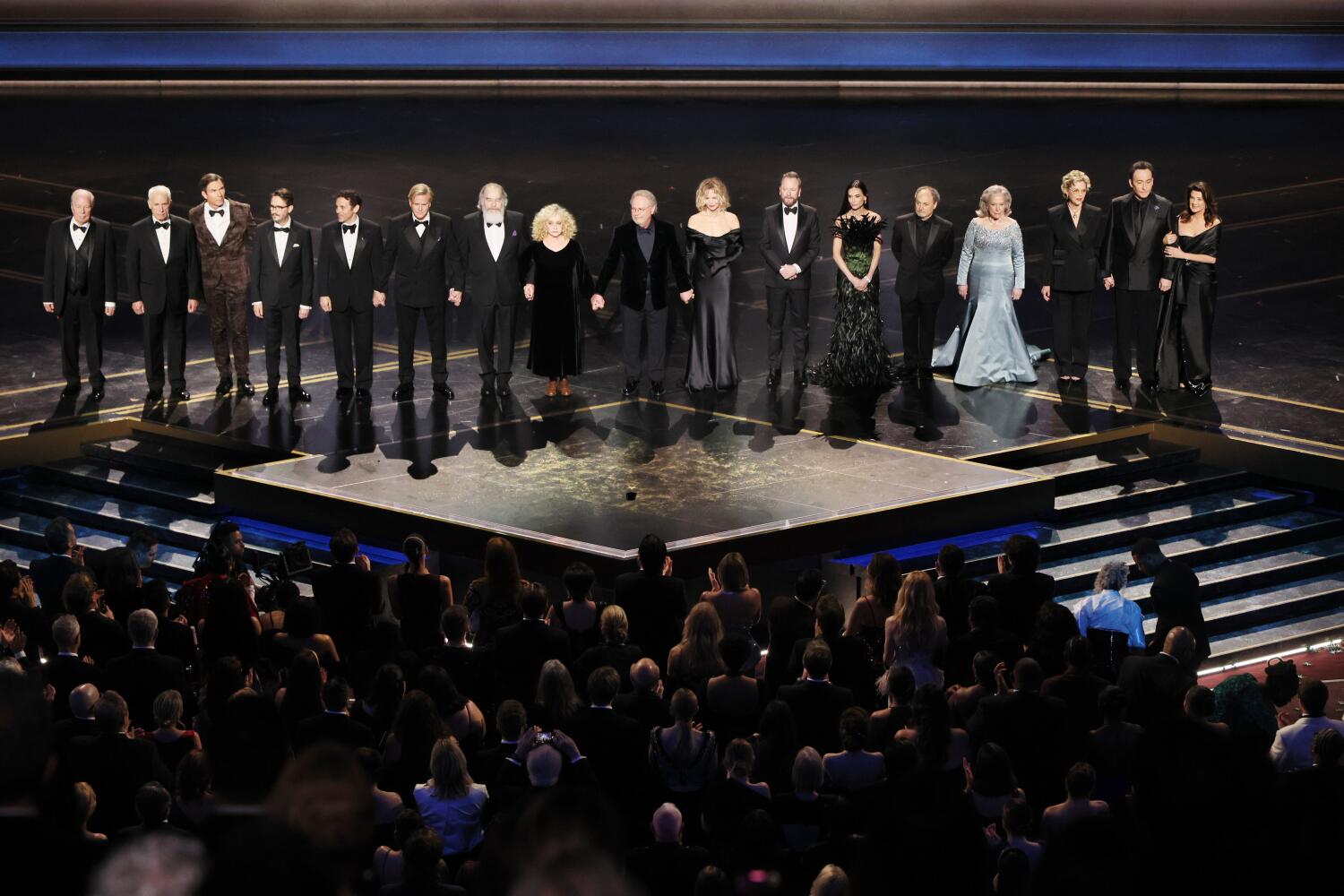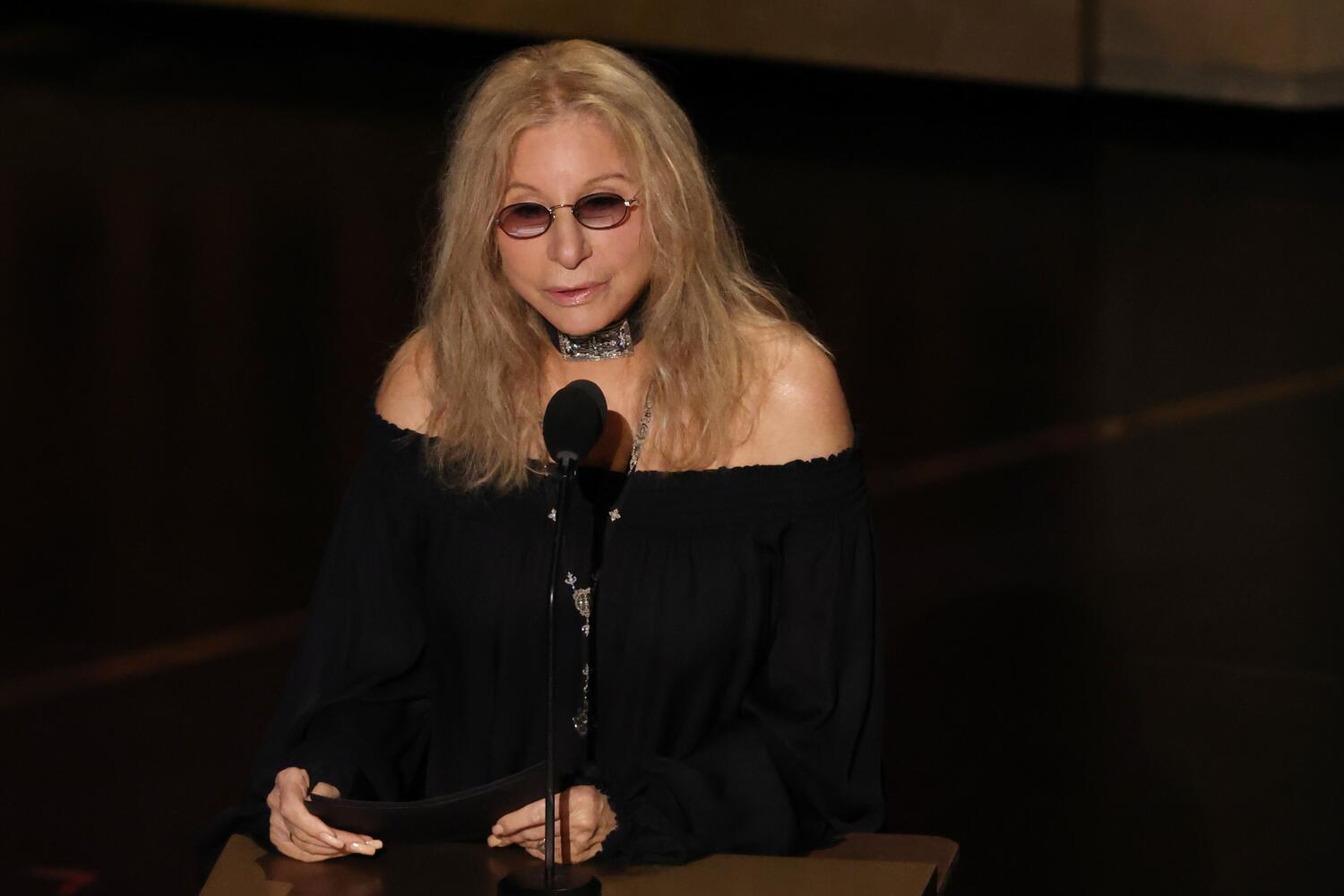
The Dolby Theatre is usually a vacuum of rehearsed perfection. It is a place where every smile is lit by a technician and every "spontaneous" sob is timed to a teleprompter. But there are rare, jagged moments when the artifice cracks. On a night meant to celebrate the present, the room suddenly felt the heavy, suffocating weight of the past. It happened the moment a woman, whose voice has defined the romantic subconscious of a century, stepped into a single pool of light.
Barbra Streisand does not just sing. She conjures.
When she stood there to honor Robert Redford, she wasn't just performing a tribute for a colleague. She was reaching back across five decades of cinematic history to touch a ghost. The audience held its breath. You could hear the faint hum of the air conditioning, the rustle of silk gowns, and then, the first few notes of a melody that felt like a bruise.
The Girl and the Golden Boy
To understand why the room dissolved into tears, you have to look beyond the trophy sitting on the pedestal. You have to go back to 1973. Imagine two people who represented the polar opposites of the American dream. There was Katie Morosky, the frizzy-haired, fierce, Marxist firebrand. Then there was Hubbell Gardiner, the effortlessly handsome, golden-boy novelist who moved through life as if the wind were always at his back.
In The Way We Were, Streisand and Redford didn't just play a couple. They played a tragedy of compatibility. They loved each other, but they couldn't survive each other. The film ended with a rainy street corner in New York, a lingering touch of hair, and a realization that some fires are too bright to keep in a house.
For the millions watching the Oscars, Streisand’s presence on that stage was the sequel we never got. It was the "what happened next" for a generation that grew up believing that maybe, just maybe, Hubbell and Katie would find their way back.
The Physics of a Memory
Memory is a strange, non-linear thing. It doesn't sit still. It decays and morphs, losing the sharp edges of facts while retaining the dull ache of emotion. When Streisand began the opening lyrics, she wasn't singing to the cameras. She was looking toward the wing of the stage where Redford sat, his face a map of the years that had passed since they were the most famous faces on earth.
She sang about "misty water-colored memories." It is a line we have heard a thousand times on grocery store speakers and in karaoke bars. But in that moment, the words regained their teeth. She sang with a slight tremor, a vulnerability that stripped away the "Diva" persona she has carried for years. This wasn't a legend protecting her brand. This was a woman mourning the passage of time.
Redford, usually the stoic, rugged icon of Sundance and independent grit, looked fragile. His eyes were glassy. In that exchange of glances, the entire industry of Hollywood—the billions of dollars, the egos, the sequels, the marketing—vanished. It was just two old friends acknowledging that the "way they were" was a place they could never visit again.
Why We Cry at Strangers
It feels irrational to weep for people who live in mansions and fly in private jets. Why does a song from a fifty-year-old movie make a Gen Z TikToker and a Boomer grandmother feel the same pang of grief?
The answer lies in the universal experience of the "Unfinished Story."
Everyone has a Hubbell or a Katie. Everyone has that one person who exists only in the sepia-toned version of their own history—the one who was perfect for a season but impossible for a lifetime. When Streisand’s voice soared on the final notes, she wasn't just honoring Redford’s career. She was honoring the parts of ourselves we leave behind as we age. She was singing for the versions of us that were younger, braver, and more convinced that love was enough to bridge any divide.
The technical mastery of the performance was undeniable, but the "human element" was found in the silence between the notes. It was in the way she reached out her hand toward him as if trying to pull him back into the frame of a film that finished shooting in the seventies.
The Weight of the Long Goodbye
As the song peaked, the cameras cut to the faces in the crowd. These were the titans of the modern industry—actors who command twenty-million-dollar paychecks and directors who helm global franchises. They were sobbing.
They weren't crying at a performance. They were crying at the reminder that even the most glittering life is subject to the gravity of time. Robert Redford, the man who once looked like he was carved out of sunlight, is now a man in the twilight of a legendary journey. Streisand, the voice that once seemed indestructible, now carries the grit and grace of survival.
There is a specific kind of beauty in watching icons acknowledge their own mortality. It grounds them. It makes the "stars" feel like neighbors.
Beyond the Script
The evening continued. Other awards were handed out. Jokes were made. But the atmosphere had fundamentally shifted. The "invisible stakes" of the night had been revealed. We often treat celebrity news as a series of data points: box office numbers, divorce filings, casting calls. We forget that these people are the curators of our collective emotional history.
When a competitor's article reports that "Streisand performed a tribute," they are technically correct but emotionally illiterate. They miss the pulse. They miss the fact that for three and a half minutes, the world stopped arguing about politics or the economy and collectively remembered what it felt like to be heartbroken for the first time.
The performance ended not with a flourish, but with a whisper. Streisand finished the song, and for a moment, she didn't move. She stood there, looking at Redford. He stood up, his applause slow and deliberate.
There was no big, cinematic kiss. There was no grand speech. Just a nod. A recognition of a shared life lived in the glare of the public eye, and a quiet thanks for the memories that, however painful, remain beautiful because they happened at all.
We spend so much of our lives trying to outrun the past, trying to reinvent ourselves and move on to the next thing. We treat our history like a skin to be shed. But watching those two, you realized that you don't actually lose the people you loved. You just carry them differently. They become the "water-colored" background of everything you do next.
The light dimmed, the orchestra swelled to lead into a commercial break, and the two legends disappeared into the shadows of the wings, leaving the rest of us to figure out how to live with the ghosts of the way we were.