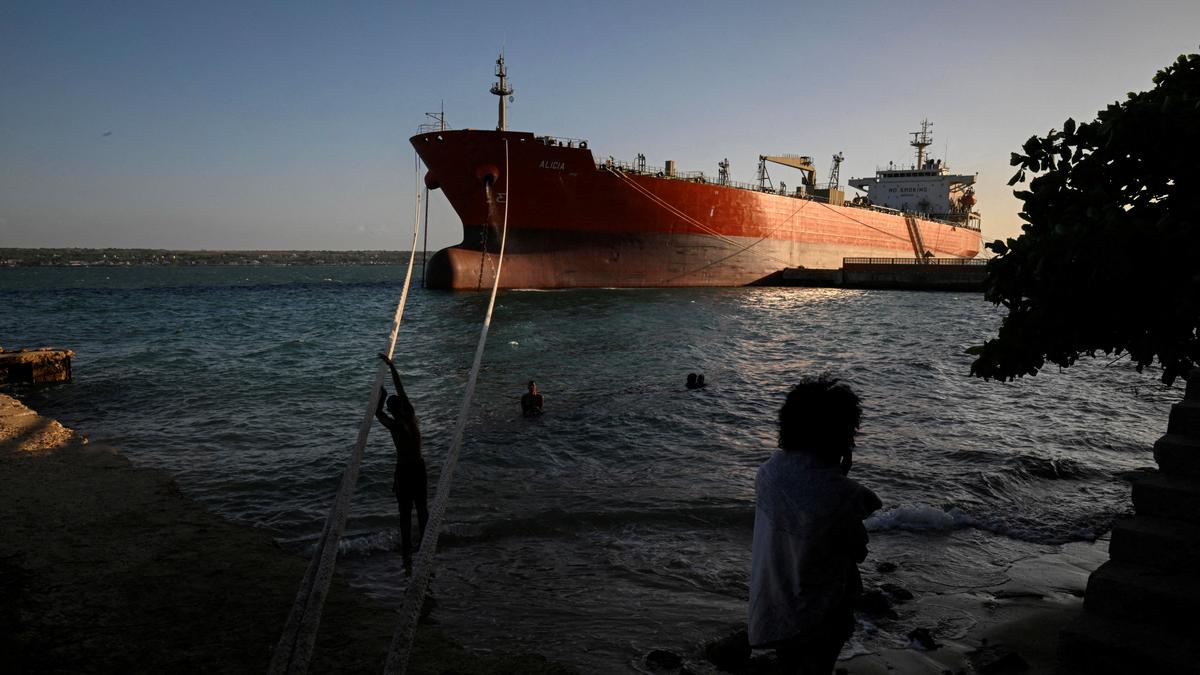
Russia is dispatching a second tanker of crude oil to Cuba this month, a move that signals a desperate pivot for Havana and a calculated geopolitical play by Moscow. While official statements frame this as routine cooperation, the reality is a high-stakes survival tactic for a Cuban energy grid on the brink of total collapse. This second shipment isn't just about fuel. It is a temporary patch on a systemic failure that has left the island suffering through rolling blackouts and a crippling shortage of basic goods.
For decades, Havana relied on Venezuela to keep the lights on. But with Caracas struggling to maintain its own production and domestic demand, the "Petro-diplomacy" of the Chavez era has withered. Russia is now stepping back into its Cold War role as Cuba’s primary benefactor, but the terms are different this time. Moscow isn't acting out of socialist solidarity; it is securing a strategic outpost in the Western Hemisphere at a time when its own global exports are under heavy scrutiny.
The Fragility of the Cuban Power Grid
To understand why two ships matter, you have to look at the state of the island's infrastructure. Most of Cuba’s thermal power plants are over forty years old. They were built with Soviet technology and designed to run on a specific grade of heavy crude. Maintenance has been sporadic at best. When a tanker arrives at the port of Matanzas, it isn't just delivering a commodity; it is preventing a nationwide shutdown.
Last year, the island experienced "zero generation" events where the entire national grid failed. The arrival of Russian Urals crude provides the necessary feedstock to keep these aging turbines spinning. However, the volume being sent is a fraction of what the island actually needs for long-term stability. Havana requires roughly 125,000 barrels per day to function normally. These sporadic shipments from the Kremlin are a sedative, not a cure.
The logistical dance required to get this oil to Cuban shores is also becoming more complex. Sanctions on Russian shipping and the long-standing U.S. embargo on Cuba create a narrow corridor for these transactions. Often, these shipments involve "dark fleet" tankers or complex ship-to-ship transfers to avoid detection or legal repercussions.
The Geopolitical Transaction
Vladimir Putin knows that every barrel sent to Havana buys influence. In exchange for fuel, Cuba provides Russia with a diplomatic mouthpiece in Latin America and the Caribbean. This is a low-cost, high-reward strategy for the Kremlin. By keeping the Cuban government afloat, Russia maintains a thorn in the side of Washington without having to commit the massive subsidies of the 1970s.
We are seeing a return to a bipolar world where energy is the primary weapon. For Russia, diverting oil from Asian markets to the Caribbean serves as a reminder that they can still project power in the U.S. "near abroad." For Cuba, the cost of this oil is likely being added to a mounting debt that they have little hope of ever repaying in cash. Instead, the payment is made in sovereignty and strategic access.
There is also the matter of technical expertise. Along with the oil, Russia is reportedly sending technicians to help overhaul the Antonio Guiteras plant, the island's most important power producer. This suggests a longer-term involvement than a few emergency shipments would indicate. It points toward a structural integration of Russian energy interests into the Cuban state apparatus.
The Failure of Internal Reform
The reason Cuba is so dependent on these shipments is the internal failure to transition to renewable energy. Despite sunshine and wind, the island still generates over 90% of its electricity from fossil fuels. Foreign investment in solar and wind has stalled because the Cuban government cannot guarantee payments to international firms.
The state-run oil company, Cupet, has seen its own production dwindle. The heavy, sulfur-rich oil extracted from Cuban soil is difficult to refine and even harder on the machinery of the power plants. This creates a vicious cycle. They use bad oil, the plants break, they need more imported oil to compensate, but they have no hard currency to buy it.
The Economic Ripple Effect
When the fuel doesn't arrive, the economy stops. It isn't just about air conditioning or lights.
- Agriculture: Pumps for irrigation stop working, leading to crop failure.
- Water: Pumping stations require electricity to deliver water to high-rise apartments.
- Transportation: Public transit grinds to a halt as diesel is diverted to power plants.
The Cuban people are the ones paying the ultimate price for this energy insecurity. The "Special Period" of the 1990s, which followed the collapse of the Soviet Union, is a haunting memory that feels increasingly like a current reality. These Russian tankers are the only thing standing between the current situation and a total humanitarian disaster.
The Washington Dilemma
The United States finds itself in a difficult position. Tightening sanctions further could trigger a massive migration wave as life on the island becomes unbearable. Relaxing them, however, would be seen as a win for the Cuban leadership and their Russian partners. The arrival of Russian oil ships is a direct challenge to the effectiveness of the U.S. policy of isolation.
Observers in the region note that Mexico and Brazil have also dipped their toes into assisting Havana, but neither has the stomach for the consistent supply that Russia provides. Moscow is effectively filling a vacuum that the U.S. has left open. As long as Havana feels it has no path to normalization with the West, it will continue to tether its fate to the Kremlin.
Crude as a Tool of Statecraft
The chemistry of the oil matters as much as the volume. Russian Urals crude is a medium-gravity blend. When mixed with the heavier Cuban crude, it makes for a more manageable fuel for the island's refineries. This technical necessity makes the partnership hard to break. Even if another supplier emerged, the refineries would need to be recalibrated.
Russia is also using this as a testing ground for its ability to bypass Western financial systems. The payments for these shipments are often handled through non-traditional banking channels or through bartering schemes involving Cuban medical services or agricultural products. It is a closed loop designed to be invisible to the U.S. Treasury Department.
The math of the situation is grim. The second ship will provide enough fuel to perhaps stabilize the grid for another two to three weeks. After that, the cycle begins again. Havana will look toward the horizon, waiting for the next Russian flag to appear on a tanker. This is not a strategy for growth; it is a desperate scramble for one more day of electricity.
The ships are a symptom of a much larger rot. The Cuban energy model is built on the hope that a foreign patron will always be there to foot the bill. First it was the Soviets, then the Venezuelans, and now the Russians are back. But the Russians are fighting a war in Ukraine that is draining their own resources. The question isn't whether the second ship will arrive, but how many more the Kremlin is willing to spare before they decide the cost of maintaining Havana is too high.
Havana has no Plan B. Without a massive infusion of capital to modernize the grid—capital that won't come from Russia—the island is destined to remain in a perpetual state of energy poverty. The lights stay on as long as the tankers keep coming, and not a second longer. Each shipment is a stay of execution, but the sentence remains the same. The reality of Cuba's energy crisis is that it is no longer a technical problem to be solved, but a geopolitical debt that is being collected in real-time.