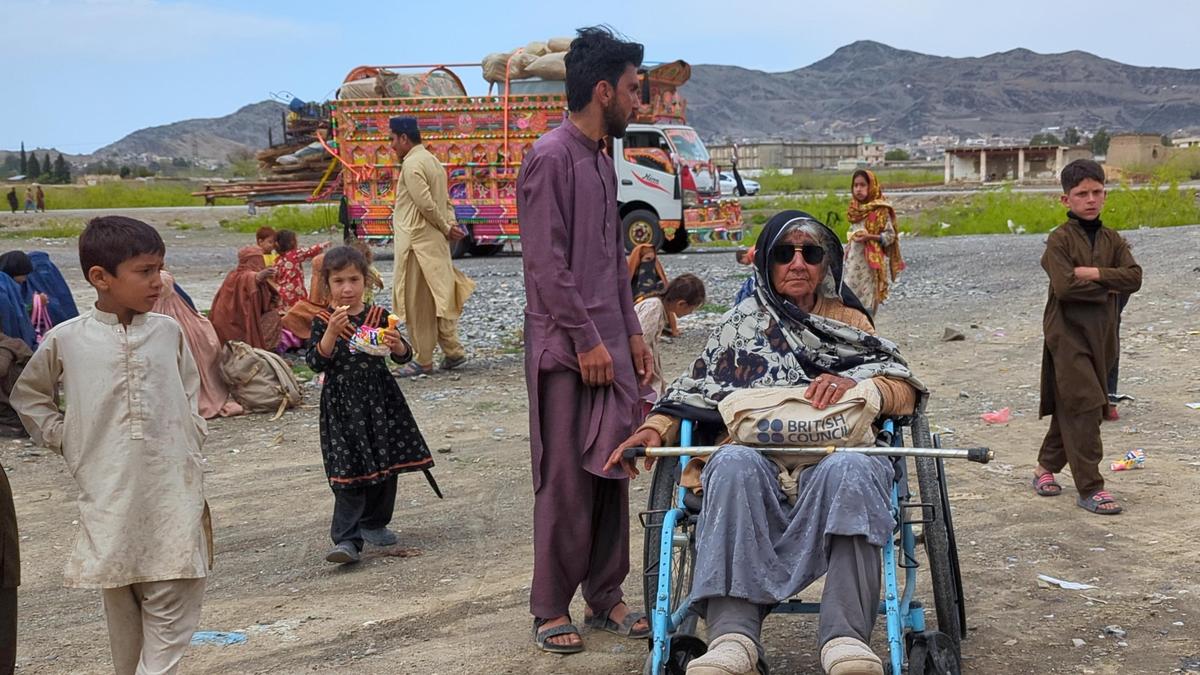
The dust in the borderlands of North Waziristan doesn't just settle; it clings. It finds the creases of a soldier’s uniform and the lungs of a shopkeeper in Miranshah. For decades, this dust has been stirred by the same repetitive cycle of hope and betrayal, a rhythm that has become the heartbeat of the Durand Line. When the wind blows from the west, it carries the smell of smoke and the echo of a promise that remains unfulfilled.
Consider a man named Tariq. He is a hypothetical composite of the thousands of officers stationed along the jagged, mountainous divide between Pakistan and Afghanistan. Tariq doesn’t care about the high-flown rhetoric of diplomatic summits in Islamabad or Kabul. He cares about the cold weight of his rifle and the way the silence at midnight feels like a physical threat. To Tariq, the geopolitics of the region aren't found in a briefing paper. They are found in the sudden, violent stutter of a machine gun from a ridge he was told was cleared.
Pakistan’s recent message to the Taliban administration in Kabul is not merely a diplomatic note. It is a scream for a status quo that has finally shattered. The "onus," as the official statements put it, is on Afghanistan. But for men like Tariq, the word "onus" is too clean. It doesn’t capture the reality of a border that has become a sieve for the Tehrik-e-Taliban Pakistan (TTP).
The Ghost in the Mountains
The TTP is not a ghost, though they move like them. They are a tangible force that has claimed the lives of thousands of Pakistanis. For years, the narrative was that if the Afghan Taliban returned to power, the cross-border raids would vanish. The logic seemed sound to those sitting in air-conditioned offices. Why would a brother-in-arms allow his soil to be used to bleed his neighbor?
The reality proved to be far more jagged. Since the fall of Kabul in August 2021, the violence has not decreased. It has mutated. It has grown teeth.
When the Pakistani government points the finger at Kabul, they are pointing at the sanctuary. Intelligence reports and satellite imagery show the camps. They show the training grounds. They show the movement of men who cross the border with the ease of shadows passing through a fence. Pakistan’s argument is simple: We helped you when the world turned its back; now, you are harboring the very men who seek to tear us apart.
It is a betrayal that stings because it is so familiar.
The Mathematics of Mourning
Statistics are often used to sanitize tragedy. We hear of "ten soldiers martyred" or "a twenty percent rise in cross-border incidents." These numbers are flat. They have no pulse. To truly understand the stakes, you have to look at the funerals in small villages in Punjab and Khyber Pakhtunkhwa.
In these villages, a soldier’s death is not a headline. It is a vacuum. It is a mother who will never again hear the front door creak open at midnight. It is a father who has to bury the strongest part of his legacy. When Pakistan demands that Afghanistan take "decisive action," they are trying to stop the production of widows.
The Afghan Taliban, for their part, play a sophisticated game of denial. They speak of "internal security" and "uncontrolled elements." They offer platitudes while the TTP issues videos of its fighters graduating from camps that are clearly within Afghan territory. This isn't just a failure of policing. It is a choice. To the hardliners in Kabul, the TTP are not terrorists; they are ideological kin. Disarming them or handing them over would be seen as a betrayal of their own revolutionary spirit.
So, the stalemate continues.
The Invisible Fence
The Durand Line was always an artificial scar across the face of the Pashtun heartland. Families live on both sides. Marriages are contracted across the divide. Trade, both legal and illicit, flows through the mountain passes like blood through an artery. You cannot simply close a border that has never truly existed in the minds of the people who live there.
Pakistan has spent billions of dollars and years of labor erecting a fence. It is a monumental feat of engineering—miles of chain-link and barbed wire snaking over peaks that would make a goat dizzy. But a fence is only as strong as the will of the people on either side of it. If the authorities in Kabul look the other way, a fence is just a ladder.
The TTP knows this. They use the topography of the land—the deep ravines and the hidden caves—as a tactical advantage. But their greatest advantage is the political cover provided by the Afghan Taliban. Every time a drone strike or a targeted operation occurs, Kabul protests the "violation of sovereignty." It is a masterful use of international law by a group that otherwise ignores it. They claim the rights of a nation-state while refusing the responsibilities that come with it.
The Weight of the Word Onus
What does it mean to put the "onus" on someone? It means the ball is in their court. It means the patience of the neighbor has run dry.
In the bazaar of Peshawar, the mood has shifted. People used to talk about the "strategic depth" that an allied Afghanistan would provide. Now, they talk about the "blowback." They see the rise in extortion, the return of the suicide vests, and the creeping dread that the dark days of 2014 are returning. The Pakistani state is now saying out loud what everyone has felt for months: The time for excuses is over.
If Kabul does not act, Pakistan has indicated it will. We have already seen hints of this—airstrikes on suspected militant hideouts inside Afghan territory. These are not just military strikes; they are messages. They are the sound of a neighbor finally kicking back against a door that won't stay shut.
But violence only breeds more of itself. A strike on an Afghan village, even one harboring militants, fuels the recruitment fire for the TTP. It allows the Taliban to paint Pakistan as the aggressor. It creates a new generation of Tariqs on the other side of the line, men who believe their only path to dignity is through the barrel of a gun.
The Human Cost of Diplomacy
Imagine a dinner table in Kabul. A Taliban commander sits with his lieutenants. They talk about the pressure from Islamabad. One suggests they should rein in the TTP to get the trade routes reopened. Another argues that if they give in now, they lose their standing as the vanguard of the faith. They eat their rice and meat while, miles away, a TTP cell prepares a vest for a market in Quetta.
Then imagine the dinner table in a Pakistani garrison town. The chairs are empty because the men are on "high alert." The wives talk in hushed tones about who might be next. The children play with toy guns, unaware that the game they are mimicking is the thing that will eventually steal their peace.
This is the human element that gets lost in the "competitor articles" and the dry news wires. This isn't about policy. It's about survival.
Pakistan is currently trapped in a geopolitical pincer. To the east, a traditional rival. To the west, a supposed ally that behaves like an adversary. The internal economy is gasping for air, and the social fabric is frayed. The last thing the country needs is a forever war on its western flank. Yet, that is exactly what is being served.
The demand for Afghanistan to "end hostilities" is not just a request for peace. It is a request for the Afghan Taliban to decide what kind of country they want to be. Do they want to be a legitimate member of the global community, or do they want to be a landlord for the world's most dangerous tenants?
The Breaking Point
There is a limit to how much a nation can endure. Pakistan has absorbed millions of refugees. It has lost over 80,000 lives in the War on Terror. It has seen its schools attacked and its mosques turned into graveyards. The current stance—the firm, public placing of the onus on Kabul—is the final warning before the storm.
History tells us that these mountain passes have a way of swallowing empires. They don't care about "onus" or "responsibility." They only care about power and the ability to project it. If the Afghan Taliban continue to believe that they can harbor the TTP without consequence, they are miscalculating the desperation of a neighbor pushed to the edge.
The dust is rising again in Waziristan. It’s thick, it’s red, and it’s getting harder to see the way home.
A soldier stands on a ridge, looking west. He sees the lights of a village across the border. He wonders if the men sitting around the fires in those houses are planning to kill him tomorrow. He wonders if his government’s words will reach the ears of those men, or if they will simply be carried away by the wind, lost in the vast, unforgiving silence of the Hindu Kush.
The line is drawn. The fence is up. The words have been spoken. Now, all that’s left is to see if anyone in Kabul is actually listening, or if the silence from the west is merely the sound of a fuse burning down.