The Accidental Resurrection of Lambeth’s Forgotten High Society
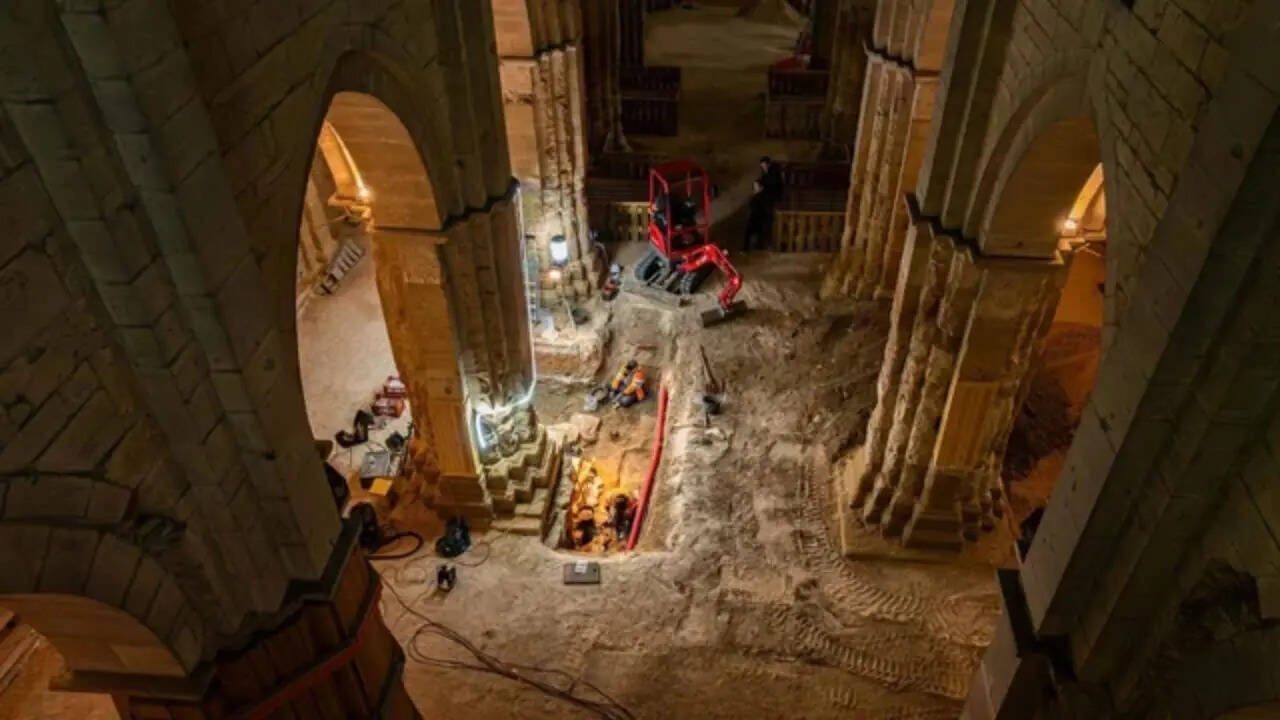
The discovery of a hidden staircase at the Garden Museum—formerly the church of St Mary-at-Lambeth—has more to do with structural necessity than Indiana Jones-style exploration. While headlines shouted about a "shock discovery," the reality is a sober reminder of how London sits on a literal powder keg of human remains. Workers replacing a floorboard stumbled upon a void that led to a vault containing thirty lead-lined coffins, including those of five Archbishops of Canterbury.
This is not a ghost story. It is a logistics nightmare and a historical reckoning. Don't miss our previous article on this related article.
London’s soil is saturated with the dead. From the plague pits of the 17th century to the neatly stacked crypts of the Victorian era, the city has run out of space to put people at least four times in the last three hundred years. When we find a "hidden" vault today, it is rarely because it was meant to be a secret. It was simply built over because the living ran out of room, out of money, or out of memory.
The St Mary’s find is significant because of the status of the occupants. We aren't looking at the anonymous poor of the Workhouse; we are looking at the upper echelons of the Church of England, tucked away and eventually ignored as the building fell into disrepair in the 1970s. The fact that the entrance was covered by a slab and then forgotten by several generations of churchwardens speaks to a broader trend in British urban development: we prefer to walk over the past rather than maintain it. If you want more about the background here, Al Jazeera offers an excellent breakdown.
The Engineering of a Crypt
Building a vault in a riverside parish like Lambeth was a feat of masonry. The ground is marshy, influenced by the tidal shifts of the Thames. To keep a burial chamber dry—and to prevent the "miasma" that 18th-century Londoners feared—these structures had to be airtight and heavily reinforced.
Lead-lined coffins were the gold standard for the wealthy. They served a dual purpose. First, they preserved the body longer, a point of pride for the elite. Second, and more practically, they contained the odors of decomposition within the vault. In a church where the congregation sat directly above the dead, this was a matter of public health.
When the modern renovation crew lowered a camera through the floorboards, they didn't just find bones. They found intact caskets, some still bearing the ornate heraldry of the families involved. The structural integrity of the vault is what kept these artifacts preserved, but it also creates a modern headache. Opening or moving these remains is a legal and ethical minefield that requires a Home Office license and a team of specialized osteologists.
The Bureaucracy of the Grave
Under the Burial Act of 1857, disturbing human remains is a criminal offense unless specific permissions are granted. This is why many developers in London hit a wall when they find a single bone during a basement excavation. At St Mary’s, the discovery didn't stop the project, but it changed the mission.
The museum decided not to disturb the Archbishops. This was a pragmatic choice as much as a respectful one. To move thirty lead coffins would cost hundreds of thousands of pounds and years of litigation with the Church of England. Instead, they installed a glass panel. Now, visitors can look down into the dark. We have turned a site of worship into a site of voyeurism, a transition that happens to almost every historic religious building in Europe eventually.
Why We Stop Caring About the Dead
There is a cycle to how London treats its ancestors. It starts with reverence—a grand funeral, a lead casket, a stone marker. Then comes the period of neglect, usually starting about eighty years after the last person who knew the deceased has died. By the 150-year mark, the site is often viewed as a burden.
By the time St Mary-at-Lambeth was slated for demolition in the late 1970s, the vault was a forgotten footnote. It was only saved because John and Rosemary Nicholson tracked down the tomb of the legendary plant hunters, the Tradescants, in the churchyard. Their quest to save a garden saved the church, and by extension, the Archbishops beneath the floor.
This pattern of "accidental preservation" is the only reason half of London’s history still exists. We are not a culture that meticulously archives its physical past; we are a culture that hoards space and occasionally finds something we forgot we had.
The real question isn't how the staircase stayed hidden. It’s how many other staircases are currently under the floors of the cafes, offices, and flats where we spend our days. In districts like Spitalfields or Marylebone, the answer is "hundreds."
The Myth of the Sealed Vault
The media loves the word "sealed." It implies a time capsule, a moment frozen in 1848 or 1720. In reality, vaults are rarely sealed perfectly. Dust, water, and time find their way in.
In the Lambeth vault, the coffins are stacked. This wasn't a gallery; it was a storage unit for the dead. When space ran out, they simply piled the next generation on top of the last. This creates a physical pressure that can cause lead coffins to "bloom" or split over centuries. The fact that these remained largely intact is a testament to the original builders' skill, but it also presents a risk. An intact lead coffin can contain trapped gases from decomposition that are, quite literally, toxic.
Archaeologists working on these sites have to wear full respirators. The "smell of history" is often just methane and ancient bacteria. When you see a grainy photo of a hidden vault, remember that the person taking it is likely standing in a space that would be classified as a biohazard by any modern health board.
The Counter-Argument for Reburial
Some historians argue that leaving these remains in situ—especially as a tourist attraction—is a violation of the original intent. The men in that vault expected a "final" resting place. They did not expect to have their coffins lit by LED strips for the benefit of people buying overpriced lattes in the museum cafe.
However, the alternative is often worse. When remains are removed from London churches to make way for development, they are frequently reinterred in mass graves in the suburbs. The individual identity is lost. By staying beneath the Garden Museum, the Archbishops keep their names, their titles, and their proximity to the seat of their power at Lambeth Palace across the road. It is a messy, imperfect compromise.
A City Built on Bone
We have to stop being "shocked" by these discoveries. London is a vertical city, and we have only been looking at the top half.
The discovery at the Garden Museum should serve as a wake-up call for urban planners and historians alike. We are approaching a point where the maintenance of these hidden spaces is becoming a structural necessity. If a vault collapses, the building above it goes with it. We cannot afford to keep "forgetting" where we put our ancestors.
If you walk through the Garden Museum today, the glass floor serves as a window into a very specific type of British amnesia. We spent centuries piling the dead into the earth, then a century pretending they weren't there, and now we are spending a fortune trying to figure out how to live alongside them without the whole floor caving in.
The next time a floorboard creaks in an old London pub or a basement wall shows a damp patch in a rectory, don't assume it’s just age. It’s likely the weight of a history we haven't quite decided how to bury for good.
Go to the Garden Museum. Look through the glass. See the lead-gray shapes in the dark and realize that the only thing separating your world from theirs is a few inches of wood and a lot of redirected funding.
If you are a property owner in an older borough, check your title deeds for "chancel repair liability" or historic burial rights before you start that kitchen renovation. You might find that your house has more residents than you listed on the census.