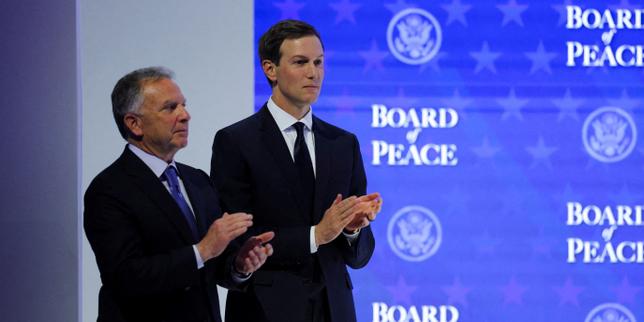
The headlines are reading like a guest list for a Mar-a-Lago garden party rather than a serious diplomatic breakthrough. Steve Witkoff and Jared Kushner are heading to Kiev in April. The mainstream press is treating this like a "bridge-building" exercise, a clever bit of back-channeling by the Zelenskyy administration to hedge its bets against a shifting political climate in Washington.
They are wrong.
This isn't strategic hedging. It is a desperate recognition that the institutional conduits of power in the West have failed. By inviting real estate moguls and former "First Son-in-Laws" to a war zone, Kiev is signaling that they no longer believe in the State Department or the Pentagon's ability to sustain this conflict. They are moving from the era of "rules-based order" diplomacy into the era of the transactional deal.
The Myth of the Diplomatic Back Channel
Mainstream analysts love the phrase "back channel." It sounds sophisticated. It implies a hidden layer of chess being played by grandmasters.
In reality, a back channel is what you use when the front door is locked and the house is on fire.
The arrival of Witkoff and Kushner isn't about military logistics or NATO integration. These men are not defense intellectuals. They are dealmakers. Witkoff is a titan of New York real estate. Kushner’s portfolio, especially post-White House, has been defined by securing massive capital injections from the Gulf.
When Kiev invites these specific individuals, they aren't looking for more Bradleys or HIMARS. They are looking for "investment" as a security guarantee. The logic is cynical and perhaps the only one left: if you can get the world’s most influential private equity players and real estate developers to buy up the "future" of Ukraine, the American political class will be forced to protect those assets.
It is the privatization of national defense. It is also a massive gamble that assumes the American electorate still cares about where the donor class puts its money.
Why the Institutionalists Are Shaking
The "Lazy Consensus" in DC is that Ukraine policy is a matter of bipartisan endurance. The think-tank circuit produces endless papers on "staying the course."
But the course has hit a wall.
The institutionalists hate this visit because it bypasses the entire bureaucracy of foreign policy. It treats a sovereign war as a distressed asset acquisition. For Zelenskyy, this is a calculated insult to the current administration's slow-walked aid packages. He is betting that the "Art of the Deal" crowd can move faster than the "Interagency Process" crowd.
The Real Estate of War
Imagine a scenario where the reconstruction of Donbas or the development of Ukrainian energy grids isn't a state-led Marshall Plan, but a series of high-yield private ventures.
That is the pitch.
Kiev is trying to sell the "Upside of Victory." They are moving away from the "Save Democracy" rhetoric, which has clearly reached its expiration date with a significant portion of the American public, and moving toward "Buy the Dip."
Is it distasteful? Yes. Is it effective? It’s the only card they have left.
The Kushner Variable
Let’s be precise about Jared Kushner. His presence isn't just about his ties to the former president. It’s about his ties to Riyadh and Abu Dhabi.
Ukraine is starving for a third-party mediator that isn't China. If Kushner can bridge the gap between Ukrainian reconstruction and Gulf sovereign wealth funds, the geopolitical map of the conflict shifts instantly. It moves the conflict from a "NATO vs. Russia" proxy war into a global infrastructure project.
The risk is obvious: you don't invite people like this into your country unless you are prepared to sell the farm. Kiev is effectively putting up the country's post-war economy as collateral for current political relevance.
The Fallacy of the "April Offensive"
The media is framing this April visit as a precursor to a renewed spring momentum. This is a fundamental misunderstanding of how these actors operate. Witkoff and Kushner don't do "momentum." They do "due diligence."
If they show up and see a stalemate that looks like a permanent drain on capital, they won't recommend a deal. They will recommend a liquidation.
This is the part the Ukrainian presidency isn't saying out loud: by inviting the dealmakers, they are also inviting the possibility of a forced settlement. You don't bring in the turnaround specialists if the business is thriving. You bring them in to see what can be salvaged before the bank forecloses.
The Cost of Admission
I have seen organizations—and nations—burn through their credibility by chasing the "magic bullet" consultant. Ukraine is doing exactly that on a global scale.
The institutional support from the EU and the current US administration is built on a foundation of "values." The support from the Witkoff/Kushner orbit is built on "value." One is about morality; the other is about margins.
When you pivot from one to the other, there is no going back. You cannot ask for "sacred democratic duty" one day and offer "prime commercial real estate" the next. You have commodified your survival.
The Harsh Truth About "Bipartisan Hedging"
People ask: "Isn't it smart to talk to both sides of the American political aisle?"
In a vacuum, yes. But this isn't a campaign stop in Iowa. It’s a war of attrition.
By engaging so heavily with figures tied to a specific political faction, Kiev risks alienating the very people currently signing the checks. It’s a classic mistake in high-stakes negotiation: showing your hand too early. They are showing that they don't believe the current support is sustainable.
If I'm a staffer at the NSC right now, I'm wondering why I'm working 20-hour days to ship artillery shells when the client is already flirting with the "alternative" management team.
The Bottom Line on the Kiev Visit
The "April Meeting" won't result in a new shipment of tanks. It will result in a spreadsheet.
Ukraine is attempting to bypass the gridlock of the US Congress by appealing to the greed of the US private sector. They are betting that if they can make the "Peace" profitable enough for the right people, those people will manufacture the "Victory."
It is a cold, hard, and deeply cynical play. It ignores the reality that geopolitical interests rarely align with private equity timelines. A real estate developer looks at a 5-to-10-year horizon. A war of attrition operates on a week-to-week basis of blood and iron.
Kiev is trying to buy a future they haven't secured yet.
Stop looking at the photo ops. Watch the land titles. Watch the mineral rights. Watch the energy concessions. That is where the real war is being fought now. The diplomacy of "values" is dead. The diplomacy of the "deal" has arrived in Kiev, and it has a very high interest rate.
If you think this is a sign of Ukrainian strength, you haven't been paying attention to how the world actually works. This is a liquidation sale disguised as a summit.
Write the check or get out of the way. Kiev has decided they can no longer afford to wait for the "right" reasons to be saved. They’ll settle for the profitable ones.