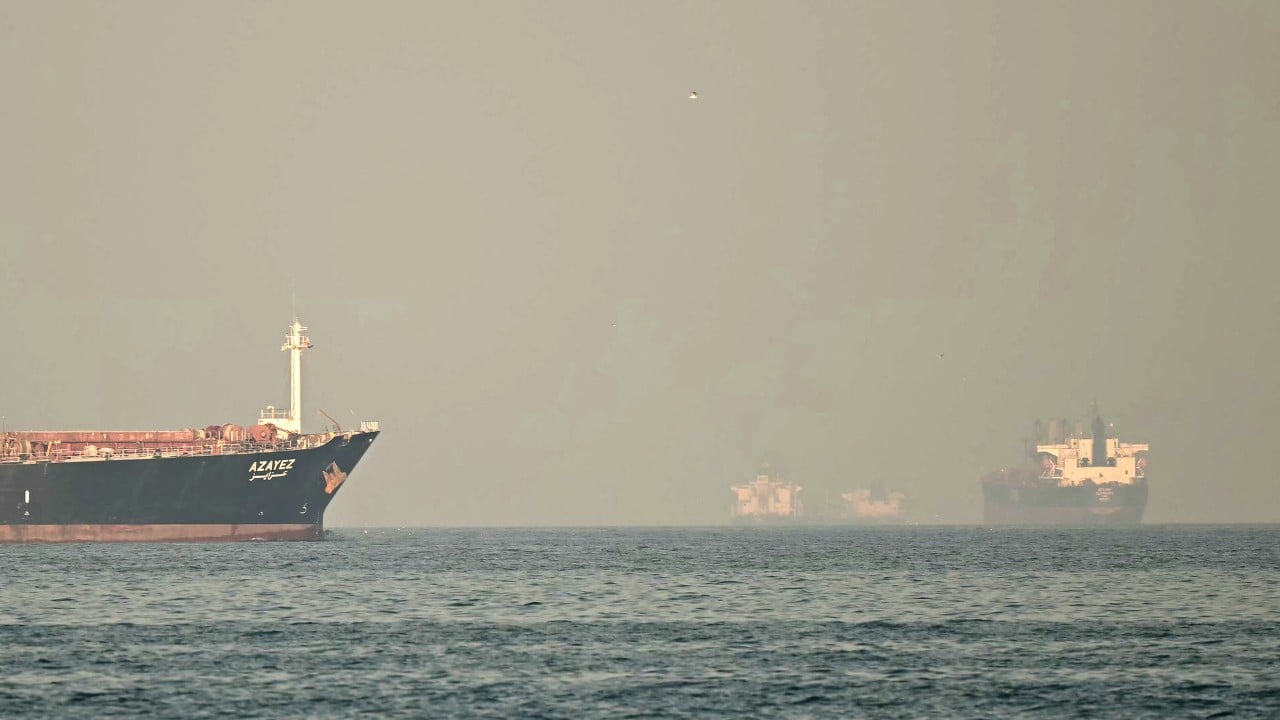
The Strait of Hormuz is not a gift shop, yet Tehran is currently treating its most volatile chokepoint as a bargaining chip for "brotherly" relations. Recent proclamations from Iranian officials suggesting that Iraqi vessels will enjoy unhindered, preferential passage through these waters are less about regional cooperation and more about a desperate bid for economic survival. For decades, the Islamic Republic has used the threat of closing the Strait as a blunt instrument of foreign policy. Now, it is pivoting toward a more subtle form of maritime extortion—branding the right of passage as a curated privilege rather than a cornerstone of international law.
This development follows years of tension where Iran’s Islamic Revolutionary Guard Corps (IRGC) has frequently harassed or seized commercial tankers. By signaling a green light for Iraqi ships, Tehran is attempting to solidify a "Shia Crescent" at sea, hoping to use Baghdad as a financial lung while Western sanctions continue to squeeze the life out of the Iranian Rial. However, the reality on the water is far more complex than the diplomatic handshakes suggest. Iraq’s dependence on this single waterway for its oil exports makes it a captive audience, and Tehran’s "generosity" is a thin veil for a strategic enclosure that threatens the traditional norms of global trade.
The Strait as a Geopolitical Lever
The Strait of Hormuz is the world's most important oil transit point. Roughly 20% of the world’s liquid petroleum passes through this 21-mile-wide stretch of water. For Iraq, the geography is a curse. Unlike Saudi Arabia or the United Arab Emirates, which have invested billions in pipelines to bypass the chokepoint and reach the Red Sea or the Gulf of Oman, Iraq remains almost entirely dependent on its southern terminals at Basra.
When Iran speaks of "brotherly" access, it is acknowledging a power dynamic where it holds the leash. By exempting Iraq from the shadow of maritime "accidents" or "regulatory seizures," Tehran is effectively telling the rest of the world that the Strait is now a private toll road. This isn't about friendship. It is about creating a tiered system of maritime security where compliance with Iranian interests dictates the safety of your cargo.
The IRGC Navy operates with a high degree of autonomy in these waters. They don't follow the standard scripts of international maritime law; they follow the mandates of the Supreme Leader. For a veteran observer, the message to Baghdad is clear: as long as your politics align with ours, your oil flows. The moment that alignment shifts, the "brotherly" status will evaporate faster than a fuel spill in the Persian Gulf heat.
The Iraqi Dependency Trap
Iraq is currently walking a tightrope between its security partnership with the United States and its deep-rooted cultural and religious ties to Iran. This maritime "privilege" puts Baghdad in an impossible position. If Iraq accepts the special status, it implicitly acknowledges Iran's right to control who enters and exits the Gulf. This undermines the United Nations Convention on the Law of the Sea (UNCLOS), which guarantees transit passage for all nations through international straits.
- Total dependency: Over 90% of Iraq’s government revenue comes from oil, most of which is exported via the Gulf.
- Lack of alternatives: The Kirkuk-Ceyhan pipeline to Turkey is frequently offline due to disputes or sabotage.
- Infrastructure rot: Iraq’s internal pipeline network is aging, making the sea route the only viable high-volume option.
Tehran knows these numbers better than anyone. By offering "safe passage," they are essentially offering protection against themselves. It is a classic protection racket played out on a global stage. If the international community allows this precedent to stand, the Strait of Hormuz ceases to be an international waterway and becomes an Iranian lake.
The Economic Ghost in the Machine
Sanctions have forced Iran into a corner. To survive, it needs "dark fleets"—unmarked tankers that move oil under the radar of Western monitors. Iraq has long been suspected of providing a "laundry service" for Iranian crude, blending it with Iraqi blends to bypass export restrictions. This new maritime agreement provides a more formal structure for this shadow economy.
If Iraqi ships are given a free pass, they become the perfect vehicles for "ghost" operations. A tanker can leave an Iraqi terminal, meet an Iranian vessel in the middle of the night, and engage in a ship-to-ship transfer. On paper, the cargo remains Iraqi. In reality, it’s the lifeblood of the IRGC. This isn't just about moving oil; it’s about moving money, weapons, and influence without the friction of international inspections.
The Failure of the International Maritime Security Construct
The United States and its allies established the International Maritime Security Construct (IMSC) to protect merchant shipping in the region. However, the presence of Western warships hasn't stopped the harassment. Iran’s latest move to carve out a "protected" class of ships for Iraq is a direct challenge to this naval presence. It creates a friction point where Western navies must decide whether to intervene in "private" regional agreements or uphold the universal right of passage.
The Infrastructure of Influence
To understand how this works, one must look at the ports. The Al-Faw Grand Port project in Iraq is seen as a potential game-changer for regional logistics, intended to connect the Gulf to Europe via a "Development Road" through Turkey. Iran, sensing a threat to its own transit dominance, has been keen to integrate its rail and road networks with Iraqi infrastructure.
By securing the maritime side of this equation, Iran ensures that any future trade corridor starting at the Iraqi coast is still subject to Iranian oversight at the mouth of the Gulf. They are building a cage around Iraq’s economic future, one "brotherly" agreement at a time. The physical reality of the Strait makes it easy to police. The shipping lanes are narrow, the currents are tricky, and the Iranian coast is lined with missile batteries and fast-attack craft.
The High Cost of Selective Sovereignty
What happens when Kuwait or Saudi Arabia demands the same "brotherly" treatment? They won't get it. Iran’s strategy is built on fragmentation. By treating each neighbor as a separate entity rather than dealing with the Gulf Cooperation Council (GCC) as a bloc, Tehran can extract specific concessions from each.
Iraq is the test case. If Baghdad accepts this deal, it moves one step closer to becoming a satellite state in all but name. The sovereignty of a nation is defined by its ability to trade freely with the world. If that trade is contingent on the permission of a neighbor, that sovereignty is an illusion.
Security Risks and False Flags
The danger of this arrangement is the "false flag" potential. If a non-Iraqi ship is attacked in the Strait, Iran can point to the unhindered passage of Iraqi vessels as proof that the waters are safe and that the "instability" is caused by outside actors. It allows them to control the narrative of regional security.
Furthermore, this agreement does not protect Iraq from the environmental consequences of a conflict in the Strait. A single major tanker collision or an intentional spill would decimate the desalination plants that provide water to the southern Iraqi provinces. Tehran is offering a pass to the front of the line, but they are still the ones holding the match near the powder keg.
The Illusion of Stability
Investors often mistake a lack of immediate conflict for stability. The current quiet in the Strait of Hormuz, punctuated by these diplomatic overtures, is not peace. It is a tactical pause. Iran is currently focused on internal dissent and the economic fallout of its regional proxy wars. It cannot afford a full-scale naval confrontation with the West right now.
Instead, it is opting for "maritime lawfare." By rewriting the rules of engagement through bilateral agreements with neighbors like Iraq, it aims to make Western naval patrols appear redundant or even provocative. If the "locals" are getting along, why are the Americans here? That is the question Tehran wants the world to ask.
Tactical Reality vs Diplomatic Rhetoric
Let us be clear: an Iraqi tanker is "safe" in the Strait only as long as it doesn't carry anything—or anyone—that offends the clerical establishment in Tehran. The IRGC has a long memory and a very broad definition of "offense."
During the Tanker War of the 1980s, neither "brotherhood" nor shared religion stopped the destruction of merchant vessels. The current regime in Tehran is the direct descendant of the one that laid mines in these same waters forty years ago. They haven't changed their goals; they’ve just refined their methods.
The shipping industry should view this "brotherly" access with extreme skepticism. Insurance premiums for Gulf transit remain high for a reason. The risk isn't just about physical attacks; it's about the legal and political entanglement that comes with operating in a zone where the rules change based on the mood in Tehran.
Iraq’s maritime "privilege" is a gilded cage. It secures the flow of oil in the short term but cements a subservient relationship that will haunt Baghdad for generations. The Strait of Hormuz belongs to the world, not to the strongest power on its northern shore. Any agreement that suggests otherwise is not a diplomatic breakthrough; it is a surrender.
The next time an Iranian official speaks of "brotherly" ships, look at the coastal batteries behind him. The guns are still there. They are simply being pointed at different targets for now.