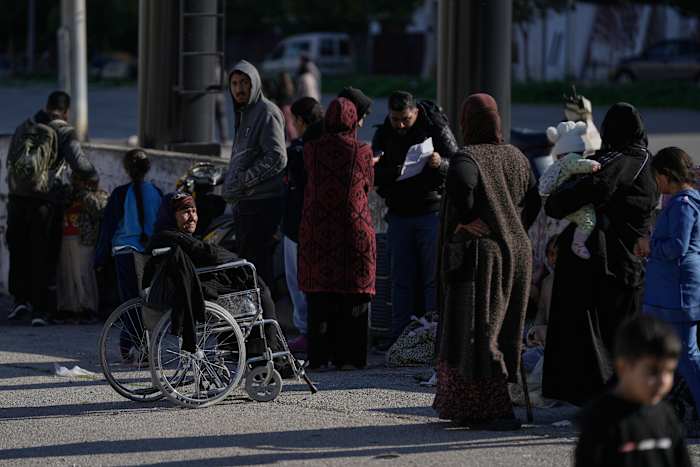
The targeted killing of Iranian Supreme Leader Ali Khamenei has triggered a wave of protests across Indian cities, exposing a fragile internal security dynamic that goes far deeper than simple religious solidarity. From the narrow lanes of Lucknow to the high-security zones of New Delhi, thousands have taken to the streets to condemn the strike. While international observers often view India through the lens of its growing strategic partnership with the West, these protests highlight a domestic reality that the government in New Delhi can no longer ignore. The unrest is not just a reaction to a foreign assassination; it is a manifestation of historical ties, energy dependencies, and a delicate sectarian balance that defines the Indian social fabric.
Security agencies are currently on high alert as demonstrations spread beyond traditional Shia strongholds. The intensity of the rhetoric suggests a significant shift in how India’s minority populations view the nation's proximity to the United States and Israel. For the Modi administration, the challenge is twofold. They must maintain a "strategic autonomy" that keeps Washington close while ensuring that a volatile domestic population does not interpret silence as complicity. The streets are loud, but the silence from the Ministry of External Affairs is even louder. Don't forget to check out our previous coverage on this related article.
Historical Anchors and the Shia Factor
India is home to one of the largest Shia Muslim populations outside of Iran. This demographic reality creates a direct emotional and political pipeline between Tehran and Indian cities like Hyderabad, Kargil, and Mumbai. For many of these citizens, Khamenei was more than a political figurehead; he was a Marja—a source of emulation and spiritual guidance. When a figure of that magnitude is eliminated, the response is rarely contained by national borders.
The protests are particularly concentrated in regions where Persian influence remains a part of the local identity. In Lucknow, the capital of Uttar Pradesh, the mourning rituals have morphed into political rallies. Black flags are draped over historic imambaras, and the slogans being chanted are directed as much at the "Western powers" as they are at the silence of the Indian government. This is a level of mobilization that goes beyond typical street politics. It is rooted in a collective grief that is both religious and anti-imperialist. If you want more about the history here, BBC News provides an in-depth breakdown.
The Geography of Discontent
- Kashmir Valley: Already a region of heightened tension, the valley has seen spontanteous shutdowns. The local administration is struggling to prevent the mourning of a foreign leader from becoming a broader anti-government movement.
- Lucknow and the Doab: The center of Indian Shia scholarship, where the scholarly elite have issued fatwas of mourning that reach across the country.
- The Deccan Belt: In cities like Hyderabad, the protests have taken on an intellectual flavor, with students and activists questioning the moral legitimacy of targeted assassinations as a tool of statecraft.
The Strategic Silence of New Delhi
Prime Minister Narendra Modi’s government finds itself in a classic geopolitical squeeze. On one side, the United States is India’s most critical partner for technology, defense, and counter-China strategy. On the other, Iran remains a vital gateway to Central Asia and a key energy supplier. For years, India has performed a high-wire act, managing to buy Iranian oil while ignoring U.S. sanctions, or at least negotiating waivers.
The killing of Khamenei has destroyed that equilibrium. If the Indian government condemns the strike, it risks alienating its partners in Washington and Tel Aviv. If it remains silent, it risks a domestic firestorm and the possible radicalization of segments of its population who feel their government has abandoned its traditional non-aligned stance.
The official response so far has been predictably vague, calling for "restraint on all sides" and "adherence to international law." But international law is exactly what the protesters are screaming about. They see a blatant violation of sovereignty that the Indian government would never tolerate if it happened to a friendly nation in its own backyard. The "strategic autonomy" doctrine is being tested in real-time, and it is showing signs of structural failure.
Intelligence and the Internal Security Risk
Home Ministry officials are reportedly concerned about the potential for these protests to be co-opted by radical elements. This is not a hypothetical scenario. In the past, domestic unrest over Middle Eastern events has led to localized communal tensions in India. The current protests are largely peaceful, but the sheer scale of the crowds makes them difficult to manage.
Security analysts are pointing to the "Zaynabiyoun Brigade" effect—the potential for Indian Shia youth to be further radicalized by the narrative of martyrdom. This is a demographic that has historically been integrated and nationalist, yet the vacuum left by Khamenei’s death could be filled by more militant rhetoric from across the border.
Monitoring Digital Echo Chambers
The battle is also being fought online. Social media platforms in India are flooded with images of Khamenei alongside messages of defiance. The Indian government’s cyber-security wings are working overtime to monitor "incendiary content," but the line between religious mourning and political incitement is notoriously blurry. Shutting down the internet in sensitive zones like Kashmir or parts of Uttar Pradesh has been a common tactic, but doing so on a national scale is impossible and politically damaging.
The Economics of a Regional Firestorm
The economic stakes for India are massive. A destabilized Iran means a direct threat to the International North-South Transport Corridor (INSTC) and the Chabahar Port project. India has invested billions in these initiatives to bypass Pakistan and reach markets in Afghanistan and Europe. If the region descends into a broader war between Iran and its adversaries, these investments become worthless overnight.
Energy security is the other side of the coin. Even with the shift toward renewables and diversified oil imports, any prolonged conflict in the Strait of Hormuz will send global oil prices skyrocketing. For an Indian economy already struggling with inflation and high fuel costs, this is a nightmare scenario. The protests on the street are driven by ideology, but the panic in the corridors of power is driven by the price of a barrel of crude.
A Failure of Diplomacy
Critics of India’s foreign policy are now suggesting that the government’s focus on "The West" has left its "Link West" (Middle East) strategy hollowed out. For years, New Delhi claimed it could be friends with everyone: Iran, Israel, Saudi Arabia, and the United States. This "friend to all" approach works during times of peace. It fails during times of assassination and war.
The protests represent a direct challenge to the idea that India can simply ignore the ideological battles of the Middle East while reaping the economic benefits. The protesters are demanding that India take a moral stand against what they see as Western hegemony. By trying to please everyone, the government risks being seen as weak by its allies and as a traitor by its own citizens.
The Regional Contagion
The unrest is not limited to India's borders. Similar scenes are unfolding in Pakistan, Bangladesh, and Afghanistan. This creates a regional "Shia Crescent" of protest that could potentially align with other anti-Western movements in the Global South. For the Indian government, there is a legitimate fear that this could lead to a transnational movement that bypasses national authorities entirely.
The role of regional actors should not be underestimated. Intelligence reports suggest that certain groups are receiving logistical support to organize these rallies. Whether this support is domestic or coming from external actors looking to destabilize India’s internal security remains a subject of intense investigation.
Addressing the Humanitarian and Social Impact
Beyond the geopolitics, there is a human element to this crisis. The protests have disrupted daily life in several major cities. Schools have been closed, transport routes blocked, and businesses shuttered. For the average citizen, the killing of a foreign leader thousands of miles away has suddenly become a very local problem.
The government must decide how to engage with the leadership of the Shia community. In the past, quiet diplomacy and the involvement of moderate clerics have helped to de-escalate such situations. However, the current mood is far more defiant. The "old guard" of the clergy is being challenged by a younger, more vocal generation that is less willing to compromise with the state.
The Indian state must now reckon with the fact that its domestic stability is intrinsically linked to the stability of the Middle East. It can no longer treat foreign policy as a disconnected sphere of activity that has no bearing on the streets of Lucknow or Srinagar. The fire in Tehran is already scorching the Indian subcontinent.
Identify the key organizers within the local religious councils and begin an immediate, transparent dialogue regarding the safety of Indian citizens and assets in the Middle East. New Delhi must articulate a clearer stance on international law to pacify domestic concerns while maintaining its core strategic partnerships.