In a small, windowless briefing room deep within the Pentagon, the air usually carries the faint, sterile scent of floor wax and recycled oxygen. But today, the atmosphere is heavy with something else. It is the weight of the "what if." On the polished mahogany table lies a map of the Middle East, crisscrossed with red icons representing proxy groups and blue circles marking U.S. outposts. To a strategist, these are data points. To a mother in Ohio or a young corporal in a dusty barracks in Jordan, these are the coordinates of a potential goodbye.
The briefing notes are blunt. The Pentagon has issued a warning that is as chilling as it is clinical: as the conflict with Iran widens, more American soldiers are likely to die. This isn't just a tactical projection. It is a mathematical inevitability in the current climate of escalation.
The Geography of a Tripwire
Imagine a young sergeant named Elias. He is 24, has a penchant for bad coffee, and is currently stationed at a remote outpost in eastern Syria. To the world, he is a "deterrent." To his unit, he is the guy who knows how to fix the radio when the heat makes it glitch. His base is little more than a collection of Hesco barriers and concrete blast walls, a tiny island of American presence in a sea of shifting alliances.
When a drone, manufactured in an Iranian factory and launched by a local militia, hums toward that outpost, the "geopolitics" of the situation vanish. There is only the sound of a siren and the frantic dive for a bunker. The Pentagon’s warning means that these sirens are going to sound more often. They are going to be louder. And for some, the bunker won't be enough.
This is the reality of the "widening conflict." It isn't a singular battle. It is a thousand points of friction where a single mistake or a particularly lucky shot can ignite a forest fire. Each time an Iranian-backed group launches a rocket, they aren't just aiming for a fuel depot; they are testing a boundary. They are asking: "How much will you pay to stay here?"
The Calculus of Ground Ops
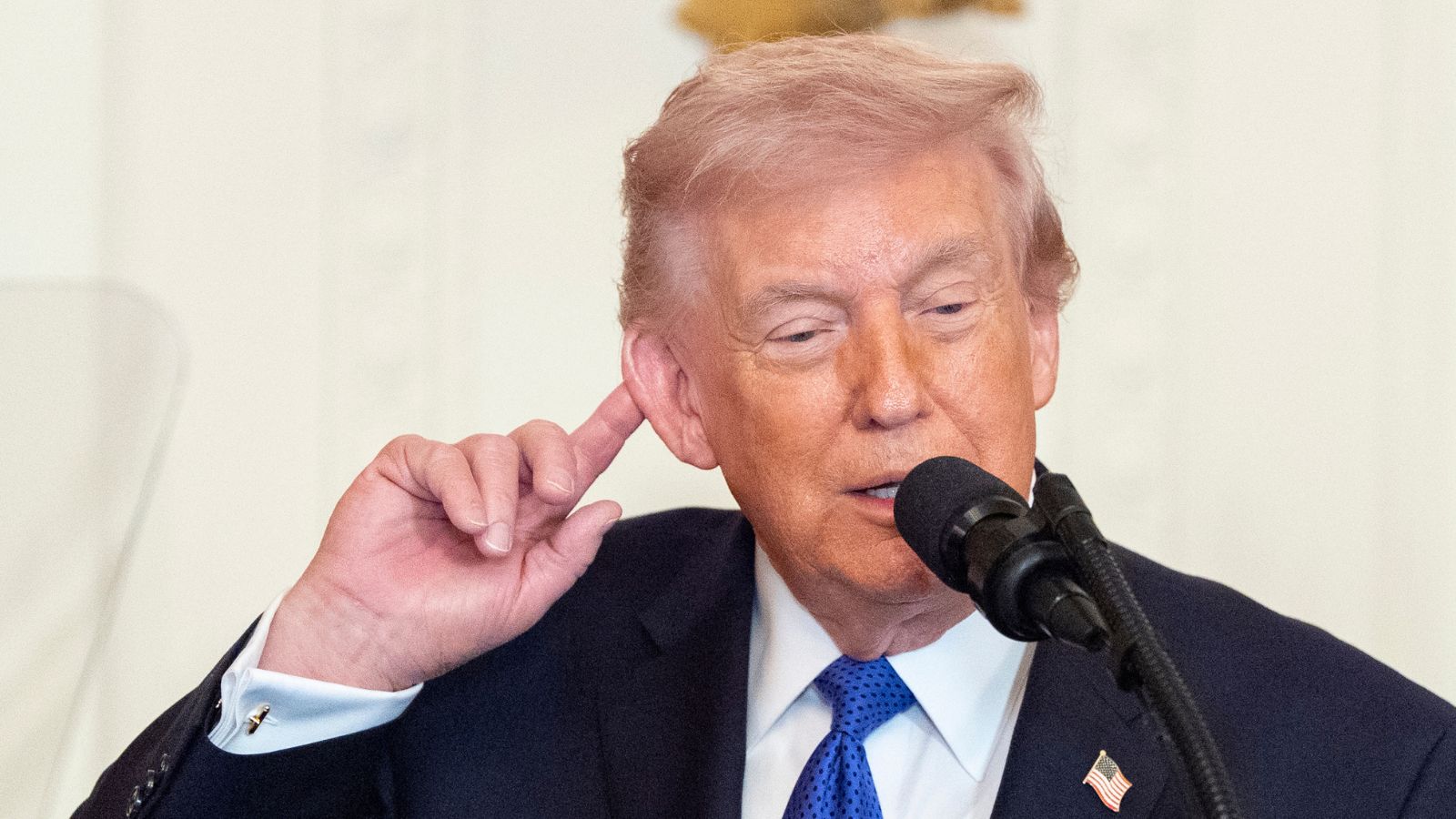
In Washington, the language shifts from the tactical to the existential. When asked about the future of the mission, the former President—and current contender—Donald Trump has signaled a refusal to rule out "ground ops." This phrase, "ground ops," is a linguistic shroud. It sounds professional. It sounds organized. But those who have worn the boots know it means the churn of mud under heavy tires, the metallic taste of adrenaline, and the sound of heavy doors closing on a transport plane.
Choosing ground operations is rarely a first resort, but it is the ultimate lever of power. It signifies a move from "watching and responding" to "holding and controlling." But the cost of control is blood. To put boots on the ground is to provide more targets for the very drones and missiles the Pentagon is worried about.
The logic is a brutal circle.
We are there to prevent a wider war. Yet, our presence becomes the catalyst for the conflict to widen. We build more defenses to protect the soldiers, which requires more soldiers to man the defenses, which creates a larger footprint for the enemy to strike.
The Invisible Stakes of a Proxy War
We often talk about Iran and the U.S. as if they are two boxers in a ring. They aren't. It’s more like a game of chess played with pieces that have their own agendas. Iran uses proxies—the Houthis in Yemen, Hezbollah in Lebanon, militias in Iraq—to strike at American interests without ever having to sign a declaration of war.
This "gray zone" warfare is designed to be frustrating. It’s a slow-motion erosion of American resolve. When the Pentagon warns of more deaths, they are acknowledging that the shield is fraying. No air defense system is 100 percent effective. Eventually, something gets through.
Consider the "Tower 22" incident in Jordan. It was a logistical base, a place for mail and supplies. It wasn't a frontline combat position in the traditional sense. Yet, a one-way attack drone found a gap in the radar, and three families in Georgia and Arizona had their worlds permanently shattered. That is the "widened conflict" in its purest, most devastating form. It is the death that comes when you aren't even looking for a fight.
The Long Shadow of History
History has a cruel way of repeating its favorite tragedies. We have seen this script before, where a series of "proportional responses" leads to a threshold that neither side can walk back from. The danger now is that we have moved past the era of predictable escalations.
In the past, you could send a carrier strike group to the Persian Gulf and the message was clear: "Don't." Today, the message is muffled by the noise of a hundred different actors with a hundred different motivations. A militia commander in Baghdad might decide to launch a strike tonight not because Tehran told him to, but because he needs to prove his toughness to a local rival.
The Pentagon knows this. They know that they are no longer just managing a relationship with a hostile state, but trying to navigate a minefield where the mines keep moving.
The Human Toll of Policy
When we read the headlines about "increased casualties," we should see more than just numbers. We should see the empty chair at a Thanksgiving table three years from now. We should see the physical therapy sessions for a soldier who survived the blast but lost his ability to run with his kids.
Policy is a cold instrument. It deals in "national interests" and "strategic depth." But the execution of policy is entirely human. It is carried out by nineteen-year-olds who joined the military to get an education or to see the world, only to find themselves sitting in a tent in the middle of a desert, wondering if the buzzing sound in the sky is a bird or a bomb.
The warning from the Pentagon isn't just a heads-up for the press. It’s an admission of a shifting reality. The era of "low-intensity" friction is ending. We are entering a phase where the friction is generating enough heat to melt the very structures intended to keep the peace.
The "widening" isn't a metaphor. It is a physical expansion of danger. It stretches from the shipping lanes of the Red Sea to the mountains of Lebanon and the plains of Iraq. As the map turns redder, the margin for error turns thinner.
There is a specific kind of silence that follows a briefing like this. It’s the silence of officials who know that the next time they stand at a podium, it might be to read names instead of statistics.
The decision to stay, to leave, or to escalate is never purely about the facts on a map. It is about the value we place on the lives of those we send to hold the line. If the conflict continues to widen, if the ground operations become a reality once more, that value will be tested in ways we haven't seen in a generation.
A map is just paper and ink until someone bleeds on it.