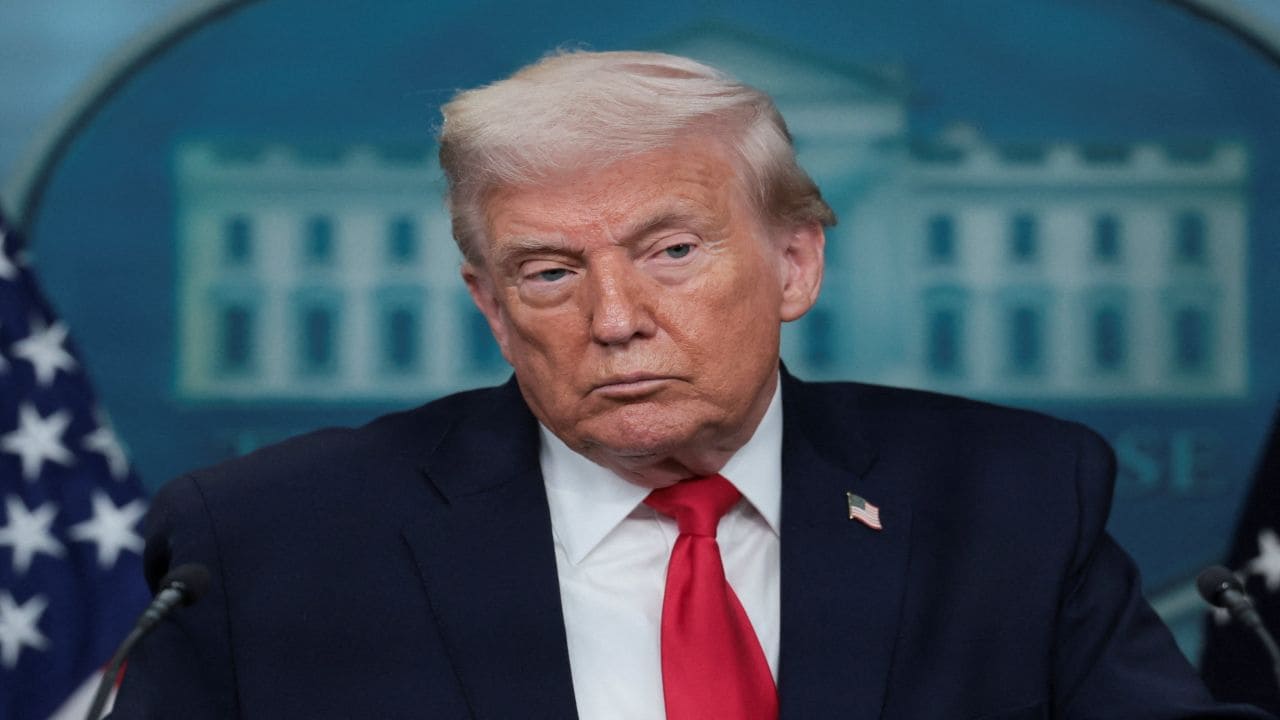
The obsession with connecting Trump’s approval ratings to the current price of a gallon of regular unleaded is the most overplayed, intellectually lazy trope in political journalism. We see the headlines every time a refinery in the Middle East sneezes: "Prices Up, President Down." It’s a clean narrative. It fits on a bumper sticker. It’s also fundamentally wrong.
If you believe a 36% approval rating is a direct consequence of surge pricing at the pump, you aren’t paying attention to the structural shifts in how the American electorate actually processes economic pain. The "misery index" logic of the 1970s is dead. We are living in an era of tribalized inflation where the price of gas is no longer an objective economic metric, but a Rorschach test for partisan identity.
The Myth of the Rational Commuter
Mainstream pundits love to cite the "rule of thumb" that for every ten-cent increase in gas prices, a sitting president loses a point in the polls. This assumes the American voter is a rational economic actor—a spreadsheet with legs.
I’ve spent two decades watching data cycles in Washington and on Wall Street. Here is the reality: voters don’t react to the price; they react to the story of the price. If a voter already dislikes the administration, a $4.00 gallon is proof of incompetence. If they support the administration, that same $4.00 gallon is a noble sacrifice for "energy independence" or a necessary cost of "standing up to Iran."
The competitor’s article focuses on the 36% low as if it were a math problem. It isn't. It’s a branding crisis. The surge in fuel prices didn't cause the drop; it merely provided the stage for the existing dissatisfaction to perform.
The Iran War Fallacy
The narrative that an "Iran war" is the primary driver of this surge is a gross oversimplification of global energy flows. Yes, geopolitical tension creates volatility. But the markets have already priced in a perpetual state of "almost-war" in the Strait of Hormuz.
What the "experts" miss is the Refining Bottleneck. You can have all the crude in the world sitting in tankers, but if the domestic refining capacity is capped—which it has been for years due to regulatory paralysis and ESG-driven underinvestment—the price at the pump stays high regardless of what happens in Tehran.
Citing the war as the sole culprit is a convenient exit ramp for politicians. It allows them to point at a foreign "other" rather than addressing the decaying infrastructure in the Gulf Coast. We aren't paying for the war; we are paying for decades of pretending that green transitions happen without maintaining the fossil fuel bridge.
Why 36% is Actually a Floor, Not a Ceiling
The "record low" 36% approval rating mentioned in the news is being framed as a death spiral. This is a misunderstanding of modern polarization. In a hyper-partisan environment, 36% is essentially the "bedrock" support.
Think of it this way:
- The Core Believers: Roughly 30-32% of the electorate will support their "team" even if gas hits $10 and the moon falls out of the sky.
- The Elastic Middle: This is only about 5-8% of the country.
- The Hard Opposition: The rest.
When you see a 36% rating, you aren't seeing a mass exodus. You are seeing the "Elastic Middle" momentarily panicking because of the media's relentless focus on the price of milk and gas. These voters are flighty, but they are also goldfish. Their memory resets every 90 days. If prices dip by fifteen cents in October, that 36% jumps back to 41% overnight.
Treating a weekly poll as a definitive verdict on a presidency is like judging a 500-page novel by the typo on page 12.
Stop Watching the Pump, Start Watching the Spread
If you want to understand the real economic threat to the administration, stop looking at the neon sign at the Chevron station. Look at the Crack Spread.
The Crack Spread is the pricing difference between a barrel of crude oil and the petroleum products refined from it. It is the most honest indicator of economic health. When the spread widens, it means the system is choking. It means even if the "Iran war" ends tomorrow, your gas prices aren't going down because the industrial machinery that turns oil into fuel is at its breaking point.
The administration’s mistake isn't "causing" high prices through foreign policy; it’s failing to communicate the reality of the domestic energy supply chain. They are fighting a 21st-century information war with 20th-century talking points.
The Counter-Intuitive Truth: High Prices Can Be a Political Gift
Here is the take that will get me kicked out of the green-room circuit: High gas prices are the best thing that could happen to a populist incumbent looking for a scapegoat.
It allows for a "War Time" footing. It provides a villain (speculators, foreign dictators, "the swamp"). It justifies executive overreach. If everything were cheap and stable, the administration would have to answer for more complex, nuanced failures in education, healthcare, or housing. Gas prices are a loud, shiny distraction that covers a multitude of sins.
The 36% low isn't a sign of the end. It's the beginning of a pivot. Watch how the rhetoric shifts from "we are fixing the economy" to "the world is at our throats and only I can protect you."
The Actionable Reality
If you are an investor or a citizen trying to navigate this:
- Ignore the Polls: They are lagging indicators. They tell you how people felt last Tuesday, not how they will vote next November.
- Follow the Inventory: Look at the EIA (Energy Information Administration) weekly storage reports. If inventories are dropping while prices are rising, the problem is physical, not political. No amount of "approval rating" shifts can manufacture more gasoline.
- Watch the "Quiet" Inflation: While the media screams about gas, the real damage is being done in services and insurance premiums. These are the costs that don't go down when the war ends.
The competitor wants you to believe that the President is a victim of a price sign. The reality is that the price sign is a victim of a broken energy strategy that both parties have been complicit in for thirty years.
Stop checking the price at the pump to see who’s winning. The house always wins, and right now, the house is the global energy market, not the White House.
Get used to the 30s. It’s the new 50s.