The pearl-clutching over "warmongering" in the South China Sea has reached a fever pitch. Critics look at the prospect of a U.S.-backed munitions facility in the Philippines and see a tripwire for World War III. They are fundamentally wrong. They are misreading the physics of modern logistics and the brutal reality of Pacific deterrence.
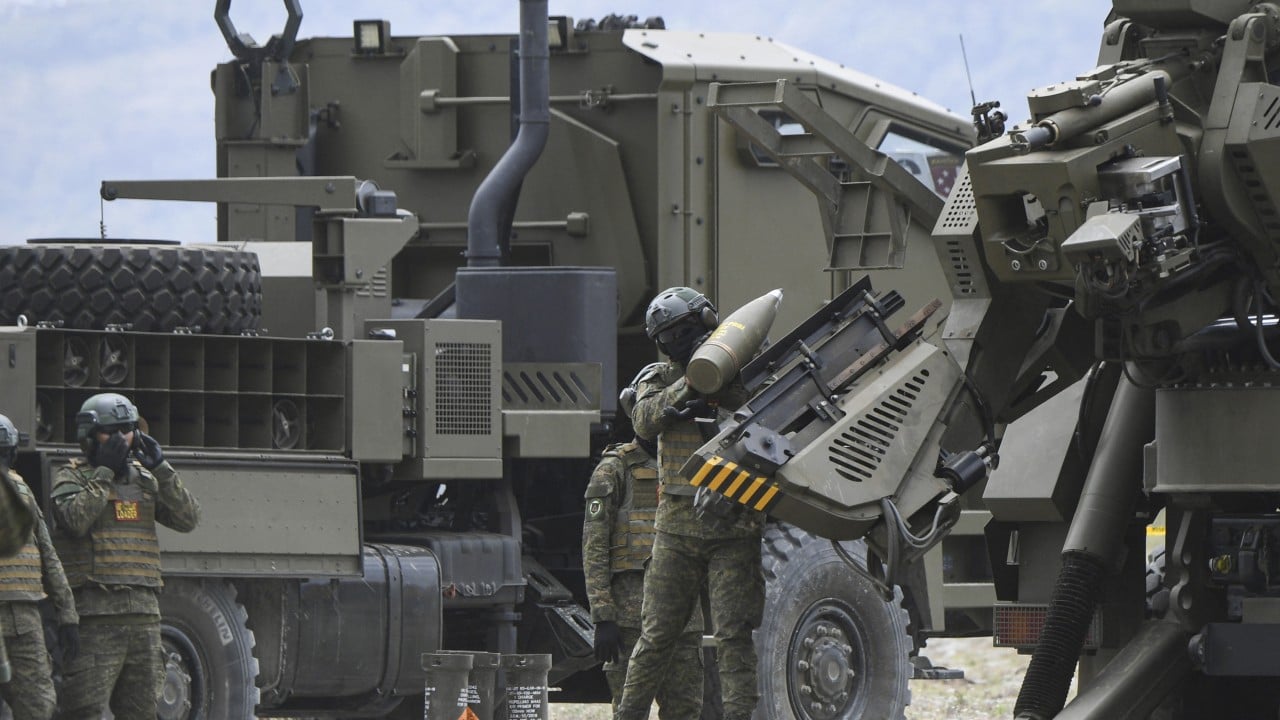
If you want peace, you don't send a diplomat with a briefcase. You build a factory that can churn out 155mm shells and precision guidance kits within a helicopter's flight of the potential friction point.
The loudest voices in the room claim this move escalates tension. They argue it turns the Philippines into a target. This logic is a relic of 20th-century isolationism. In the 21st century, the greatest threat to Philippine sovereignty isn't "provocation"—it is the logistical vacuum that invites bullying.
The Myth of Neutrality via Scarcity
The "lazy consensus" dictates that an empty arsenal is a sign of peaceful intent. This is a fairy tale. I have spent years analyzing regional supply chains, and the math doesn't lie: a nation that cannot arm itself is a nation that has already surrendered its policy decisions to the highest bidder.
When the U.S. eyes a Philippine ammo facility, they aren't looking for a "launchpad" for an invasion. They are looking to solve the "Malacca Dilemma" in reverse. Currently, if a conflict erupts, the logistics tail for the West stretches thousands of miles across vulnerable sea lanes. That distance is an invitation for an adversary to test the waters.
By placing production capacity on the ground, the math of aggression changes.
- Lead times drop from weeks to hours.
- Sustainment costs plummet.
- The "cost per shot" for defense becomes sustainable.
The critics call this "warmongering." I call it logistical certainty. There is nothing more terrifying to an aggressor than a defender who doesn't need to wait for a shipping container to arrive from California.
The Industrialization of Sovereignty
Let’s talk about what the "anti-war" advocates ignore: the massive transfer of industrial capability.
The Philippines has long been relegated to the "service economy" corner of the global market. Building a high-tech munitions plant isn't just about gunpowder; it’s about advanced metallurgy, chemical engineering, and precision manufacturing. This is the kind of heavy-industry foundation that the country has lacked for decades.
I’ve watched developing nations waste billions on "digital transformation" projects that leave no physical footprint. A munitions plant is different. It requires a specialized workforce, stable energy grids, and high-spec transport links. It forces an upgrade of the entire local infrastructure.
If the Philippines wants to be a player in Southeast Asia, it needs more than call centers. It needs the ability to manufacture the tools of statehood.
The "Target" Fallacy
"But this makes the Philippines a target!"
Newsflash: The Philippines is already a target. Look at the maps. Look at the "nine-dash line" that sits comfortably over Philippine sovereign waters. You don't become a target because you have a factory; you become a target because you have something someone else wants and no way to stop them from taking it.
Imagine a scenario where a local fisherman is harassed in the West Philippine Sea. Currently, the response involves a diplomatic protest that is filed and promptly ignored. Why? Because the underlying power dynamic is skewed.
Now, imagine that same scenario when the Philippines sits on a domestic stockpile of advanced anti-ship munitions. The calculus changes. Deterrence isn't about the will to fight; it's about the capacity to sustain a fight. An ammo plant is a physical manifestation of that capacity.
Breaking Down the Shell Game
The competitor article worries about the "warning" from opposition groups. Let’s dismantle that warning with some cold, hard numbers.
Modern warfare consumes ammunition at a rate that would make a CFO weep. In the first few months of the Ukraine conflict, the daily expenditure of artillery shells exceeded the monthly production capacity of most Western nations.
- Current Reality: If the Philippines were dragged into a skirmish today, they would be out of high-end kinetic options in 72 hours.
- The Proposed Shift: Domestic production creates a "Strategic Reserve of Capability."
Opponents argue this is "alignment with U.S. interests." They miss the point. This is the Philippines using U.S. capital to build Philippine security. It is a leverage play of the highest order.
The Tech Debt of Defense
Most people think of "ammo" as a lead ball and some powder. That's 18th-century thinking. Modern munitions are flying computers.
By hosting these facilities, the Philippines gains access to the "Source Code" of modern defense. You aren't just buying a finished product; you are hosting the assembly line. This creates a feedback loop of technical expertise.
I have seen how this works in places like Poland and South Korea. You start by assembling shells. You end by designing your own missile systems. It is an escalator of national power that begins with a factory floor.
The Economic Counter-Intuition
The fiscal hawks say this is a waste of money or a risky investment. They are looking at the balance sheet upside down.
A defense facility is an "anchor tenant" for an economy. It provides high-paying, high-skill jobs that aren't subject to the whims of the retail market or the tourism cycle. Wars or no wars, the global demand for munitions is currently at a 40-year high.
If the Philippines doesn't build this, Vietnam will. Or Thailand. Or Indonesia. The demand is there. The only question is which nation is going to reap the industrial benefits while securing their own borders.
Addressing the "Warmongering" Tag
Let’s be brutally honest: the term "warmongering" is a rhetorical shield used by those who have no actual plan for national defense. It’s easy to shout from a podium in Manila. It’s much harder to explain to a coastal community why their fishing grounds are being encroached upon while the national navy is docked because they can't afford the ordnance to run a drill.
True warmongering is leaving a power vacuum. It’s inviting a larger neighbor to see how far they can push before you snap. Building a munitions plant is the most "pro-peace" move the Marcos administration could make because it removes the "easy victory" from the opponent's table.
The Reality of the "Pivot"
The U.S. isn't doing this out of the goodness of its heart. They are doing it because they are terrified of their own brittle supply chains. They need the Philippines.
This gives Manila immense bargaining power.
- Demand technology transfers.
- Demand joint-use agreements.
- Demand that a percentage of the output stays in-country.
This isn't about being a "vassal state." This is about being a bottleneck. When you control the production of the ammunition required for a regional conflict, you aren't just a participant; you are the gatekeeper.
The critics are worried about becoming a "pawn" in a "Great Power" game. They don't realize that in this game, the pawns that can manufacture their own pieces eventually become Queens.
Stop viewing defense infrastructure through the lens of 1970s student protests. Start viewing it as a 2026 industrial strategy. The world isn't getting any safer. You can either be the person holding the receipt for the ammo, or the person holding the ammo.
Pick one.