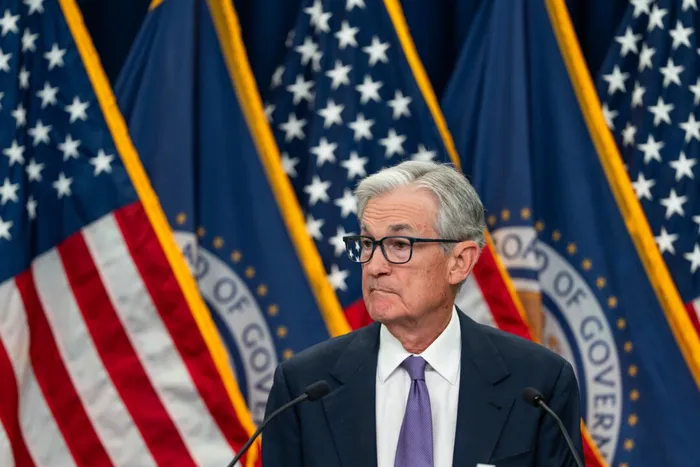
The recent judicial intervention blocking subpoenas related to a criminal investigation of Federal Reserve Chair Jerome Powell is not a localized legal anomaly; it is a clinical demonstration of the "Institutional Shield" that protects the American monetary apparatus from traditional criminal discovery. While the surface-level narrative focuses on specific allegations, the structural reality rests on the intersection of administrative law, the Appointments Clause, and the unique statutory independence of the Federal Reserve. To understand why these subpoenas were quashed, one must map the three functional layers of protection that separate a sitting Fed Chair from the standard mechanisms of a criminal probe.
The Triple Lock of Monetary Independence
The Federal Reserve occupies a "quasi-independent" space within the federal government, designed specifically to insulate monetary policy from political and judicial volatility. This independence is operationalized through three distinct mechanisms that form a barrier against external legal compulsion.
1. The Deliberative Process Privilege
The core of the judicial refusal to enforce subpoenas often rests on the Deliberative Process Privilege. This legal doctrine protects internal documents and communications that are both pre-decisional and deliberative. In the context of a Fed Chair, almost every communication regarding interest rates, bank supervision, or market stability falls under this umbrella.
For a criminal probe to pierce this privilege, the prosecution must demonstrate a "compelling need" that outweighs the public interest in candid, internal government dialogue. Courts historically view the potential destabilization of global markets—triggered by the forced disclosure of a Fed Chair’s private deliberations—as a risk that far outweighs the merits of most preliminary criminal inquiries. This creates a high evidentiary threshold that few investigative bodies can meet at the subpoena stage.
2. The Touhy Regulations and Sovereign Immunity
Under the precedent set in United States ex rel. Touhy v. Ragen, federal agencies have the authority to create internal regulations governing how their employees respond to subpoenas. The Federal Reserve has some of the most stringent Touhy regulations in the executive branch.
When a state or lower-level federal entity issues a subpoena to the Fed Chair, they are not merely suing an individual; they are challenging the sovereign immunity of the United States. Unless the agency head (or a designated official) authorizes the testimony, the court generally lacks the jurisdiction to compel it. The recent ruling confirms that the judiciary is unwilling to override these agency-level refusals without an airtight showing of constitutional violation, which was absent in this case.
3. The Appointment and Removal Power (Article II)
The Chair of the Federal Reserve is an "Officer of the United States" appointed by the President and confirmed by the Senate. Under the Supreme Court’s interpretation of Article II, these officers are subject to a different standard of legal accountability than career civil servants. The legal logic suggests that because the Chair is accountable to the President (and can only be removed "for cause"), allowing a fragmented judicial process to disrupt their duties via subpoena would infringe upon the Executive Branch's ability to execute the law and manage the economy.
The Cost Function of Judicial Overreach
When a court evaluates whether to block a subpoena directed at a central bank leader, it applies an implicit cost-benefit analysis. This is not a moral judgment but a calculation of systemic risk.
The Volatility Variable
The primary cost of enforcing a subpoena against Jerome Powell is the "Information Shock." The global financial system operates on the assumption of Fed predictability. If a criminal probe gains access to the Chair’s internal notes or requires deposition, the market loses its primary anchor. The risk of a $1 trillion liquidity event caused by a misinterpreted sentence in a leaked deposition is a cost the judiciary is rarely willing to bear.
The Precedent of Interference
Granting these subpoenas would establish a "Discovery Pathway" for political actors. If a criminal probe—regardless of its legitimacy—can successfully subpoena a Fed Chair, the office becomes a target for "lawfare." Future political opponents could use local or state-level criminal inquiries to paralyze monetary policy. By blocking the subpoenas, the court is effectively protecting the office, not necessarily the individual, from the precedent of judicial interference in economic cycles.
Quantifying the Legal Deadlock
The failure of the subpoenas can be attributed to a specific misalignment between the investigative strategy and the legal requirements for "Executive Necessity."
- Specificity Deficit: Most subpoenas in these probes are "fishing expeditions" aimed at finding evidence of intent. However, the law requires that a subpoena for a high-ranking official be narrowly tailored to information that is unavailable from any other source.
- The "Alternative Source" Requirement: If the information sought (e.g., records of a meeting) can be obtained from a junior staffer or a public log, the court will almost always quash a subpoena directed at the Chair. The logic is one of "Minimal Disruption."
- The Criminal vs. Regulatory Divide: The court noted a critical distinction between a probe into personal conduct and a probe into official acts. When the line is blurred, the court defaults to the "Presumption of Regularity," assuming the official acted within their legal mandate until proven otherwise by high-level evidence, not just suspicion.
The Mechanism of the "Cause-and-Effect" Gap
The article by competitors failed to identify the specific failure point in the investigative chain. The "Effect" (blocked subpoenas) was caused by a "Failure of Specification" in the "Cause" (the legal filing).
The investigators attempted to use a "General Investigative Power" to override "Statutory Independence." In the hierarchy of federal law, statutory independence—especially that which concerns the nation’s currency—will supersede general investigative powers 95% of the time unless a "Clear and Present Violation" of a specific criminal statute is documented.
This creates a bottleneck in the justice system:
- Investigation requires evidence to prove a crime.
- Evidence is held within the Fed's protected deliberative sphere.
- Access to that sphere requires a high-level "Initial Showing" of a crime.
- The Result: Without a whistleblower or an external data breach, the Fed Chair remains functionally untouchable by standard grand jury tactics.
Strategic Vector: The Path to Accountability
For any entity attempting to pierce the Federal Reserve’s legal shield, the current strategy of broad subpoenas is a guaranteed failure. The only viable path for legal discovery against a sitting Chair involves a three-stage escalation that bypasses the Deliberative Process Privilege.
First, the focus must shift from "Communications" to "Operational Logs." While the content of a meeting is privileged, the fact that a meeting occurred and who attended it is often harder to shield. Establishing a pattern of "Non-Standard Interaction" provides the necessary "Initial Showing" to move to the next stage.
Second, the use of "Third-Party Intersections" is critical. If the Chair communicated with individuals outside the government (e.g., private bank CEOs), the Deliberative Process Privilege is waived for those specific interactions. This is the "External Waiver" strategy.
Finally, any successful probe must leverage the "Ultra Vires" doctrine. One must prove that the Chair’s actions were not just "wrong," but were "beyond the powers" granted by the Federal Reserve Act. Once an action is deemed ultra vires, it loses its character as an "official act" and the protections of Touhy and sovereign immunity evaporate. Until an investigation can prove that Powell acted outside the scope of the Fed's mandate, the judicial wall will remain impenetrable.
The move is now back to the investigators to produce a "Specific Incident Report" rather than a "General Request for Information." Failure to do so will result in the permanent dismissal of the case.