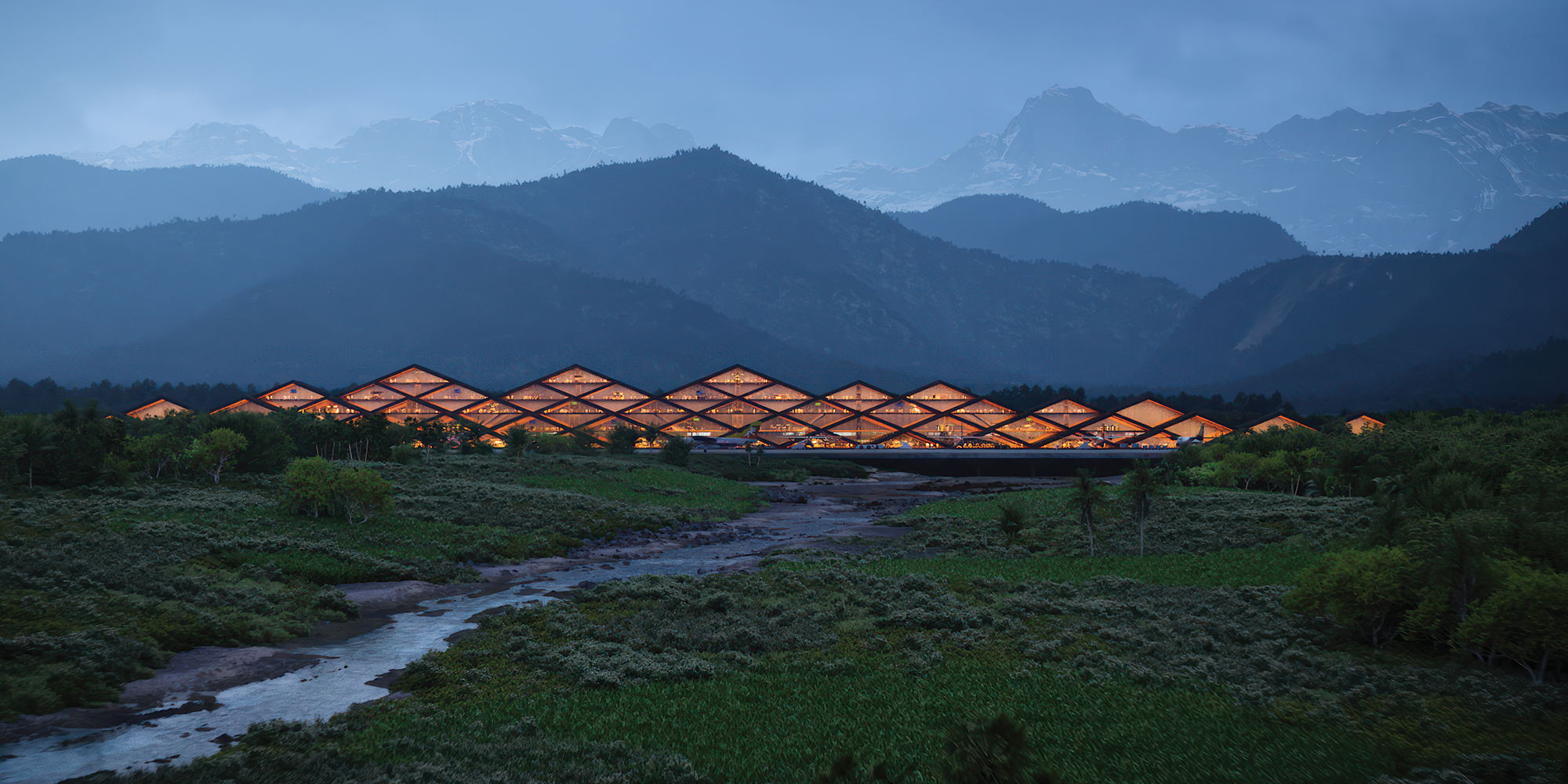
The press releases describe a "Mindfulness City." They speak of "Gross National Happiness" and "spiritual hubs." They want you to envision a serene Gelephu, nestled in the foothills of Bhutan, acting as a bridge to Southeast Asia.
They are wrong.
What we are actually witnessing is the construction of a high-stakes, land-locked special economic zone (SEZ) designed to prevent a sovereign nation from becoming a museum piece. Calling it a "Mindfulness City" is a clever marketing pivot, but it obscures the brutal economic reality: Bhutan is fighting for its demographic life.
The Myth of the Spiritual Hub
The common narrative suggests Bhutan is building a city to teach the world how to breathe. The reality is that Bhutan is building a city because its young people are leaving for Australia and the Middle East in record numbers.
I have seen dozens of these "visionary" cities fail across the developing world. They fail because they prioritize the "vision" over the plumbing. Bhutan’s Gelephu Mindfulness City (GMC) isn't about spiritual enlightenment; it’s about creating a 1,000-square-kilometer pressure valve for the country’s stagnant private sector.
The competitor's view focuses on the "fly east" strategy via Assam. They treat this as a simple logistics play. It is not. It is a massive bet on Indian infrastructure and regional stability that Bhutan does not control.
The Assam Connection Is a Fragile Lifeline
The "fly east" strategy relies entirely on the connectivity of the Indian Northeast. While the Indian government is pouring billions into the "Act East" policy, the terrain remains some of the most geologically and politically volatile on earth.
To believe that Gelephu will become a seamless gateway to the ASEAN region requires ignoring the physical reality of the Himalayas and the Brahmaputra basin. Logistics in this corridor are not about "seamless" integration. They are about surviving monsoon seasons, landslides, and the shifting sands of cross-border bureaucracy.
If you want to understand the real mechanics here, look at the energy. Bhutan’s current wealth is built on the $P = \frac{V^2}{R}$ of its hydroelectric exports to India. But hydropower is a low-employment industry. You need a massive amount of concrete and a few dozen technicians. It doesn't create a middle class. Gelephu is an attempt to diversify away from water-power, but it is trying to do so by inviting the very global capitalism it has historically shunned.
Why Mindfulness Is a Business Risk
In business, "mindfulness" is often a code word for "slow." In a special economic zone, "slow" is another word for "bankrupt."
The GMC plan calls for low-density development and environmental preservation. While noble, this creates an immediate conflict with the ROI expectations of international investors. If you are building a tech hub or a manufacturing center, you need density. You need high-speed data. You need a 24/7 work culture.
How does a "Mindfulness City" compete with the sheer, caffeinated velocity of Shenzhen or Ho Chi Minh City? It doesn't.
The risk is that Bhutan creates a city that is too expensive for the locals and too slow for the foreigners. I’ve seen this before in projects like Masdar City in Abu Dhabi. You end up with a high-tech ghost town—a beautiful, sustainable, empty shell.
The Sovereign Debt Shadow
Let’s talk about the money. Bhutan does not have the internal capital to build a city of this scale. This means foreign direct investment (FDI) and sovereign debt.
The "Mindfulness" branding is intended to attract a specific type of ESG (Environmental, Social, and Governance) investor. But ESG capital is fickle. It leaves the moment a project hits a snag or a better, "greener" project appears elsewhere.
Bhutan is essentially putting its sovereignty on the table as collateral. If Gelephu fails to generate the tax revenue needed to service its development costs, the country faces a debt trap. This isn't just a business failure; it's a national security threat.
The Real People Also Ask Answers
Is Gelephu Mindfulness City a good investment?
Only if you are comfortable with a 30-year horizon and have zero expectation of short-term liquidity. It is a frontier market play in a region defined by geopolitical friction between India and China.
Will it stop Bhutan's brain drain?
Unlikely. A city takes decades to mature. The youth are leaving today. Unless the GMC can offer competitive salaries and a global lifestyle—things that are antithensis to the "quiet, mindful" brand—the exodus will continue.
Is the Bhutan-Assam connection viable?
It is physically possible, but economically precarious. The costs of transporting goods through the chicken-neck corridor of India make Bhutanese exports inherently more expensive than those coming from coastal Vietnam or Thailand.
The Counter-Intuitive Truth
The success of Gelephu will not come from its "mindfulness." It will come from its ability to be a high-tech, low-regulation sandbox for the Indian market.
Bhutan’s real advantage isn't spiritual; it's its relationship with New Delhi. If Gelephu becomes a "back door" for Indian companies to innovate outside of India's stifling domestic bureaucracy, it has a chance. But that requires Bhutan to be much more aggressive and much less "mindful" than its marketing suggests.
The "fly east" narrative is a distraction. The real story is the "look south" strategy. Bhutan is tethering its future to the rise of India’s middle class. Everything else is just window dressing.
The Logistics of the Impossible
Consider the sheer engineering required. We are talking about building an international airport, high-speed rail links, and a digital infrastructure in a region that currently struggles with basic road maintenance during the rainy season.
The physics of the project are daunting. The energy requirement alone for a modern digital city would swallow a significant portion of Bhutan’s current power surplus. To keep the city "green," they would need to build even more massive dams, further disrupting the very environment they claim to protect.
It is a paradox. To save the environment, you must build on it. To save the culture, you must invite the world to dilute it.
Stop Calling it a Sanctuary
Investors need to stop looking at Bhutan through the lens of a tourist brochure. If you are putting money into Gelephu, you aren't buying peace of mind. You are buying a seat at the table of a massive geopolitical experiment.
The downside is total. The upside is a radical new model of a city-state. But let’s be honest about the trade-off. You can have a "mindful" sanctuary, or you can have a global economic hub. You cannot have both.
The moment you pave the forest and install the 5G towers, the sanctuary is gone. Bhutan knows this. They are making the trade because they have no other choice.
Forget the meditation halls. Watch the customs regulations. Watch the tax incentives. Watch the border security. That is where the real city is being built.
The incense is just there to cover the smell of the diesel engines and the fresh asphalt.
Build the city or lose the country. It’s that simple.