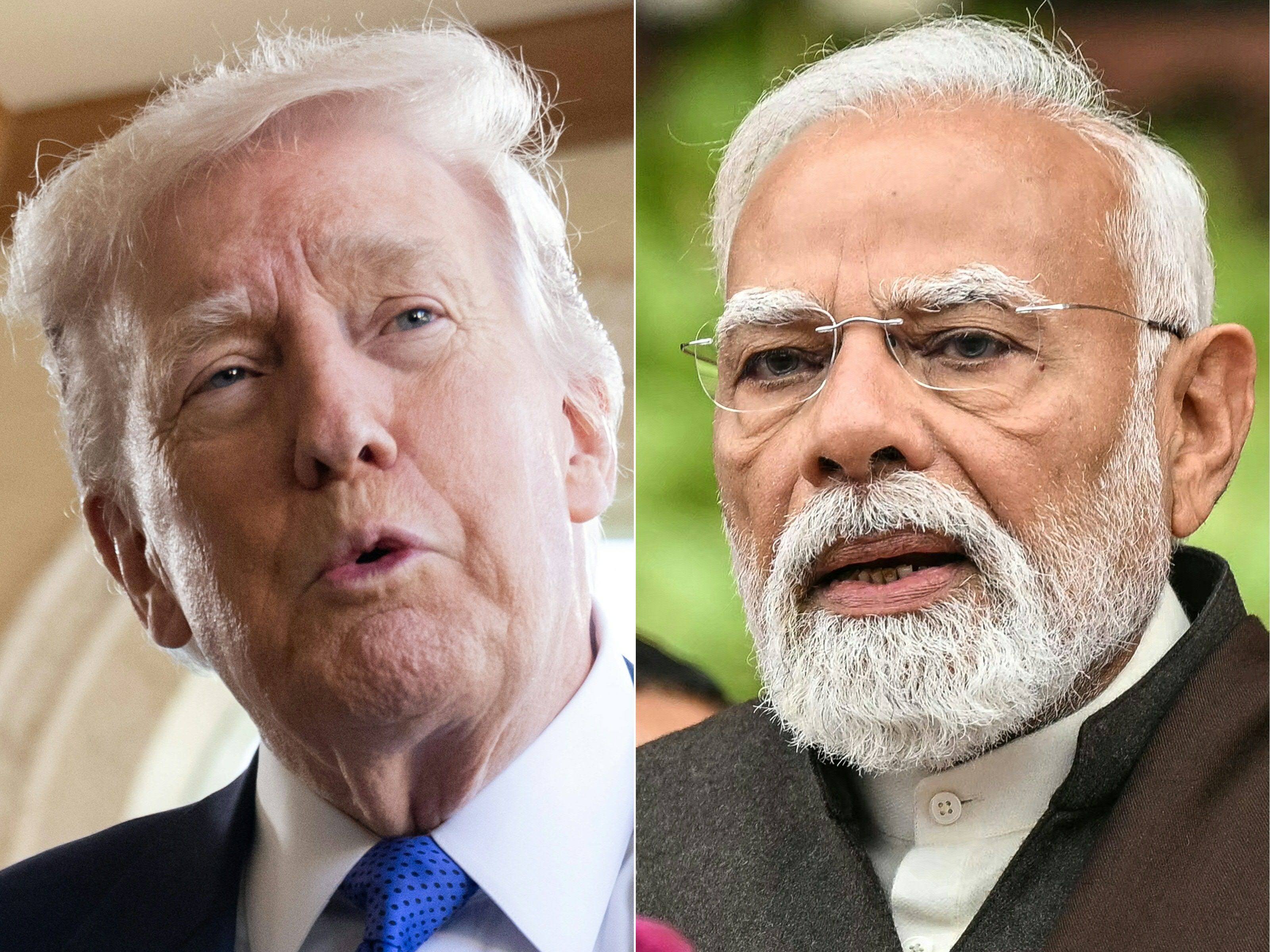
Commerce Minister Piyush Goyal spent Friday morning in New Delhi performing a familiar ritual of high-stakes diplomacy: aggressive damage control. By dismissing reports that India is hitting the brakes on a trade deal with the United States as "baseless," Goyal attempted to project a sense of stability. However, the reality on the ground suggests a much more volatile calculation. The friction isn't just a matter of scheduling; it is a direct collision between Donald Trump’s resurgent "America First" tariff regime and India's own "Atmanirbhar" protectionism.
The official line is that negotiations remain on track for an interim agreement. Yet, the timing of the denial is telling. It comes exactly 48 hours after the U.S. Trade Representative (USTR) launched a sweeping Section 301 investigation into the "unfair trade practices" of 16 nations, with India squarely in the crosshairs. For those who have watched these two tectonic plates shift over the last decade, the current tension feels less like a minor speed bump and more like a fundamental breakdown in the "Reciprocal Trade" framework announced just last month.
The Reciprocity Trap
In February 2025, the narrative was triumphant. Prime Minister Narendra Modi and President Trump stood together to launch the COMPACT (Catalysing Opportunities for Military Partnership, Accelerated Commerce & Technology). The deal was marketed as a historic reset. The U.S. agreed to lower its reciprocal tariff on Indian goods from 25% to 18%, provided India made massive concessions.
The price of that 7% reduction was steep. India reportedly committed to:
- A staggering $500 billion in purchases of American energy, coal, and tech products.
- A virtual freeze on Russian oil imports, a move that strikes at the heart of India's strategic autonomy.
- The elimination of tariffs on all U.S. industrial goods and a vast array of agricultural products.
Goyal’s insistence that India has protected "sensitive sectors" like dairy and poultry is a necessary political shield. Domestic pressure is mounting. In Punjab and the Himalayan states, farmers' unions are already on the streets, fueled by memories of the 2024-2025 protests. They see the lowering of duties on tree nuts, fruits, and soybean oil not as a "win-win," but as a death warrant for local growers who cannot compete with heavily subsidized U.S. agribusiness.
The Section 301 Shadow
Why is the deal suddenly looking fragile? Look to the U.S. Supreme Court. Last month, a landmark ruling declared the use of the International Emergency Economic Powers Act (IEEPA) for broad tariff levies illegal. This forced the Trump administration to pivot, scrambling to find new legal cover for its protectionist agenda.
Enter the Section 301 "Overcapacity" probe. By targeting "structural excess manufacturing capacity," the USTR is creating a mechanism to bypass the courts and reimpose pressure. For New Delhi, this feels like a moving goalpost. After agreeing to a framework in February based on the 18% reciprocal rate, they are now being told they are under investigation for the very industrial policies that drive their "Make in India" initiative.
It is a classic squeeze play. Washington wants the $500 billion commitment and the break from Moscow, but it is no longer willing—or perhaps legally able—to offer the tariff stability India thought it had purchased.
The Data Center Gambit
Goyal’s speech at the NXT Summit 2026 pivoted heavily toward technology. He spoke of India becoming the "data center of the world" through American investment. This is the new carrot. The deal promises increased trade in Graphics Processing Units (GPUs) and AI-enabled infrastructure.
But even here, the ground is shaky. The U.S. is demanding "robust digital trade rules," which is code for the free flow of data. India has long fought for data localization, viewing its citizens' data as a sovereign national resource. Relinquishing this control in exchange for GPUs is a trade-off that many in the Indian security establishment find unpalatable.
The geopolitical math has also changed. Since the India-Pakistan conflict of May 2025, Washington has played a delicate balancing act, occasionally leaning toward Islamabad to secure counter-terrorism goals. This has eroded the "highest level of political alignment" that industry leaders require before committing billions in long-term capital.
A Managed Decline of Expectations
The core problem is that the "Interim Agreement" was built on a series of "ifs."
If India stops buying Russian oil.
If India opens its markets to American apples and spirits.
If the U.S. doesn't find a new reason to label India a currency manipulator or a trade deviant.
The reality of 2026 is a "tiered" global trade system. Canada was notably excluded from the latest U.S. trade probes, signaling a "trusted partner" status that India has yet to fully earn in the eyes of the current White House. Instead, India is being treated as a competitor that must be "balanced" through aggressive reciprocity.
Goyal’s rejection of the "hold off" reports may be technically true—the meetings might still be happening—but the momentum has shifted from "when" the deal will be signed to "if" it still makes sense for either side. For New Delhi, the risk of a domestic political firestorm over agriculture might finally outweigh the benefits of an 18% tariff rate that remains subject to the whims of a Section 301 investigation.
The deal isn't dead, but it is currently in a state of suspended animation. Any further move will require one side to blink on the two issues neither can afford to concede: food security for India and absolute reciprocity for the United States.
Ask yourself if you want to see the specific list of agricultural products currently on the chopping block in the latest draft of the BTA.