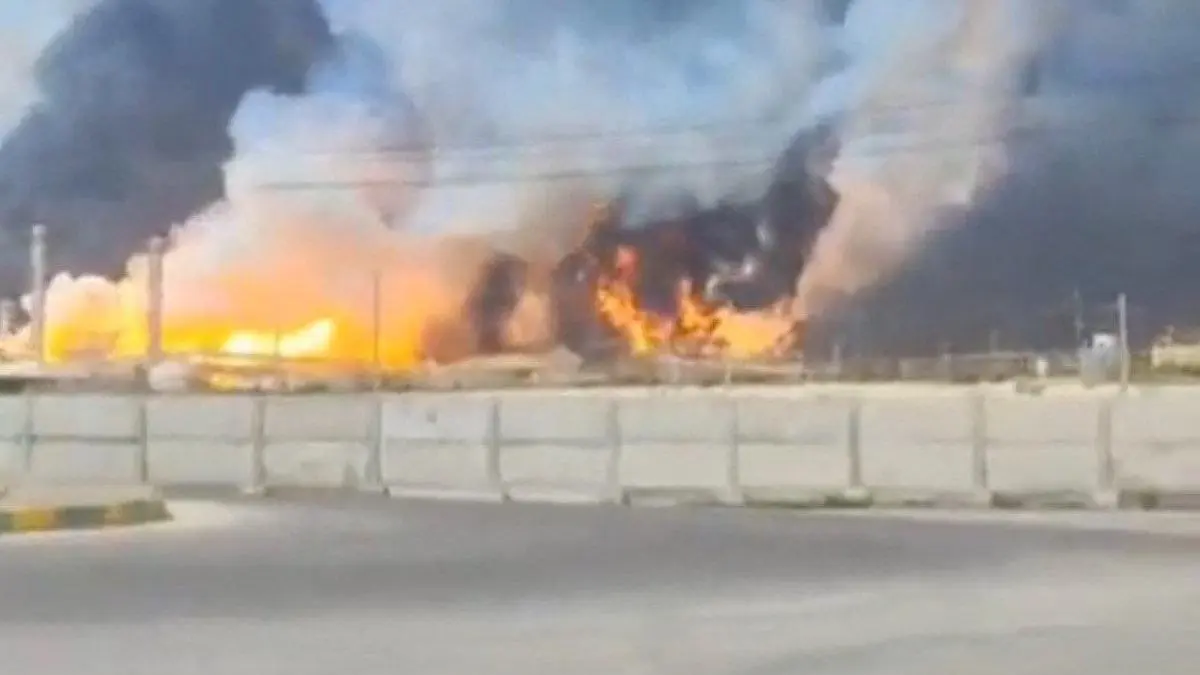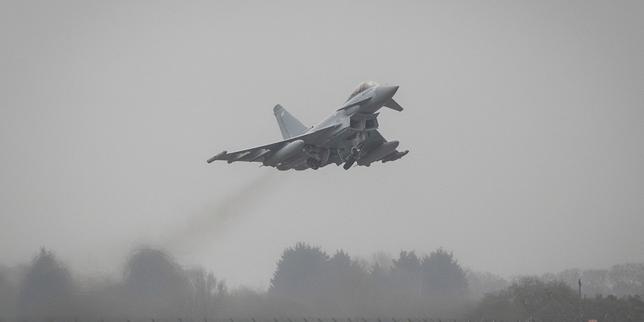
The math of modern warfare has turned against the Islamic Republic. For decades, Tehran’s military doctrine relied on the "asymmetric edge"—the idea that cheap drones and mass-produced missiles could overwhelm sophisticated, expensive Western-aligned defenses. But as the conflict in Iran transitions from localized skirmishes into a sustained, high-intensity war of attrition, the industrial reality is setting in. Iran is burning through its strategic reserves at a rate that its domestic manufacturing base cannot sustain, while the financial cost of every launch eats deeper into a collapsing national budget.
This is no longer a localized security crisis. It is a logistics collapse in slow motion. When a nation pivots from a "hit and run" posture to a "hold the line" necessity, the burn rate of precision-guided munitions and surface-to-air interceptors becomes the only metric that matters. Tehran is finding out that while it is easy to talk about a "forever war," it is nearly impossible to fund one when your primary export is sanctioned oil and your primary import is high-end electronic components smuggled through three different shadow companies.
The Mirage of Self Sufficiency
The Iranian defense ministry has long boasted about its "autarky"—the ability to build everything from the ground up without foreign interference. This was always a convenient fiction. While the airframes of the Shahed drones and the casings of the Fattah missiles are indeed stamped in local factories, the "brains" of these weapons remain stubbornly foreign.
An investigation into the wreckage of recent engagements reveals a recurring pattern. Advanced microcontrollers, inertial measurement units, and GPS modules found in Iranian ordnance often trace back to civilian supply chains in Europe, Asia, and North America. As global sanctions tighten and the "dark fleet" of shipping becomes more expensive to operate, the cost of acquiring these dual-use components has spiked by as much as 400 percent.
Iran isn't just paying for the chip. It is paying for the risk taken by the middleman in Dubai, the shell company in Turkey, and the forged manifest in Singapore. By the time a guidance system reaches an assembly line in Isfahan, it is one of the most expensive pieces of silicon on the planet. This hidden "sanction tax" is the primary driver of the unsustainable cost per unit that is currently draining the Iranian treasury.
The Interceptor Trap
Warfare is often a game of lopsided economics. Usually, the attacker has the advantage. A $30,000 drone forces the defender to fire a $2 million interceptor. For years, Iran sat on the favorable side of that equation. However, the introduction of prolonged regional conflict has flipped the script.
Iran now finds itself forced to defend its own sensitive infrastructure—oil refineries, nuclear sites, and military command centers—against increasingly sophisticated incursions. To do this, they rely on systems like the Bavar-373 and the Khordad-15. These are not cheap. The production of domestic long-range interceptors is a slow, artisanal process compared to the assembly-line speed of one-way attack drones.
Every time Iran successfully defends its airspace, it loses a piece of its future. The industrial capacity required to replace a single long-range battery can take months. If the opposition can force Iran to fire its best missiles at decoys or low-cost projectiles, they are effectively de-arming the nation without ever hitting a target. This is the "interceptor trap," and Tehran is falling straight into it.
Blood and Oil Money
Money is the ultimate propellant. The Iranian economy, already hollowed out by years of mismanagement and international isolation, is now being cannibalized to keep the assembly lines running. In the most recent budget cycles, the allocation for "defense and security" has grown at the expense of infrastructure and social subsidies.
Consider a hypothetical scenario to illustrate the pressure. If a state spends $100 million on a single night of missile salvos, that money isn't just "gone." It is money that wasn't spent on maintaining the aging power grid or stabilizing the rial. When the power goes out in Tehran because the gas turbines weren't serviced, the civilian population feels the weight of every missile fired in a distant border province.
The government is essentially betting that they can outlast the patience of their enemies before they run out of hard currency. It is a high-stakes gamble with a diminishing pile of chips. The "war of stocks" is being fought in the central banks as much as it is in the silos.
The Russian Variable
Moscow was once seen as the ultimate safety net for Tehran’s military needs. The trade was simple: Iranian drones for Russian Su-35 fighter jets and advanced electronic warfare suites. But Russia is currently embroiled in its own logistical nightmare in Ukraine.
The expected "synergy" has largely failed to materialize in a way that helps Iran’s immediate inventory crisis. Russia is a consumer of munitions right now, not a provider. Instead of receiving finished high-tech goods, Iran is often getting "vouchers" or raw materials. This leaves Tehran in a precarious position. They are exporting their own limited stock to support a partner who cannot yet provide the air superiority tools Iran needs to protect its own borders.
The Hidden Cost of Human Capital
Beyond the hardware and the currency, there is the exhaustion of the technical class. The engineers capable of refining solid-state fuel and programming guidance logic are a finite resource. Many of Iran's brightest minds have already fled in a decade-long "brain drain." Those who remain are being pushed to the limit, working in facilities that have become prime targets for sabotage and kinetic strikes.
When a factory "accidentally" explodes, the loss isn't just the machinery. It is the years of specialized knowledge lost with the personnel. Replacing a CNC machine is a matter of money and smuggling. Replacing a senior ballistics engineer in a pariah state is nearly impossible.
Scaling the Unscalable
There is a fundamental limit to how much a sanctioned, mid-sized economy can produce. Modern precision warfare requires a massive industrial base, reliable electricity, and a steady flow of high-grade chemicals and metals. Iran is trying to scale an industrial revolution while the world tries to unplug their power cord.
The military leadership in Tehran is currently facing a choice that every general throughout history has dreaded: do you fire your best weapons today to win a tactical victory, or do you save them for the "big" fight that might happen tomorrow?
Recent satellite imagery shows a frantic expansion of underground "missile cities." These are impressive feats of engineering, carved into mountainsides to protect the stockpile. But a bunker can only protect what is inside it; it cannot generate new missiles once the shelves are bare. The focus on storage is a tacit admission that the "burn rate" has exceeded the "build rate."
The Strategic Bankruptcy
The current trajectory is a slow walk toward strategic bankruptcy. If the conflict continues at this intensity for another eighteen months, Iran’s regional influence will be backed by a hollow shell. They may still have the rhetoric of a regional power, but they will lack the physical "stocks" to enforce their will.
For the international community, understanding this shift is vital. The threat from Iran is moving from a question of "intent" to a question of "inventory." A cornered animal is dangerous, but an animal that has run out of teeth is a different problem entirely.
The logistics of this conflict have moved beyond the reach of ideology. You cannot pray a missile into existence, and you cannot fund a war with a currency that loses value every time a drone is launched. The real war is being fought on the factory floors and in the ledgers of the shadow banks. And right now, the numbers are not adding up.
Track the shipments of specialized carbon fiber and high-grade aluminum heading toward the Iranian coast. When those ships stop moving, or when the price of the cargo exceeds the value of the oil exchanged for it, the war ends, regardless of what the generals say.