The Florida sun doesn't just illuminate. It glares. It bounces off the white sand of the Gulf Coast and the glass towers of Miami, creating a brightness so intense it actually makes it easier for things to hide in the shadows. We often think of "hiding" as a dark alleyway or a locked basement. In reality, the best place to disappear is right in front of everyone, carrying a backpack, walking across a campus, and holding a piece of paper that says you belong here.
A student visa is a golden ticket. It represents a promise of intellectual exchange, a bridge between nations, and a future built on merit. But sometimes, that gold is just a thin plating over something far more jagged.
The Paper Shield
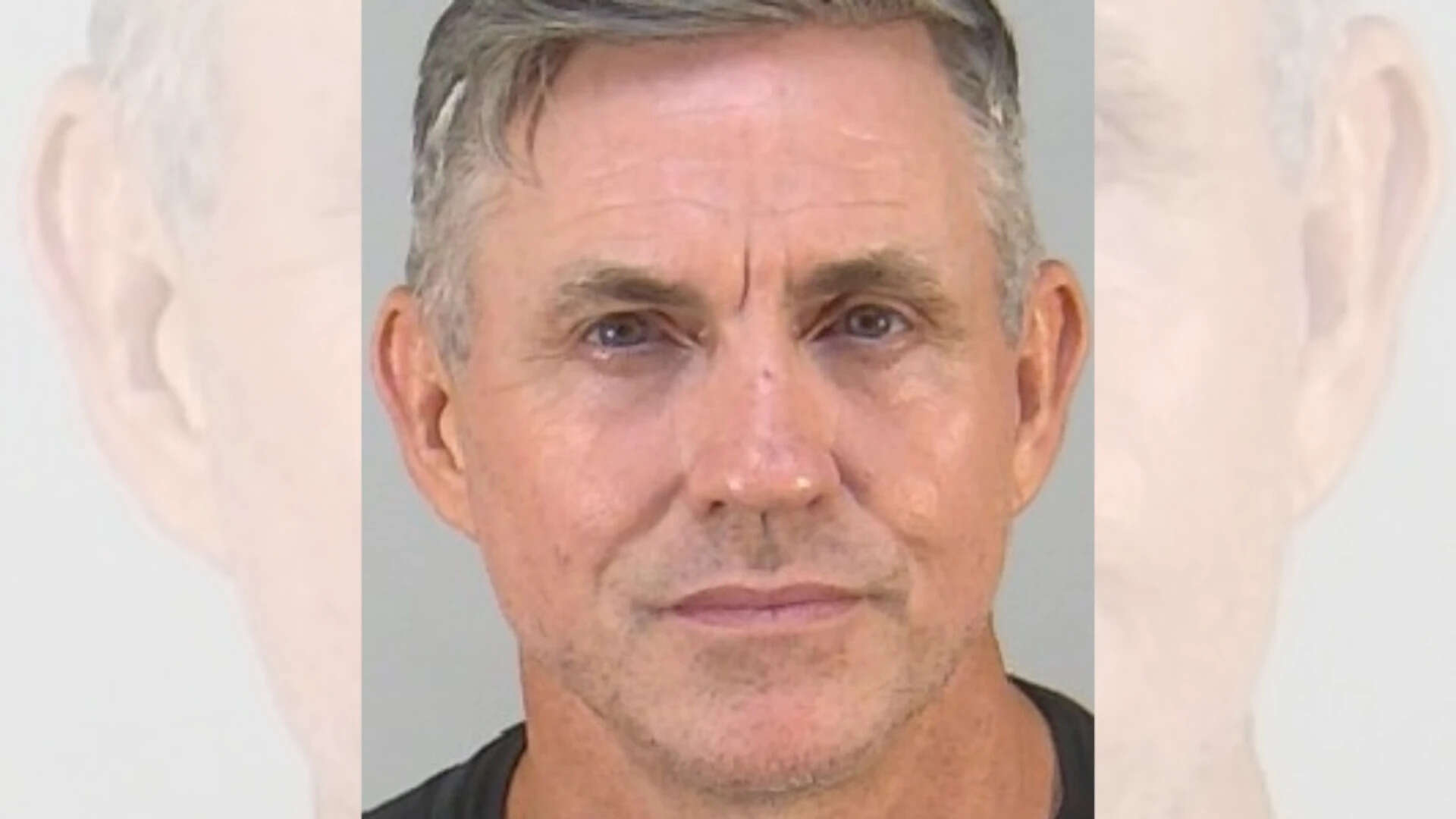
Consider the mechanics of a border. We imagine high walls and thermal cameras, but the most significant barriers are digital and bureaucratic. When a thirty-four-year-old man from Australia stepped onto American soil, he wasn't a nameless shadow slipping through a gap in a fence. He was a documented guest. He had a name. He had a destination. He had a F-1 non-immigrant student visa.
This wasn't a failure of the perimeter. It was a failure of the vetting.
The documents allowed him to move through the world with the assumed innocence of a scholar. While he was ostensibly here to study, his history back in Australia told a different story—one of violence and shattered lives. He had been convicted of sexual penetration without consent. In simpler, blunter terms: rape.
How does a man with a record of such gravity manage to check into a flight, clear customs, and settle into a life in the United States? The answer lies in the gaps between international databases and the sheer volume of human movement. We live in a world where your credit card works instantly in a different hemisphere, yet a criminal conviction can take years to catch up to a passport.
The Arrest at the Edge of the Map
Greenacres, Florida, is the kind of place people go to blend in. It is suburban, palm-fringed, and quiet. It is not where you expect a multi-agency manhunt to reach its crescendo.
But the shadows eventually grow too long to ignore.
The Enforcement and Removal Operations (ERO) team in Miami didn't stumble upon this case by accident. It was the result of a slow-motion collision between past sins and present surveillance. On a Tuesday that likely felt like any other humid Florida afternoon, the facade finally cracked. Federal agents moved in.
There is a specific kind of silence that follows an arrest like this. It’s the silence of a neighborhood realizing that the person they saw at the grocery store or at the gas station was carrying a history that didn't match his face.
The Australian national was taken into custody not just for being in the country, but for being a "prohibited person." Under U.S. law, specifically the Immigration and Nationality Act, the moment that visa was granted under a cloud of undisclosed or overlooked criminal history, the legal ground beneath his feet turned to sand.
The Mechanics of Removal
When we talk about ICE and ERO, the conversation usually devolves into shouting matches about politics. We lose sight of the actual, functioning machinery of public safety. This isn't just about "deportation" as a buzzword. It is about the specific, surgical removal of individuals who have already proven they are a danger to the social fabric.
The process of "detention pending removal proceedings" sounds clinical. In practice, it is the heavy hand of a country saying that its hospitality is not infinite.
The stakes are invisible until they aren't. We don't think about the vetting process when we sit in a coffee shop next to a stranger. We assume the system has filtered out the predators. We trust the stamp in the passport. When that trust is violated, the psychological cost to a community is far higher than the legal cost of the processing fees.
The man is currently held in an ICE detention center. He is no longer a student. He is a case number. He is a "priority for removal." This isn't a matter of a missed deadline or a clerical error regarding his credit hours. This is about the fundamental right of a resident—documented or otherwise—to live in a community where the person next door isn't a fugitive from their own conscience.
The Human Cost of a Blind System
Why does this matter to the person living in Ohio, or Oregon, or the heart of Florida? Because it reveals the fragility of our safety nets. If a convicted rapist can navigate the complex web of international travel and visa applications, what else is slipping through?
The ERO Miami Field Office Director, Garrett Ripa, doesn't speak in metaphors. His team deals in the hard reality of "aggravated felons." Their job is to find the people who treated the U.S. border like a reset button on a violent past.
Imagine the victims back in Australia. For them, justice isn't just a prison sentence; it’s the knowledge that the person who harmed them isn't allowed to simply start over somewhere else and potentially find new targets. When a predator flees across an ocean, the trauma follows the victim, but the accountability often stays behind.
By executing these arrests, the system is trying to bridge that gap. It is an admission that our world is too small for monsters to have hiding places, even if those hiding places are sunny, suburban, and decorated with a student ID.
Beyond the Statistics
We can look at the numbers of annual deportations and feel overwhelmed or indifferent. But statistics are just people with the "human" stripped away.
This story isn't about immigration policy in the broad, polarized sense. It’s about the specific, agonizing detail of a woman in a courtroom years ago, testifying against a man, believing the law would protect her and others from him. It’s about the terrifying realization that a signature on a form in a consulate halfway around the world almost made that protection irrelevant.
The Florida sun is setting now, casting long, distorted shadows across the Everglades. In a detention cell, a man waits for a flight back to the country where his record began. The system worked, this time. The "golden ticket" was revoked.
But as the lights come on in Greenacres, one can't help but wonder about the other faces in the crowd. We rely on the paper shield to keep us safe, but the shield is only as strong as the ink used to vet the person holding it.
Justice is rarely a lightning bolt. It is a slow, methodical dragging of the past into the present. It is the sound of a heavy door closing in a Florida facility, ensuring that for at least one person, the sunshine no longer serves as a veil.
The backpack is empty. The visa is void. The history has finally arrived.