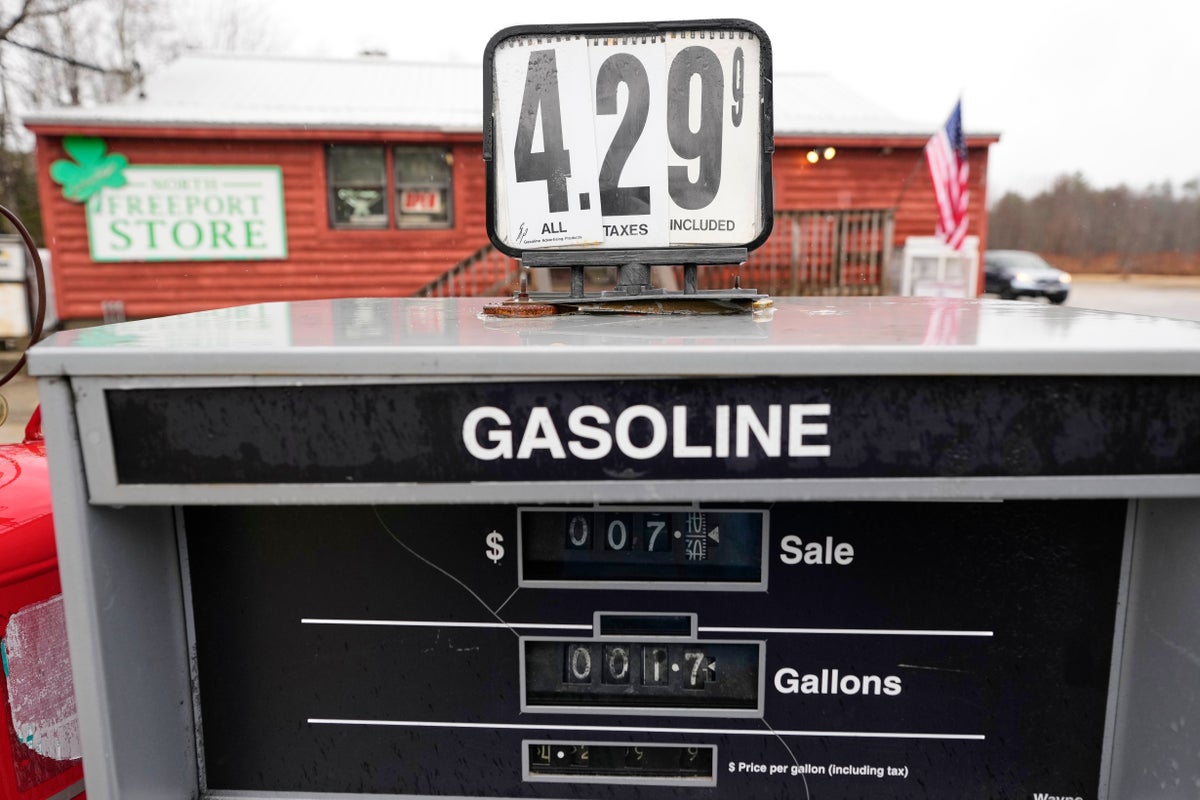
Suspending state gas taxes operates on a flawed assumption of linear price transmission where a 10-cent reduction in tax leads to a 10-cent reduction at the pump. In reality, the efficacy of a gas tax holiday is governed by the price elasticity of supply and demand, the structure of retail competition, and the opportunity cost of depleted infrastructure funds. When states pause these levies, they often trigger a transfer of wealth from public treasuries to fuel retailers and producers rather than providing sustained relief to the consumer.
The Incidence Matrix Tax Burdens vs Retail Reality
To understand why gas tax holidays frequently fail to meet their stated objectives, one must examine Tax Incidence. This economic principle dictates who actually bears the burden of a tax—or who captures the benefit of its removal. It is rarely a 50/50 split. The entity with the least flexibility (the most inelastic curve) pays the most.
- Demand Inelasticity: In the short term, gasoline demand is highly inelastic. Commuters must drive to work, and logistics chains must move goods regardless of a 5% price swing. Because consumers cannot easily substitute gasoline for another energy source overnight, they are vulnerable to price gouging or "sticky" retail pricing.
- Supply Constraints: If refinery capacity is capped or crude oil prices are surging globally, a state-level tax cut does nothing to increase the volume of fuel available. When supply is fixed, any increase in consumer "spending power" resulting from a tax cut simply allows retailers to keep prices higher, capturing the tax margin as profit.
- Retail Lag and Asymmetry: Gasoline prices exhibit "rockets and feathers" behavior—they rise like rockets when costs increase but drift down like feathers when costs drop. Retailers often use tax holidays to pad depleted margins, slowing the pass-through rate to the consumer.
The Fiscal Opportunity Cost and The Infrastructure Gap
State gas taxes are not general revenue; they are primary funding mechanisms for the Highway Trust Fund and local infrastructure projects. Suspending these taxes creates a bifurcated fiscal crisis.
First, the Direct Revenue Loss is immediate. A state like Florida or Georgia can lose hundreds of millions of dollars in a single month of suspension. This revenue is typically tied to debt service for existing road bonds. When the revenue disappears, the state must either pull from the general fund—cannibalizing budgets for education or healthcare—or halt active construction projects.
Second, the Deferred Maintenance Penalty is a long-term multiplier of cost. Pavements and bridges follow a non-linear degradation curve. If a road repair is delayed by 18 months because of a gas tax holiday, the cost of that repair can quadruple as the structural base fails. The consumer "saves" $20 at the pump over a month but pays $400 in vehicle repairs due to increased pothole frequency and long-term infrastructure decay.
Behavioral Distortion and Counterproductive Demand
A primary goal during periods of high inflation should be the stabilization or reduction of demand to cooling prices. Gas tax holidays achieve the exact opposite by subsidizing consumption during a supply crunch.
By artificially lowering the price, the state encourages continued high-volume usage. This prevents the market from reaching a natural equilibrium. If the global supply of oil is restricted, the only way to lower prices is to reduce consumption. A tax holiday acts as a price signal that tells the consumer "carry on as usual," which maintains upward pressure on the base price of the fuel. The net result is often a "wash" where the tax savings are eaten by global price increases fueled by the very demand the tax cut protected.
The Three Pillars of Pass-Through Efficiency
Whether a tax holiday works depends on three specific variables that most policymakers ignore in favor of political optics.
- The Competitive Density of the Local Market: In regions with high concentrations of independent gas stations, competition is more likely to force the tax savings through to the consumer. In rural areas dominated by one or two stations, the retailer has the market power to absorb the tax cut into their margin without fear of being undercut.
- The Inventory Turnover Rate: Stations buy fuel at a "rack price" that includes the tax. They are unlikely to lower prices until they have sold through the inventory they purchased at the taxed rate. This creates a multi-day or multi-week delay where the consumer sees no benefit while the state is already losing revenue.
- The Duration of the Suspension: Short-term holidays (30 days) are almost entirely absorbed by the supply chain. Long-term suspensions (6 months or more) allow for a more stable adjustment of retail prices, but the fiscal damage to infrastructure becomes catastrophic.
Measuring the Leakage How Public Funds Become Private Profit
The "Leakage" of a gas tax holiday is the delta between the total tax revenue forfeited by the state and the total savings realized by the end-user.
$$Leakage = \sum (Tax_{forgone}) - \sum (Price_{reduction} \times Volume)$$
Empirical data from past holidays suggests leakage rates can range from 20% to 40%. This means for every $100 million a state gives up, $30 million may stay in the pockets of wholesalers and retailers. This is an incredibly inefficient form of social stimulus. If the goal is to help low-income families affected by inflation, direct cash transfers or transit subsidies are mathematically superior because they avoid the supply-chain friction and the regressive nature of fuel subsidies—where the wealthiest citizens with the largest, least-efficient vehicles receive the largest "check" from the state.
Structural Bottlenecks in the Refining Stack
Price at the pump is determined by four components: the cost of crude oil, refining costs and profits, distribution/marketing, and taxes. Taxes are the only component the state controls, but they are also the smallest variable in the current inflationary environment.
The current price surge is driven primarily by a "Refining Bottleneck." Since 2020, global refining capacity has shrunk as older plants were decommissioned and not replaced. When refineries are running at 95% capacity, they cannot produce more gasoline regardless of the tax rate. In this scenario, the supply curve is vertical (perfectly inelastic). Any tax cut in a perfectly inelastic supply environment results in a 100% transfer to the producer. The consumer sees a $0.00 change in price.
The Regressive Nature of Uniform Tax Relief
Gas taxes are often criticized as regressive because they take a larger percentage of income from low-earning households. However, suspending them is also structurally regressive in terms of absolute benefit.
A family living in an urban center who relies on public transit receives $0 from a gas tax holiday but suffers from the resulting cuts to municipal budgets. Meanwhile, an individual driving a luxury SUV with a 25-gallon tank receives a significant subsidy. This creates a misalignment between fiscal policy and social equity. Effective relief should be targeted; a gas tax holiday is a "shotgun" approach that misses the most vulnerable while rewarding the highest consumers of a limited resource.
Strategic Identification of Market Failure
To determine if a gas tax suspension is viable, a state must first audit its local fuel market for "Perfect Competition."
- Check Wholesale Rack Price Transparency: Are retailers getting transparent pricing that allows them to pass on savings?
- Evaluate Current Infrastructure Debt: Can the state meet its 12-month bond obligations without this specific revenue stream?
- Assess the Elasticity of the Commuter Base: Does the state have a high percentage of "forced drivers" who cannot reduce consumption?
If the supply is constrained and demand is forced, the tax holiday is not an economic policy; it is a marketing campaign for the incumbent government.
The Execution Framework for Real Relief
For a state to truly mitigate the impact of high fuel costs without destroying its long-term solvency, it must pivot away from the "Holiday" model toward a "Rebate" or "Investment" model.
- The Targeted Fuel Rebate: Instead of a blanket tax cut, states should issue one-time "inflation relief" checks to households below a certain income threshold. This preserves the price signal (encouraging conservation) while providing the liquidity needed to cover higher costs. It also ensures that 100% of the funds reach the citizen, with 0% leakage to the petroleum supply chain.
- The Suspension of the Indexing Mechanism: Rather than a total holiday, states can temporarily freeze the "automatic" annual increases in gas taxes that many have written into law. This prevents the burden from worsening without creating a sudden hole in the budget.
- The Multi-Modal Credit: Divert the equivalent of a 10-cent tax cut into temporary free or reduced-fare public transit. This directly reduces the demand for gasoline, which—unlike a tax cut—actually exerts downward pressure on the base price of fuel by increasing the price elasticity of demand.
The focus must remain on the Net Benefit per Capita. A gas tax holiday that results in a $5 monthly saving for the average driver but leads to a 5-year delay in bridge reconstruction is a net-negative transaction for the taxpayer. The data consistently demonstrates that the most effective way to lower gas prices is not to subsidize the cost, but to increase the efficiency of the market and provide alternatives to the consumption.
The Strategic Play
Decision-makers must reject the gas tax holiday as a viable economic tool. It is a fiscal leak. The superior strategy is to maintain the tax to protect infrastructure integrity while simultaneously deploying targeted, means-tested rebates that bypass the retail pump entirely. This ensures that public funds are used to support citizens, not to subsidize the margins of a global commodity market that is currently indifferent to state-level fiscal adjustments.