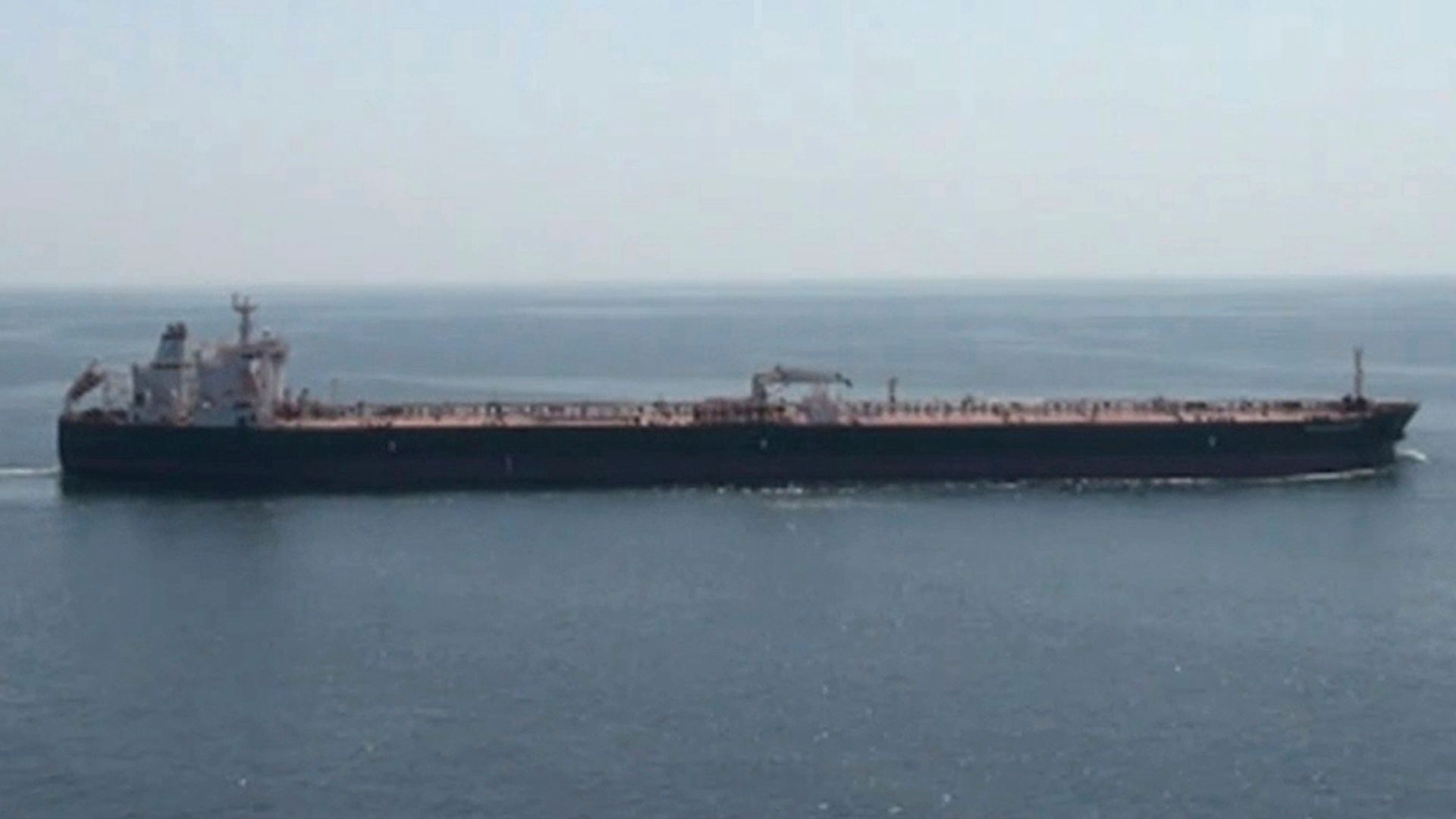
The global economy is currently undergoing a violent decoupling from the efficiency-first model that defined the last three decades. This is not merely a localized conflict impacting energy prices; it is a fundamental restructuring of how sovereign states value physical atoms over digital bits. The prevailing logic of "Just-in-Time" logistics—which prioritized the minimization of inventory costs—is being replaced by "Just-in-Case" strategic stockpiling. This shift introduces a permanent inflationary floor under global markets, as the cost of redundancy is far higher than the cost of efficiency.
To understand the magnitude of this transition, one must analyze the three structural pillars currently being eroded: the stability of the global energy mix, the unfettered flow of critical minerals, and the reliability of the maritime commons.
The Energy Elasticity Paradox
The immediate impact of the conflict is often measured in the price per barrel of Brent Crude or the spot price of Title Transfer Facility (TTF) natural gas. However, the deeper economic disruption lies in the destruction of energy elasticity. In a stable market, supply can react to price signals. In a fragmented geopolitical landscape, supply is constrained by infrastructure bottlenecks that take years, not months, to resolve.
The European transition away from piped Russian gas to Liquefied Natural Gas (LNG) represents a shift from a low-marginal-cost, fixed-infrastructure system to a high-marginal-cost, flexible-infrastructure system.
This creates a "Volatility Trap." Because LNG depends on a global fleet of specialized vessels, European demand now directly competes with Asian demand in real-time. The result is a synchronized global price floor. For industrial manufacturers in Germany or Northern Italy, this means energy is no longer a utility to be managed, but a strategic risk that dictates whether a factory remains solvent. The cost function of heavy industry has been permanently altered, leading to "deindustrialization by default" where energy-intensive processes migrate toward the US or Gulf States, regardless of labor costs.
The Critical Mineral Bottleneck
While energy dominates the headlines, the long-term strategic threat is the concentration of the "Transition Minerals" required for the shift to a low-carbon economy. The conflict has exposed the fragility of supply chains for neon, palladium, and high-grade nickel.
The analytical framework for evaluating these risks is the HHI (Herfindahl-Hirschman Index) applied to mineral extraction and refining. A high HHI indicates market concentration. Currently, the concentration of refining capacity for lithium, cobalt, and rare earth elements is more localized than oil production ever was during the 1970s.
- Refining Dominance: Even if a mineral is mined in Australia or Chile, the chemical processing often occurs in a single geopolitical jurisdiction.
- Supply Chain Inelasticity: Opening a new copper or nickel mine takes an average of 10-15 years from discovery to first production.
- Substitution Constraints: While a consumer can switch from oil to electricity, a jet engine or a battery has a fixed chemical requirement for specific elements (e.g., Scandium, Rhenium).
This creates a "Strategic Inflexibility" where geopolitical friction translates directly into technological delays. The ripple effect extends through the entire value chain of the digital and green economy, as the cost of these minerals is no longer a function of market demand, but of geopolitical alignment.
The Friction of the Maritime Commons
The era of "Free and Open" seas is being replaced by "Contested and Costly" transit. For decades, the global economy relied on the assumption that major maritime choke points—the Suez Canal, the Strait of Malacca, the Bab el-Mandeb—would remain neutral territory.
The current conflict has effectively weaponized distance. When a container ship is forced to reroute around the Cape of Good Hope, the impact is not just a longer transit time. It is a massive consumption of "Dead Weight Tonnage" (DWT).
- Fuel Consumption: A Cape of Good Hope reroute adds 3,000–4,000 nautical miles, increasing fuel costs by 25–40% per TEU (Twenty-foot Equivalent Unit).
- Insurance Premiums: The risk of kinetic strikes in maritime corridors leads to an exponential increase in war-risk insurance, which is passed directly to the consumer.
- Tonnage Tightness: By extending the time each ship is at sea, the effective global fleet capacity shrinks. If 10% more time is needed per voyage, the global supply of ships is functionally reduced by 10%, even if no ships are destroyed.
This is the "Logistics Inflation Multiplier." It creates a persistent upward pressure on the landed cost of goods, regardless of interest rate hikes or fiscal policy.
The Architecture of Economic Fortification
The strategic response to this environment is "Friend-Shoring" and "Reshoring." These are not merely buzzwords; they represent the National Security Premium on economic activity.
Companies are being forced to choose between the Absolute Advantage of low-cost production and the Strategic Advantage of supply chain resilience. The shift toward reshoring high-value manufacturing (e.g., semiconductors, aerospace) to the US or EU is an admission that the cost of a supply chain disruption now outweighs the cost of higher domestic wages.
This creates a "Dual-Track Global Economy."
- Track 1: Essential, high-security supply chains localized within trusted geopolitical blocs.
- Track 2: Non-essential, low-margin goods that continue to compete on price in the global market.
The friction between these two tracks will define the next decade of capital allocation. Investors must now discount the cash flows of companies with high exposure to "Track 2" logistics, as the probability of a "Black Swan" supply event has shifted from a tail-risk to a baseline expectation.
The Strategic Play: Capital Allocation in a Fragile World
The most effective strategy for navigating this landscape is a pivot toward Tangible Asset Control and Energy Sovereignty.
- Vertical Integration of Raw Materials: Corporations that previously relied on open-market purchases must move toward equity stakes in mines and refining facilities. Controlling the source is the only hedge against geopolitical blackmail.
- Investment in Modular Energy: Small Modular Reactors (SMRs) and localized renewable grids provide industrial plants with the "Off-Grid" capability required to decouple from volatile national energy prices.
- Redundancy as an Asset: CFOs must reclassify "Excess Inventory" from a liability to a strategic reserve. The companies that thrived during the recent supply shocks were those with "inefficient" balance sheets that allowed them to fulfill orders when lean competitors failed.
The war has effectively ended the era of the "Borderless World." The new reality is a global economy defined by the physical constraints of resources and the political constraints of geography. The winners will be those who prioritize the security of their physical inputs over the optimization of their digital outputs.