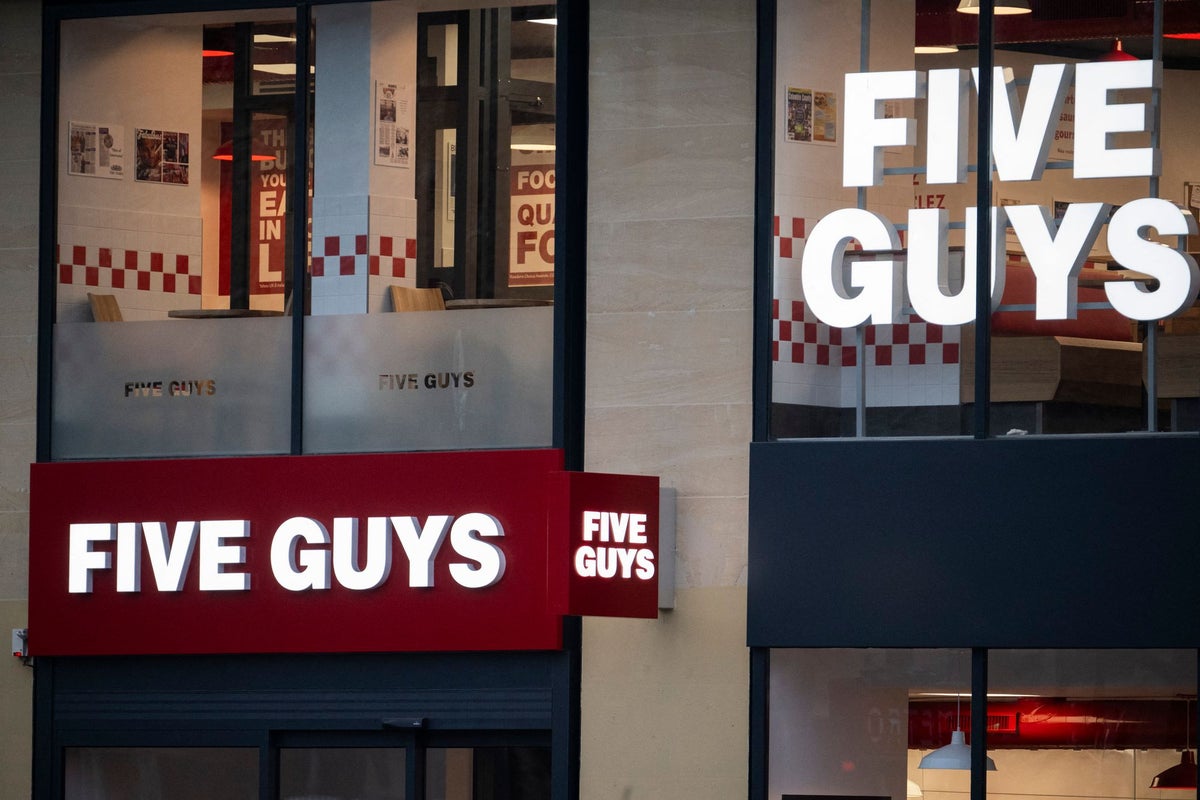
The grease trap hums a low, industrial B-flat. It is 10:45 AM. For a Five Guys crew, this is the final breath of oxygen before the water starts to boil. Outside, the parking lot is a gray slab of anticipation. Inside, the air smells of peanut oil and the sharp, medicinal sting of sanitizer.
A fry cook—let’s call him Marcus—adjusts his cap. He has his station set. The potatoes are soaking, the salt is ready, and the grill is a shimmering plane of heat. In the old days, a rush was predictable. You could look out the window and see the line forming. You could count the bodies. You could prepare your mind for the next sixty minutes of rhythmic chaos.
Then came the "Life Hack."
It started as a flicker on a glass screen, a viral video promising the ultimate off-menu burger. It wasn't just a recommendation; it was a command. Within forty-eight hours, the digital world exhaled, and the physical world at Five Guys locations across the country buckled under the weight of that breath.
The Sound of a Thousand Pings
When a store goes viral, the floor doesn't just get busy. It transforms.
The ticket machine began to scream. It’s a rhythmic, mechanical chirping that signals a new digital order. One chirp is fine. Five is a rush. Fifty is a crisis. Suddenly, the lobby wasn't just filled with the usual lunch crowd; it was packed with "delivery partners" staring at their phones and teenagers filming their bags for their own slice of the algorithm.
Imagine standing at that grill. To your left, the fries are bubbling at exactly $180°C$. To your right, the patties are searing. But the tickets are now four feet long. Customers aren't just asking for bacon cheeseburgers; they are asking for the specific, complex modifications they saw on their feeds.
The pressure is invisible but heavy. It’s the feeling of being hunted by an entity you cannot see—the internet. For Marcus and his team, the stakes aren't just about flipping meat. Five Guys has built its reputation on a grueling internal metric: the secret shopper.
At any moment, the person ordering a "Little Fries" could be the one grading your performance. They check the thickness of the shake. They check the floor for stray napkins. They check if the greeting was genuine or a rehearsed plea for mercy. If the store fails the secret shopper during a viral flood, the morale doesn't just dip—it vanishes.
The Economy of the Extra Mile
Business schools love to talk about "scalability" and "demand curves." They rarely talk about the sweat behind the counter.
When a promotion or a viral trend leaves a store flooded, the immediate corporate instinct is usually to celebrate the revenue. But money in the register doesn't flip the burgers. People do. And those people are currently drowning in a sea of grilled onions and "all the way" toppings.
The company realized something that many modern retailers miss: you cannot ask for elite performance during an anomaly without offering an elite reward.
The bonuses announced weren't just a pat on the back. They were a recognition of the sheer physical and mental toll of the digital age. When a store’s sales volume spikes by double digits because of a social media fluke, the staff isn't just working harder; they are working at a pace the human body wasn't designed to maintain for an eight-hour shift.
Consider the math of the "extra." Five Guys is famous for the "topper"—that extra scoop of fries thrown into the bag. It’s a gesture of abundance. But when the store is flooded, that extra scoop represents another basket that must be dropped, another bag that must be shaken, and another thirty seconds added to a wait time that is already ticking upward.
The bonus structure was designed to turn that resentment into a mission. If the crew keeps the quality high—if they pass those dreaded secret shopper audits while the store is bursting at the seams—the company cuts them in on the win.
The Secret Shopper in the Eye of the Storm
There is a specific kind of tension in serving someone who might be evaluating your soul for a corporate spreadsheet.
Under normal circumstances, the secret shopper is a ghost. You try to treat everyone like a king so you don't accidentally treat the judge like a peasant. But when the line is out the door and the "Life Hack" orders are piling up, the temptation to cut corners is a physical itch.
Don't worry about the floor.
The fries are close enough.
Forget the greeting, just get the bag out.
The stores that won these bonuses didn't give in to that itch. They maintained the "Five Guys Way" while the world outside went mad. This requires a level of tribal leadership that you can't teach in a handbook. It’s Marcus looking at the prep cook and nodding. It’s the manager jumping on the shake station. It’s the shared understanding that if they survive this hour with their standards intact, there is a tangible reward waiting on the other side.
The "flood" wasn't just a surge in customers; it was a stress test for the very concept of the brand. Five Guys doesn't have freezers. They don't have timers. Everything is done by sight, sound, and smell. You can't automate that. You can't "leverage" a robot to tell if a potato has been soaked long enough to remove the starch.
You need humans. Focused, tired, determined humans.
The Human Cost of Virality
We live in an era where a single video can redirect the flow of millions of dollars. It’s a chaotic, beautiful, and terrifying reality for the people on the front lines.
When we see a headline about "flooded stores" and "employee bonuses," it’s easy to view it as a simple transaction. Demand went up, so pay went up. But that ignores the exhaustion. It ignores the person who stayed two hours late because the night shift was intimidated by the crowd. It ignores the frantic cleaning of the soda machine at 11:00 PM.
The real story isn't the money. The real story is the bridge between the digital whim and the physical reality.
Behind every viral "hack" is a kitchen full of people who have to figure out how to make it work without breaking the system. They are the ones who turn the "content" we consume on our couches into the food we put in our mouths.
The bonuses are a signal. They tell the worker that they aren't just a line item on a P&L statement. They tell the worker that when the internet chooses their store as the "main character" for a week, the company knows who is actually playing the role.
Marcus finishes his shift. His red apron is stained with a map of the day's battles—a splash of ketchup here, a dusting of flour there. His back aches. His ears are still ringing with the sound of the ticket machine. But he knows the audit went well. He knows the "toppers" were generous. He knows that when the digital storm cleared, his team was still standing.
The lobby is finally quiet. The grease trap continues its low hum. He hangs up the apron, touches the cold metal of the door handle, and walks out into the cool evening air. He is more than a gear in a machine. He is the reason the machine still works.
The fries were perfect today. That has to mean something.