The earth does not just shake when a 900-kilogram bomb strikes. It screams. But in the high-stakes chess match played out in the arid stretches of central Iran, the most terrifying sounds are often the ones that never reach the surface.
Isfahan is a city of turquoise domes and ancient bridges, a place where history feels carved into the very dust. Yet, beneath this cradle of Persian culture lies a different kind of architecture altogether. It is a world of reinforced concrete, lead-lined chambers, and centrifuges that hum with a frantic, metallic urgency. This is the heart of a nuclear program that has become the focal point of global anxiety. When the decision was made to target this specific geography, it wasn't just an act of war. It was a message delivered in the language of physics and kinetic energy.
To understand why a military would choose a "bunker buster"—specifically the behemoths designed to penetrate dozens of meters of earth before detonating—you have to understand the psychology of the burrow.
The Architecture of Defiance
Imagine a scientist named Arash. He is hypothetical, but his reality is shared by thousands. Arash spends his daylight hours sixty feet underground. He doesn't see the sun. He works in a facility where the air is scrubbed and the walls are thick enough to withstand a conventional air raid without so much as a coffee cup rattling. For years, the prevailing wisdom was that depth equaled safety. If you bury your secrets deep enough under the mountains of the Iranian plateau, they become untouchable.
This sense of security creates a specific kind of geopolitical leverage. When a nation believes its most sensitive assets are immune to intervention, its diplomatic posture hardens. The "invincible" facility at Isfahan wasn't just a place to enrich uranium; it was a fortress of political will.
But gravity and high-grade explosives have a way of shattering illusions.
A standard fragmentation bomb explodes on contact. It is loud, devastating to anything on the surface, and ultimately useless against a mountain. The 900-kilogram bunker busters used in recent strategic strikes are different. They are essentially kinetic spikes. They don't explode when they hit the dirt. Instead, they use their immense weight and hardened steel casings to "drill" through the layers of rock and reinforced cement.
They wait. They feel for the void. Only when the onboard sensors detect that they have breached the hollow space of a laboratory or a storage hall do they trigger their payload. The resulting explosion isn't a plume of fire rising into the sky; it is a pressure wave trapped in a confined space. It turns the very air into a hammer.
The Mathematics of a Message
Why 900 kilograms? Why not more, or less?
The choice of payload is a calculated data point. In the world of clandestine strikes, every gram of explosive is a syllable in a sentence. Using a weapon of this magnitude serves two purposes. First, it ensures the destruction of the "hard" target—the centrifuges that are the lifeblood of nuclear enrichment. These machines are delicate. They spin at supersonic speeds. Even a slight tremor can cause a "crash," where the rotors touch the casing and the entire machine disintegrates into a cloud of shrapnel and toxic gas.
Second, the 900-kilogram weight class sends a signal of capability. It tells the recipient that no amount of concrete is sufficient. It says: We know exactly where you are sitting, and we have the tools to reach you.
Consider the logistics involved in such a strike. It isn't just about dropping a weight from a plane. It requires a symphony of intelligence gathering. To hit a buried target, you need to know the blueprints. You need to know the density of the soil, the thickness of the overhead cover, and the exact coordinates of the ventilation shafts. A miss of ten meters is a total failure.
When those bombs hit Isfahan, the primary casualty wasn't just equipment. It was the concept of the "safe zone." The strike stripped away the comfort of the subterranean. It forced the realization that the earth itself provides no sanctuary against modern precision.
The Human Echo
We often talk about these events in the cold terminology of "strategic assets" and "surgical strikes." We lose sight of the people standing on the ground.
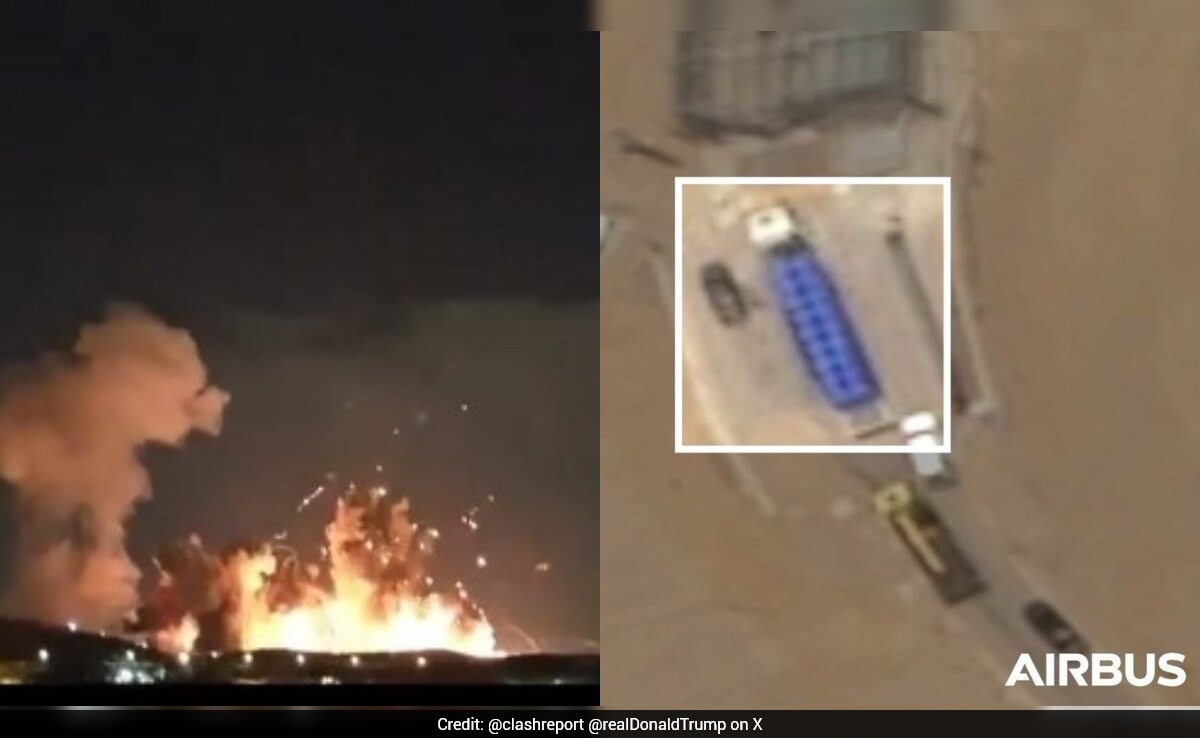
For the residents of Isfahan, the conflict isn't a map with red dots. It is a sudden, bone-deep vibration that wakes them in the night. It is the uncertainty of what comes next. When a bunker buster hits, the surface impact can be deceptively small—a crater that looks like a minor construction mishap. But the men and women working below feel the world collapse.
There is a profound psychological weight to knowing that the ceiling above you, which you were told was an impenetrable shield, is actually a lid.
This is the hidden cost of the arms race in the Middle East. It isn't just the billions of dollars spent on hardware or the years of wasted scientific potential. It is the permanent state of hyper-vigilance. It is the transformation of a historic city into a target.
The Logic of the Depths
The use of such heavy ordnance reflects a shift in modern warfare. We are moving away from broad, carpet-bombing tactics and toward a philosophy of "deep reach."
In the past, to stop a nuclear program, you might have had to invade a country or destroy its entire power grid. Today, the goal is to disable the heart without killing the patient—or at least, that is the theory. By using bunker busters, the targeting nation attempts to contain the damage to the specific facility. They want to avoid a wider war while still achieving a definitive result.
But this "surgical" approach is a gamble. Every time a 900-kilogram bomb is dropped, the margin for error is razor-thin. If a strike hits a pocket of volatile chemicals or breaches a containment unit in the wrong way, the environmental fallout could be catastrophic for the civilian population. The precision is high, but the stakes are infinite.
The craters at Isfahan tell a story of a world that is running out of places to hide. We have spent decades digging deeper, building thicker walls, and burying our most dangerous ambitions under layers of stone. And in response, we have built smarter, heavier, and more relentless ways to dig them back up.
The earth is no longer a shield. It is merely a delay.
The dust in Isfahan eventually settles. The turquoise domes remain, reflecting a sun that has seen empires rise and fall with monotonous regularity. But underneath the beauty, the ground remains scarred. Not just by explosives, but by the realization that in the modern age, the deeper you bury a secret, the more weight will eventually come crashing down to find it.
Shadows long, the bridges of the Zayandeh River stand silent, while somewhere in the dark, the sound of a shovel hitting dirt begins the cycle all over again.