Modern warfare is dying under the weight of its own PR department. Every time a headline screams about "urgent evacuation orders" followed by "tragic soldier fatalities," the media treats these as two separate, unfortunate events. They aren't. They are the same event. We are witnessing the catastrophic failure of a 20th-century doctrine trying to survive in a 21st-century transparent battlespace.
The competitor narrative suggests that the Israel Defense Forces (IDF) are simply following international law by clearing civilians while simultaneously losing soldiers to "unforeseen" Hezbollah ambushes. This is a sanitized lie. The reality is that the very process of "evacuation" is currently being weaponized by non-state actors to turn high-tech militaries into slow-moving targets.
The Evacuation Trap
When a military issues an evacuation order, they aren't just clearing civilians; they are broadcasting their exact operational vector to the enemy. In the old days of the Napoleonic "fog of war," you kept your movements secret until the bayonets were visible. Today, we telegraph our punches three days in advance to satisfy a global legal audience that will never be satisfied anyway.
Hezbollah isn't running away when the flyers drop. They are checking their watches. They know exactly where the "corridor" is, which roads are being monitored, and—most importantly—where the IDF ground units will be forced to funnel to secure those perimeters. By trying to be the "most moral army," the IDF is inadvertently becoming the most predictable. Predictability in a guerrilla environment is a death sentence.
I have seen this play out in private security contracts and urban theater analysis for a decade: the moment you institutionalize your humanitarian response, it becomes a fixed variable in your enemy’s tactical equation.
The Myth of the "Surgical" Ground Incursion
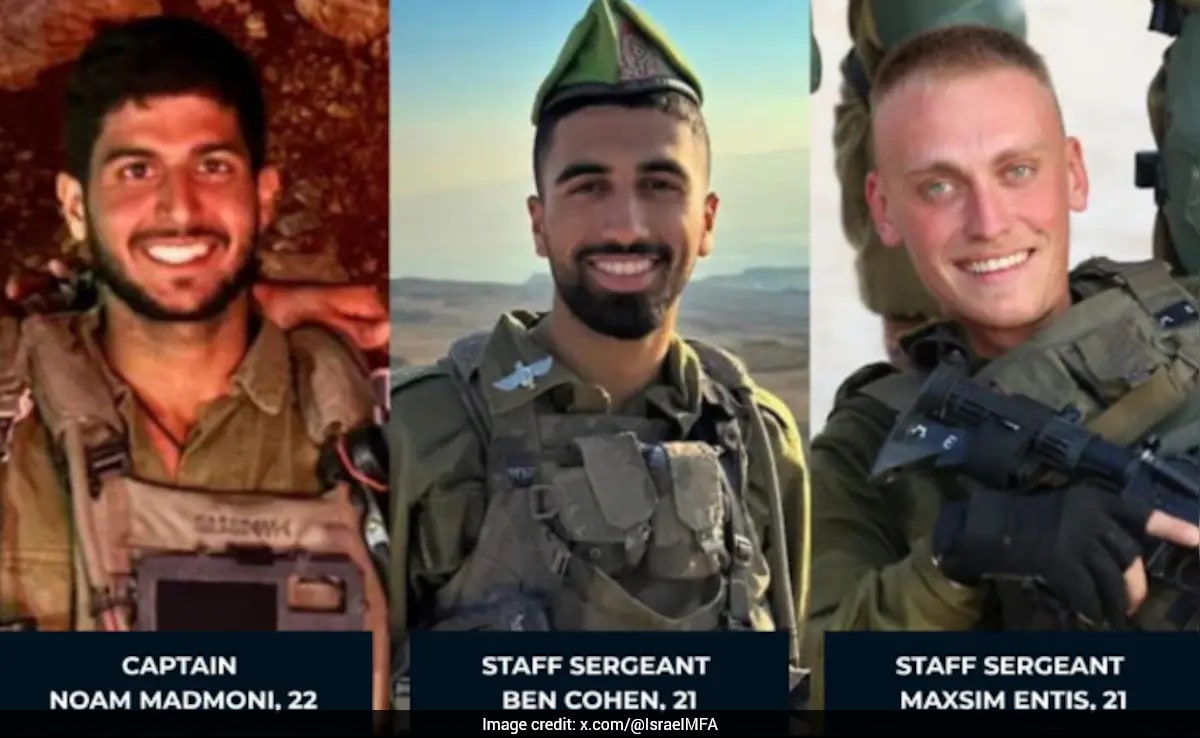
The deaths of four soldiers in South Lebanon shouldn't be framed as a localized skirmish. It is a failure of the "Surgical Incursion" myth. We’ve been sold this idea that sensors, drones, and AI-driven target acquisition make ground combat cleaner.
It’s actually the opposite.
The more technology we layer onto the soldier, the more "tactical friction" we create. Every soldier is now a walking nodes-and-links hub. When they enter a village in South Lebanon, they aren't just fighting men with RPGs; they are fighting an environment where the enemy has had 18 years to map every basement, every drainage pipe, and every "evacuation route."
- Information Overload: Commanders are paralyzed by a "God-view" from drones that doesn't actually show the guy under the floorboards with a directional mine.
- The Speed Gap: Civilians move slowly. If you wait for them to leave, you give the enemy time to plant IEDs. If you don't wait, you lose the information war.
- The Static Perimeter: Securing an evacuation zone requires soldiers to stand still. A standing soldier is a target.
Logistics is the New Front Line
We focus on the four soldiers lost, but we ignore the 400 specialized units required to maintain the "humanitarian" posture that put them in danger. Hezbollah’s strategy isn't to win a tank battle; it’s to increase the "cost per square inch" of Israeli advancement until the domestic political will in Jerusalem snaps.
The "urgent evacuation" isn't a sign of looming victory. It’s a sign of a military that is stuck in a loop of its own making. They cannot advance without clearing, but the act of clearing invites the very ambushes that stall the advance.
Stop Asking About "Casualty Figures"
The media loves to count bodies. It’s a lazy metric. If you want to understand the truth of the Lebanon conflict, stop looking at the death toll and start looking at the Tempo of Operation.
If the IDF is losing four soldiers while issuing evacuation orders, it means their "clearing" operations are taking ten times longer than planned. In high-intensity conflict, time is the only resource you can't replenish. Every hour a unit spends managing a civilian corridor is an hour Hezbollah spends calibrating a drone or prepping a Kornet anti-tank missile.
People ask: "Why can't the IDF stop these ambushes?"
The answer is brutally honest: They can't stop them because they've prioritized the process of war over the purpose of war.
The Technological Crutch
We see the use of "Zizit" drones and Eitan AFVs as signs of dominance. But high-end tech has a diminishing return in the rubble of South Lebanon. When you turn a village into a pile of concrete through "pre-emptive strikes" to protect your troops, you actually create a more complex, three-dimensional maze for the enemy to hide in.
I’ve watched "disruptive" tech firms try to sell sensors that claim to "see through walls." They don't work in a mess of rebar and burning tires. The "tactical superiority" we brag about in press releases is often neutralized by a $500 drone and a guy who isn't afraid to die in a hole.
The Uncomfortable Reality of Asymmetric Stakes
The hard truth that nobody wants to admit is that for Hezbollah, losing a village is a temporary setback. For the IDF, losing four soldiers is a national trauma that shifts government policy. This asymmetry means that the "evacuation orders" are actually a tactical win for the insurgents. They use the lull to reset. They use the civilian flow to hide.
If you want to protect soldiers, you move fast and strike without warning. If you want to be "urgent" and "orderly," you accept that your soldiers are going to come home in bags because you gave the enemy the luxury of preparation.
The current strategy is a halfway house that satisfies nobody. It doesn't satisfy the international community, which still accuses the military of war crimes, and it doesn't protect the troops, who are being picked off in predictable zones of operation.
Stop looking at these events as "tragedies" and start seeing them as the inevitable output of a flawed, bureaucratic approach to high-stakes violence. The "lazy consensus" says we can have a clean, orderly war in one of the most densely fortified regions on earth.
Logic says you’re dreaming.
The IDF is currently fighting a war of 1940s objectives with 2020s technology and 1990s legal constraints. That math never adds up to a win. It only adds up to a slow, expensive bleed.
Get used to the headlines. As long as the "evacuation" theater continues, the ambushes will follow like clockwork. You can’t announce a home invasion and then act surprised when the owner is waiting behind the door with a shotgun.
The mission isn't failing. The framework is.
Discard the flyers. Move the metal. Or get out entirely. There is no third option that doesn't involve more funerals.