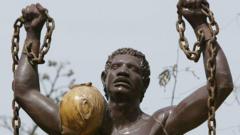
The United Nations recently moved to label modern slavery as the gravest crime against humanity, a rhetorical escalation intended to shock the global conscience. On paper, the vote signifies a unified front against forced labor, human trafficking, and debt bondage. In reality, this diplomatic maneuver does little to disrupt the multi-billion-dollar supply chains that keep the global economy humming. While the resolution seeks to tighten the legal net around bad actors, it ignores the structural dependency that modern industry has on exploited labor.
The vote centers on a fundamental shift in legal definitions. By elevating slavery from a human rights violation to a "crime against humanity," the UN allows for universal jurisdiction. This means, theoretically, that perpetrators could be prosecuted in any country, regardless of where the crime occurred. It is a bold legal stance. However, the gap between a General Assembly resolution and a courtroom conviction is a canyon filled with political compromise and economic reality.
The Invisible Architecture of Modern Exploitation
We often imagine slavery through the lens of history books—chains, ships, and overt physical branding. The modern iteration is quieter and more sophisticated. It hides in the fine print of recruitment fees and the "gig economy" of the developing world. Today, an estimated 50 million people live in situations of forced labor. This isn't happening in a vacuum. It is a direct result of a global race to the bottom in manufacturing costs.
The tech sector is particularly vulnerable. The minerals required for our smartphones and electric vehicle batteries—cobalt, lithium, and tantalum—are frequently extracted in regions where state oversight is non-existent. When the UN votes to condemn these practices, they are effectively condemning the very foundations of the green energy transition and the digital revolution. Companies claim they have "zero-tolerance" policies, but their auditors rarely look past the first tier of suppliers. The deeper you go into the sub-contracting layers, the darker the picture becomes.
Why Legal Labels Fail to Stop the Profit Motive
Labeling slavery a crime against humanity sounds definitive. It carries the weight of Nuremberg. But international law is only as strong as the domestic enforcement that backs it up. Many of the nations that voted in favor of this resolution are the same nations where forced labor is a state-sponsored tool for economic development or political suppression.
Consider the "Kafala" system in parts of the Middle East. It isn't called slavery by the host governments; it’s called labor sponsorship. Yet, it ties a worker’s legal status to a single employer, creating a power imbalance that mirrors historical bondage. A UN vote doesn't provide a migrant domestic worker with a passport or the right to leave an abusive situation. It provides a press release.
The economics are simple. Forced labor generates an estimated $150 billion in illegal profits every year. As long as the profit margin for exploitation exceeds the cost of potential legal penalties, the practice will persist. Corporations operate on quarterly cycles; international law operates on decades.
The Myth of Clean Supply Chains
For decades, the industry standard for ethical sourcing has been the social audit. A third-party firm visits a factory, checks the fire exits, interviews a few workers, and issues a certificate. This system is broken. It has become a checkbox exercise that provides "plausible deniability" for Western brands.
Real investigative work shows that workers are often coached on what to say to auditors. In some cases, two sets of books are kept—one for the government and the auditor, and one for the actual operation. When the UN passes a resolution, it often triggers a flurry of new "compliance" documents. These documents rarely change the lives of the people on the factory floor. They change the risk profile for the legal department in London or New York.
The Debt Bondage Trap
The most prevalent form of modern slavery is debt bondage. It starts with a "job opportunity." A worker in a rural village is promised a high-paying role in a city or abroad. To get there, they must pay a recruitment fee. They take a loan at predatory interest rates to cover the fee. By the time they arrive, they are already underwater.
Their wages are docked to pay the interest. They can never pay off the principal. This isn't a crime of violence in the traditional sense; it is a crime of mathematics. The UN resolution struggles to address this because recruitment agencies often operate legally within their own borders. To stop debt bondage, you don't just need a vote in New York; you need a total overhaul of the global recruitment industry.
The Geopolitics of the UN Vote
The timing of this vote is not accidental. It serves as a soft-power tool in the escalating tensions between the West and competing power blocs. By framing labor practices as crimes against humanity, Western nations can justify trade sanctions and import bans under the guise of human rights.
This leads to a selective application of morality. We see aggressive rhetoric regarding labor in the textile industry of one region, while remaining silent on the forced labor used in the fishing fleets of a strategic ally. When the law is applied selectively, it loses its status as a moral imperative and becomes a trade weapon. This cynicism is not lost on the Global South.
Digital Serfdom and the Future of Work
While the UN looks at traditional labor, a new form of exploitation is emerging in the digital space. Data labeling for artificial intelligence is the new assembly line. Thousands of workers in low-income countries spend ten hours a day identifying traffic lights or "hateful content" for pennies an hour.
They have no benefits, no job security, and no recourse if a platform decides to withhold their pay. Is this slavery? Under the new UN definition, it’s a gray area. But it carries the same hallmarks: a total lack of agency and a subsistence-level existence designed to enrich a distant corporate entity.
Beyond the Ballot Box
If the UN wants this vote to mean more than a footnote in a human rights report, the focus must shift from definitions to data.
- Radical Transparency: We need a global, public database of sub-contractors. If a brand cannot name every factory and farm in its chain, it should be barred from public markets.
- Liability Beyond the Border: Laws like the UK’s Modern Slavery Act need teeth. Currently, they require companies to report what they are doing, not to actually succeed in ending slavery. We need legislation that holds executives personally liable for exploitation found in their supply chains.
- Direct Worker Support: Instead of funneling money into high-level summits, resources should go toward worker-led monitoring systems and legal aid in manufacturing hubs.
The reality is uncomfortable. We have built a world where the standard of living in the West is subsidized by the misery of others. A UN vote is an easy way to signal virtue without changing the price of a t-shirt or a smartphone. Until the cost of exploitation is higher than the cost of a fair wage, the "gravest crime against humanity" will remain a profitable business model.
Stop looking at the resolution. Start looking at the shipping manifests. That is where the truth is hidden.